#Google AI terminal assistant
474 related articles
 Tutorials
·4 min
Gemini CLI Installation & Configuration Guide: Getting Started with Google's AI Terminal Programming Assistant from Scratch
Complete guide to installing, configuring, and using Google Gemini CLI. Covers Node.js setup, npm global installation, Google account authentication, and project context analysis to help developers get started with this AI terminal programming assistant.
Read more →

·6 min
AI Coding Boosts Productivity 10x: Are Programmers Writing Their Own Pink Slips?
A senior developer admits 95% of work is done by Claude Code, with 10x productivity gains. From coding to architecture, AI is eroding programmers' core skill moats. Deep analysis of AI coding's impact on tech employment.
Read more →

·2 min
Yap: A 4MB Open-Source Voice Input Tool That Runs Entirely Locally with Zero Privacy Risk
Yap is a 4MB open-source Mac voice input tool that runs entirely locally using native macOS speech APIs. No internet needed, built with 3000 lines of Swift, MIT licensed and free.
Read more →

·2 min
LangWatch Open-Source Tool: Making Every Token Cost in Claude Code Crystal Clear
LangWatch launches an open-source tool for Claude Code usage tracking — one command to trace token consumption, cache breakdowns, call chains, and terminal replay to optimize AI coding costs.
Read more →

·2 min
Yap: A 4MB Open-Source Voice Input Tool That Runs Entirely Locally with Zero Privacy Risk
Yap is a 4MB open-source Mac voice input tool that runs entirely locally using native macOS speech APIs. Zero cloud dependency, MIT licensed, built with 3,000 lines of Swift code.
Read more →

·3 min
Agent-Manager: Unified Management of Multiple AI Coding Assistants with Tmux
Agent-Manager is an open-source Tmux-based terminal tool for managing multiple AI coding agents like Claude Code, Codex, and OpenCode in a unified interface with quick switching and session persistence.
Read more →

·3 min
Agent-Manager: Unified Management of Multiple AI Coding Assistants with Tmux
Agent-Manager is an open-source Tmux-based TUI for managing multiple AI coding agents like Claude Code, Codex, and OpenCode in a unified terminal interface with quick switching and session persistence.
Read more →

·3 min
Second Brain Desktop: A Persistent Memory Store Across AI Tools
Second Brain desktop brings unified persistent memory across AI tools for Mac and Windows, featuring intelligent recall, auto-built knowledge graphs, and self-hosted data via Cloudflare.
Read more →

·3 min
OpenComputer: Deploy Managed AI Agents with a Single Sentence — A Minimalist Launch Solution for Developers
OpenComputer is an AI agent managed deployment platform that gives you a live agent URL from a single description. This article analyzes its workflow design, market positioning, and security/cost considerations.
Read more →

·3 min
Kemeny's 'Man and the Computer': Why the BASIC Creator's Tech Prophecies Still Haven't Expired
Revisiting BASIC creator Kemeny's 1972 'Man and the Computer' — how his predictions about universal computing, human-machine symbiosis, and data monopoly resonate powerfully in today's AI era.
Read more →

·2 min
Bun Now Generates CLAUDE.md by Default: The AI-Native Development Era Has Arrived
Bun runtime now generates a CLAUDE.md file by default with bun init, signaling AI assistants becoming first-class citizens in the development toolchain.
Read more →

·3 min
Antigravity CLI Weekly Usage Limits in Practice: A Practical Guide to Maximizing Quota for Ops Workflows
Analyzing Google Antigravity CLI weekly usage limits, Flash vs Pro quota weights, and practical tips like trimming context and batching requests to help sysadmin and homelab users maximize subscription quotas.
Read more →

·3 min
Antigravity CLI Weekly Limit Real-World Testing: A Practical Guide to Maximizing Quota for Ops Workflows
Deep analysis of Google Antigravity CLI weekly usage limits, Flash vs Pro quota weights, and practical tips for sysadmin/homelab users to maximize subscription quota.
Read more →
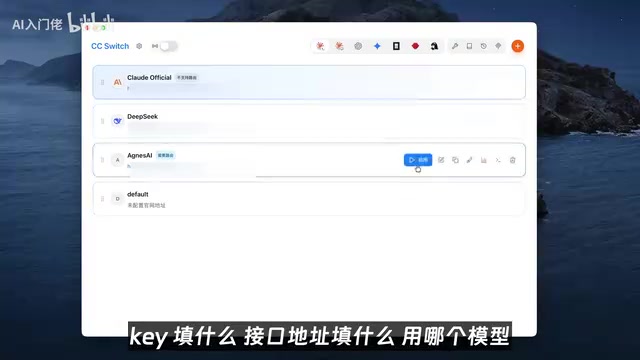
·4 min
Free Claude Code Tutorial: Complete Configuration Guide for Connecting to Agnes Multi-Modal Models
Learn how to connect Claude Code to Agnes AI's free models via Sense Switch for zero-cost text, image, and video generation, with complete setup steps and real-world results.
Read more →

·2 min
HuggingFace Open-Source Voice Assistant: A Complete Guide to Local Deployment
A deep dive into HuggingFace's speech-to-speech open-source project, covering its modular VAD, STT, LLM, and TTS pipeline architecture and the advantages of local deployment for privacy, cost, and latency.
Read more →

·3 min
Claude Max Subscription Extra Billing Controversy: Where Are the Subscription Benefit Boundaries?
Anthropic Claude Max subscribers find Claude Code only deducts Extra Usage Credits, sparking debate over subscription benefit boundaries and billing transparency.
Read more →

·3 min
Grok 4.5 Feels Weaker in Cursor? A Deep Dive into AI Coding Tool Integration Differences
Users report Grok 4.5 underperforms in Cursor vs. the official terminal. We analyze how system prompts, context management, parameters, and tool calling create AI coding tool integration gaps.
Read more →

·3 min
Getting Started with Codex: A Complete Guide to AI Agent Programming Tools
Compare Codex and Claude Code AI agent programming tools. Learn AI Agent concepts, tool selection, cost analysis, and GPT account setup in this complete beginner's guide.
Read more →

·3 min
Cursor Alternatives Compared: A Guide to 5 AI Coding Tools
Compare 5 Cursor alternatives — from GitHub Copilot and Windsurf to open-source Cline and Continue — covering model freedom, workflow integration, cost, and privacy.
Read more →

·4 min
Chinese AI Accounts for 58% of US Compute Consumption: How Open-Source LLMs Are Disrupting Silicon Valley
OpenRouter data shows Chinese AI models now account for 58% of US AI consumption. Silicon Valley giants like DoorDash and Airbnb adopt Kimi, DeepSeek, and Qwen, leveraging low cost, high performance, and open weights.
Read more →