#Google UK
160 related articles

·3 min
Open-Source Writing App Hammer Seeks Translation Volunteers — No Coding Skills Required
Hammer is an MIT-licensed, local-first open-source story writing tool available cross-platform. Facing a localization manpower shortage, it seeks translation volunteers via Crowdin — no coding needed. Chinese localization remains a blank slate.
Read more →

·5 min
GPT-5.6 In-Depth Review: Crushing Competitors on Value, But Its Jailbreak Vulnerabilities Can't Be Ignored
OpenAI's GPT-5.6 Soul, Terra & Luna are priced at one-third of Claude, leading Anthropic Fable on many benchmarks. We analyze its value, reasoning, and jailbreak risks.
Read more →

·4 min
Dumb Co Flip Phone Review: Can Digital Minimalism Cure Phone Addiction?
Dumb Co launches a flip phone that syncs with your smartphone, physically walling off social media and short video while keeping calls and texts. A deep dive into its sync mechanism, user experience, and limits—and whether digital minimalism can cure phone addiction.
Read more →

·3 min
Microsoft's Largest Xbox Layoffs Ever: The Strategic Dilemma of Betting Big on a Cross-Platform Entertainment Ecosystem
Microsoft announced the largest restructuring layoffs in Xbox history, while CEO Asha Sharma unveiled a grand vision to "entertain more users." Can this ambitious bet on cross-platform ecosystem expansion break console market boundaries?
Read more →

·3 min
Designing MPMC Queues: Balancing Bounded Waiting and High-Performance Concurrency
An in-depth look at the core design challenges of MPMC queues: bounded waiting, lock-free mechanisms, sequence-number slots, dual-path strategies, and helping. Helping engineers balance throughput, fairness, and latency.
Read more →

·5 min
In-Depth Comparison of AI Image Generation Tools: How to Choose Between Flux, Midjourney, and Gemini?
A comprehensive comparison of mainstream AI image generation tools: Flux, Midjourney, Grok, Gemini, and Stable Diffusion. Dissecting their pros and cons across quality, freedom, and usability to help you find the right AI drawing solution.
Read more →
OpenAI Targets the Home Market: How Ch…
·5 min
OpenAI Targets the Home Market: How ChatGPT Aims to Become the Whole Family's AI Assistant
OpenAI is recruiting a family product manager, targeting older adults and caregiver scenarios. An in-depth analysis of ChatGPT's shift from productivity tool to home digital assistant.
Read more →

·5 min
DCTS: A Deep Dive into an Open-Source Self-Hosted E2EE Encrypted Communication Platform
DCTS is an open-source, self-hosted instant messaging platform led by an individual developer, integrating E2EE and decentralized architecture across desktop and mobile.
Read more →

·5 min
Zero-Dependency AI Decision Record Auditor: A Practical Guide to Building Traceable AI Systems
An in-depth analysis of the zero-dependency decision record auditor: from AI compliance and incident postmortems to human-AI accountability, exploring how 'Governance as Code' enables traceable, transparent AI decision-making.
Read more →

·5 min
AI Data Centers Competing for Power: Why U.S. Manufacturing Energy Costs Keep Soaring
The explosive expansion of AI data centers is voraciously consuming electricity, directly driving up U.S. manufacturing energy costs. This article dissects the crowding-out effect and the path forward.
Read more →
·5 min
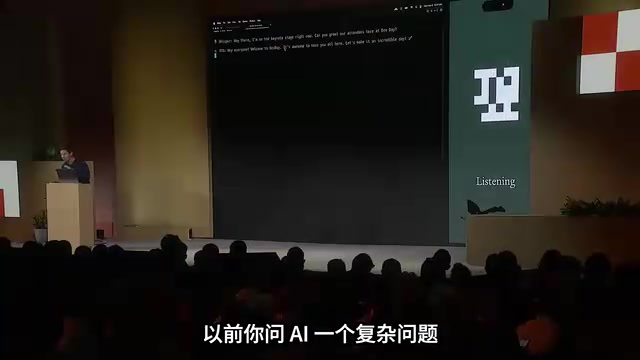
GPT-5.6 Triple Launch: Understanding the Positioning and Key Differences of Sol, Terra, and Luna
OpenAI released three GPT-5.6 models—Sol, Terra, and Luna—covering everything from flagship reasoning to lightweight speed. A deep dive into their positioning, performance differences, pricing, and industry signals.
Read more →

·6 min
Nothing Phone 4B Announced: The First B-Series Phone, Once Again Skipping the US Market
Nothing officially launches its first B-series phone, the Phone 4B, blending 4A and 4A Pro design elements for the entry-level market. It continues the strategy of skipping the US, focusing on price-sensitive markets like India and Europe.
Read more →

·7 min
Rumored Pixel-Wide Price Hike: Watch 5 Starting Price May Rise to $399
Per French leak site Dealabs, Google's Pixel lineup may see across-the-board price hikes. The Pixel Watch 5 41mm could start at $399, with the LTE version reaching $499—nearly 15% higher than the Watch 4.
Read more →

·3 min
GPT-5.6 Deep Dive: Sol Flagship Model Performance, Weaknesses, and Competitive Analysis
Deep dive into GPT-5.6 (Sol/Terra/Luna): one-shot complex coding, agentic workflows, benchmark wins over Claude — but hallucination and vision still lag. Must-read for developers.
Read more →

·7 min
50 AI Research Job Applications to FAANG, 0 Replies? Unpacking the Truth Behind the Job Search Struggle
An AI research engineer with 3 years of experience sent 50 applications to FAANG with zero replies. This article breaks down the hidden barriers of top-tech AI roles, the truth about LinkedIn ghost jobs, and the MLE vs. Research Engineer divide.
Read more →

·5 min
Has Apple Lost the AI Race? The Battle Between Software Setbacks and the Hardware Moat
After Apple failed to deliver on its new Siri promise for two years running, many ask: has Apple lost the AI race? We break down two AI tracks—software models vs. on-device hardware.
Read more →

·8 min
GPT-5.6 Hands-On: Farm Automation, Mathematical Breakthroughs, and End-to-End AI Execution
GPT-5.6 (Sol, Terra, Luna) hands-on testing: a Hokkaido farmer controls a greenhouse with AI, a NYC small business builds custom software, and a Polish mathematician breaks a 3-year problem. A deep dive into end-to-end autonomous execution.
Read more →

·6 min
Is AI Dream Interpretation Really Accurate? Unpacking the Technical Limits and the Truth Behind Psychological Suggestion
AI dream interpretation and personality analysis are trending on social media, but can AI really understand you? This article unpacks the technical limits and hidden risks—from the Barnum Effect to LLMs.
Read more →
·6 min
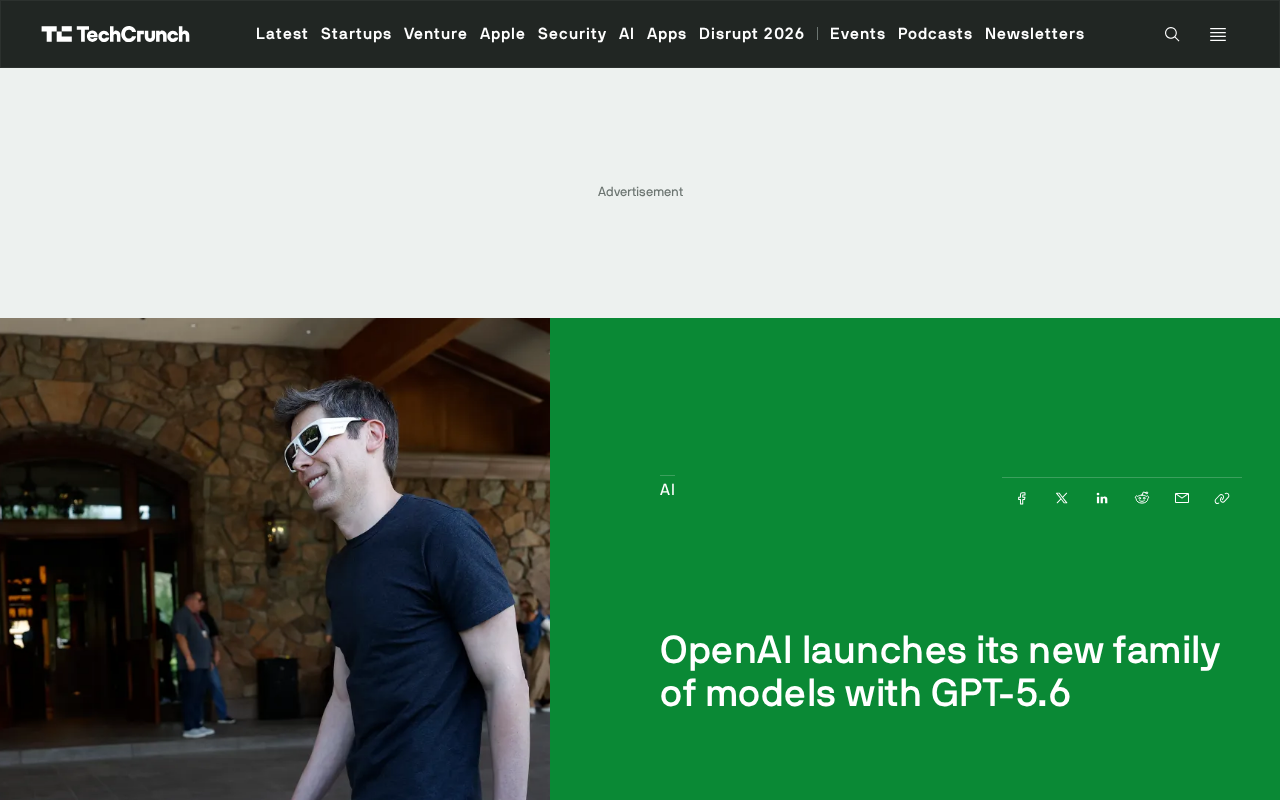
OpenAI Releases GPT-5.6: Cybersecurity Capabilities Take Center Stage
OpenAI launches the GPT-5.6 model family with cybersecurity as its biggest highlight. A deep analysis of GPT-5.6's differentiation, double-edged-sword effect, and enterprise strategy.
Read more →

·6 min
Tencent Hunyuan HY3 Official Version Open-Sourced: The Strongest Under 300B, at 1 Yuan per Million Tokens
Tencent Hunyuan HY3 official version is open-sourced under Apache 2.0, priced as low as 1 yuan per million input tokens, with major gains in agents, reasoning, coding, and long context. On the same day, Meituan open-sourced its trillion-parameter LongCat 2.0.
Read more →