#Harness AI Engineering
358 related articles

·4 min
Laguna S 2.1 Deep Dive: Hands-On Local Deployment of a 118B Parameter Coding Model
In-depth review of Poolside's Laguna S 2.1 open-source coding model: MoE architecture, RL training, DGX Spark local deployment, and real-world agentic coding tests with 8B active parameters.
Read more →

·5 min
Running GPT-5.6 Inside Claude Code: Best Practices for Subagent Orchestration and System Prompts
Deep dive into running OpenAI GPT-5.6 inside Claude Code: comparing Codex vs Claude Code on subagent orchestration, workflow design, and system prompt quality, revealing how harness engineering determines model output.
Read more →

·3 min
How to Choose an AI Agent Platform for Your Team: 5 Evaluation Dimensions & Decision Framework
Choose an AI Agent platform by evaluating model flexibility, observability, tool integration, security compliance, and total cost. A complete decision framework to avoid vendor lock-in.
Read more →

·5 min
A Beginner's Guide to Prompt Engineering: From One-Off Instructions to a Systematic Methodology
A beginner's guide to prompt engineering covering the four functions of prompts, the key differences from prompt engineering, a six-step systematic workflow, and critical technical and practical limitations.
Read more →
·3 min
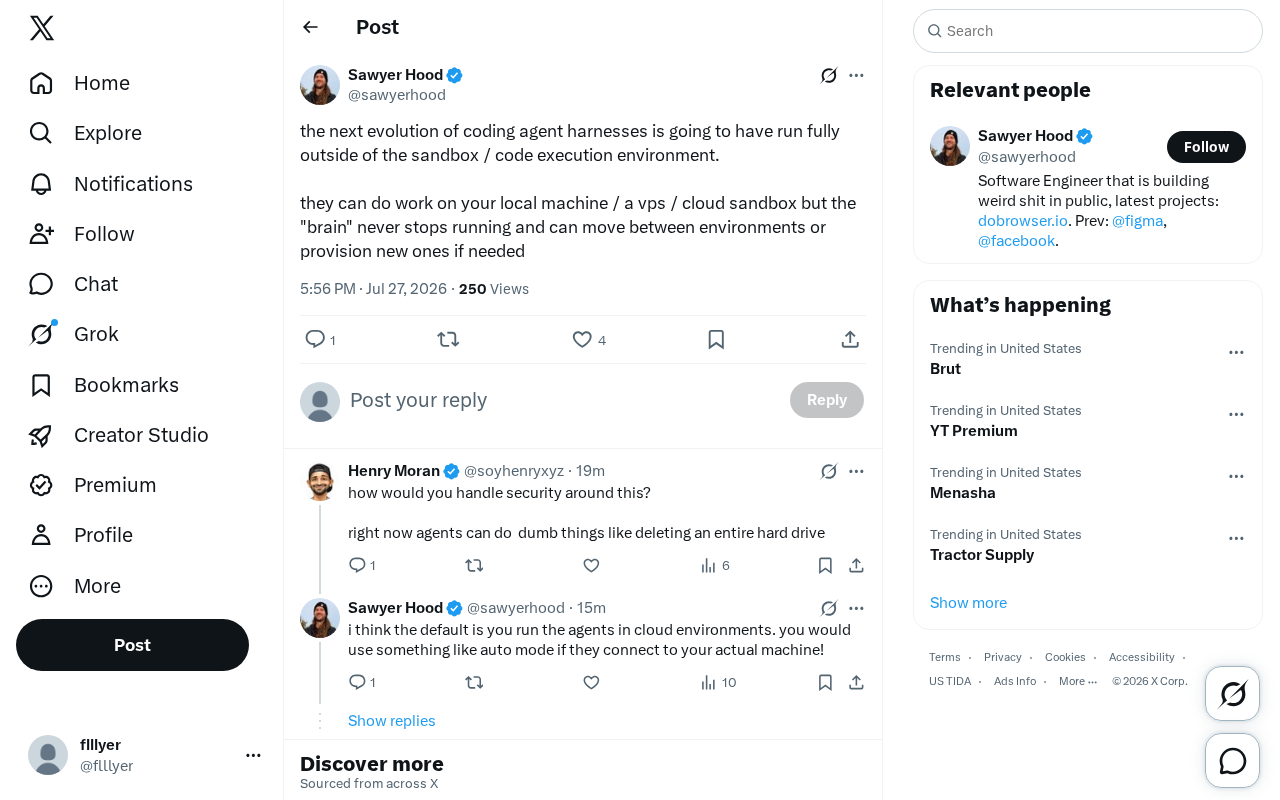
The Next Evolution of Coding Agents: Letting the Brain Break Free from the Sandbox
Exploring the key evolution in coding agent architecture: separating the reasoning core from code execution environments to decouple control and execution planes.
Read more →

·2 min
Efficient Development with Copilot: Why Your Workflow Framework Matters More Than the Tool Itself
GitHub's official four-stage Copilot workflow framework covering prototyping, planning, implementation, and review helps developers build systematic AI-assisted development practices for real productivity gains.
Read more →
·3 min
The Next Evolution of Coding Agents: Letting the Brain Escape the Sandbox
Exploring the next evolution in coding agent architecture: decoupling the reasoning core from code execution environments to separate control and execution planes.
Read more →

·2 min
Impeccable Open Source Project Deep Dive: A Design Language Framework That Gives AI a Designer's Eye
Deep dive into the trending open source project Impeccable — a design language framework that enables AI tools to generate professional-grade UI. Learn how it bridges the design quality gap in AI-generated interfaces.
Read more →

·3 min
Claude Opus 5 High Reasoning Mode: The Concerns and Insights of Overthinking
Claude Opus 5's high+ reasoning mode has been jokingly called an "anxious overthinker." This article analyzes why LLMs over-reason, the diminishing returns tipping point, and how to balance reasoning intensity.
Read more →
Terence Tao on AI and Mathematics: For…
·4 min
Terence Tao on AI and Mathematics: Formal Proofs, Human-AI Collaboration, and the Road Ahead
Fields Medalist Terence Tao analyzes AI's impact on math research, discussing LLM-assisted proofs, Lean formal verification, large-scale collaboration, and the future of math education in the AI era.
Read more →

·3 min
GitHub Daily · July 27: AI Agent Skill Ecosystem Explodes, Claude's Capability Boundaries Keep Expanding
GitHub Trending July 27: AI Agent Skills explode as claude-video, impeccable, and last30days-skill extend model capabilities without modifying models themselves.
Read more →
·3 min
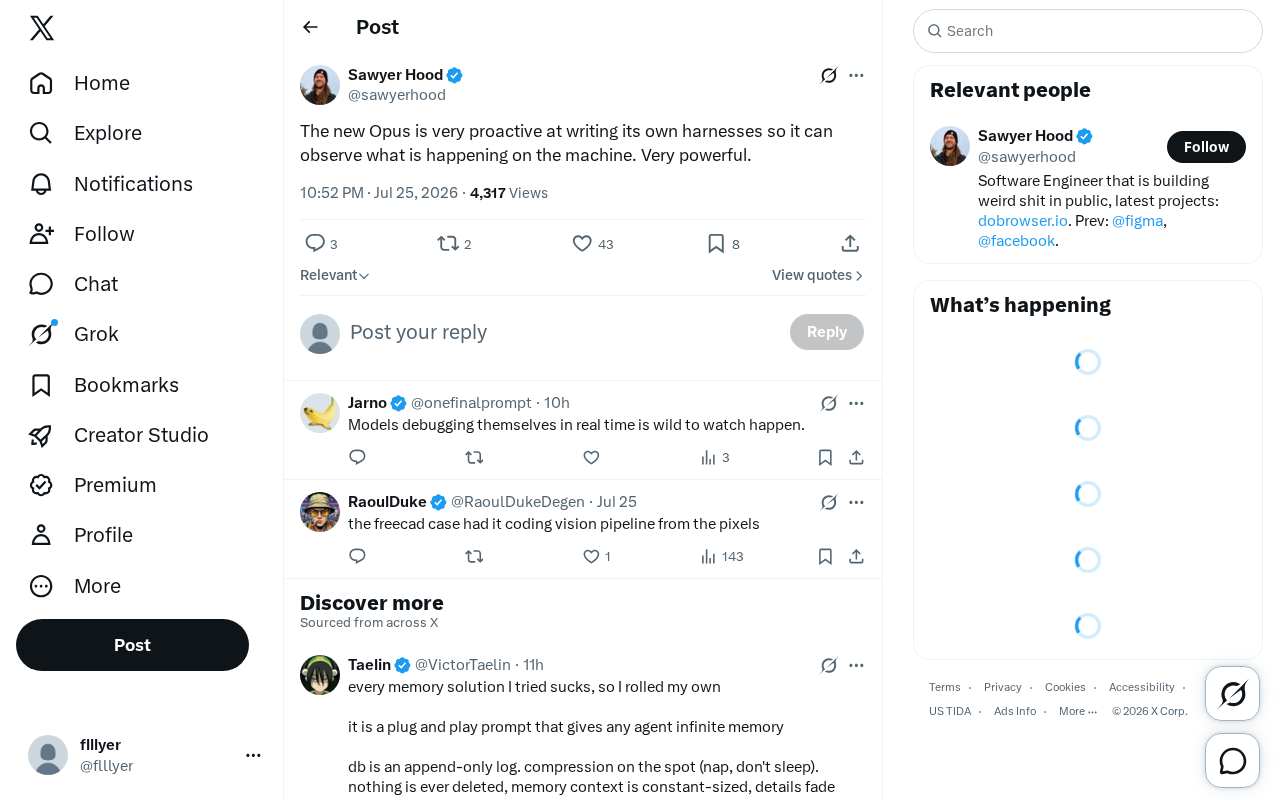
Claude Opus's Autonomous Debugging Capabilities: What It Means When AI Proactively Writes Test Harnesses
New Claude Opus proactively writes test harnesses to observe runtime behavior. We analyze how this shift from passive code generation to autonomous debugging marks a key evolution in AI programming.
Read more →

·3 min
Copilot Now Charges at API Prices — What Are You Actually Paying For?
With GitHub Copilot now billing at API rates, model costs match raw APIs. This article analyzes Copilot's real value in workflow integration, enterprise governance, and harness engineering.
Read more →

·4 min
AI Coding Tools in Practice: Which Ones Actually Stuck with the Team?
A 12-person product team shares real-world experiences with Cursor, Codex, Claude Code, and CodeRabbit—exploring efficiency plateaus, scenario matching, and selection criteria for AI coding tools that actually stick.
Read more →

·5 min
From Chat to Agent: Automating Your Entire Business Workflow with AI Agents
Veteran AI practitioner Remy breaks down the leap from chat models to AI agents: how agents work, the three pillars of context, tools, and skills, MCP connections, and hands-on architecture to make you a 100x employee.
Read more →

·4 min
Claude Code from Scratch: A Complete Guide from Installation to Enterprise-Grade Development
A complete guide to Claude Code from beginner to enterprise practice: covering CLI installation, connecting domestic LLMs via CC Switch, basic commands, Git workflow integration, automated bug fixing, and engineering capabilities like MCP and SubAgents.
Read more →

·2 min
GitHub Weekly Trending: 5 AI Coding Tools from Beginner to Advanced
This week's GitHub trending focuses on AI coding: Skills sets rules for Agents, Omniroute is a never-down AI gateway, Code Review Graph is a code knowledge graph, PI is an open-source Agent toolbox, and AI Engineering from Scratch teaches from zero.
Read more →

·2 min
GitHub Weekly Trending: 5 AI Coding Tools from Beginner to Advanced
This week's GitHub trending focuses on AI coding: Skills sets rules for Agents, Omniroute is a never-down AI gateway, Code Review Graph builds a code knowledge graph, PI is an open-source Agent toolkit, and AI Engineering from Scratch teaches from the ground up.
Read more →

·4 min
Notion Co-founder: From Note-Taking Tool to AI Agent Workspace
Notion co-founder Simon Last shares Notion's journey from note-taking tool to AI agent workspace: from first tasting GPT-4 to personal and custom agents.
Read more →

·2 min
Why Does GPT-5.6 Perform Better in Claude Code Than in Codex? A Deep Dive
Tech blogger Theo found GPT-5.6 runs better in Claude Code than in OpenAI's own Codex. A deep dive into their differences in system prompt quality and subagent orchestration.
Read more →