#Huawei LLM
62 related articles

·3 min
LongCat 2.0: Meituan Trains a 1.6 Trillion Parameter LLM on Domestic Chips
Meituan open-sources LongCat 2.0, a 1.6T-parameter MoE model trained on 50,000+ custom chips without NVIDIA GPUs or Google TPUs, rivaling OpenAI and Google.
Read more →

·7 min
Building a Published App with Zero Code in Four Days: A Complete HarmonyOS Development Journey
A tech blogger with zero programming knowledge built a retro DV app in four days using AI tools like Cursor and Codex, and got it published on Huawei App Gallery. A full vibe coding walkthrough.
Read more →
·5 min
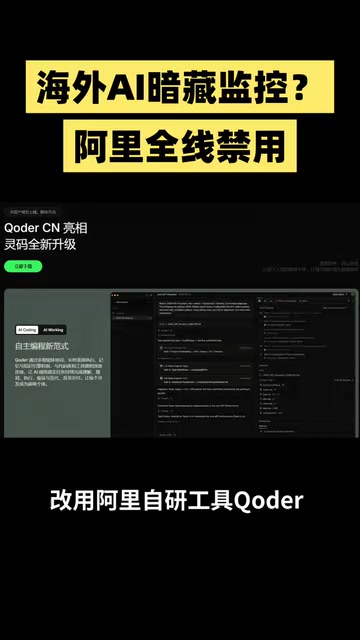
Deep Analysis of the Alibaba-Claude Ban: The Battle for Autonomous Control of AI Coding Tools
Alibaba bans all Anthropic products including Claude Code, while ByteDance and Tencent switch to in-house tools. A deep dive into the security logic and industry trends behind China's push for autonomous AI coding tools.
Read more →

·6 min
Tencent Hunyuan HY3 Official Version Open-Sourced: The Strongest Under 300B, at 1 Yuan per Million Tokens
Tencent Hunyuan HY3 official version is open-sourced under Apache 2.0, priced as low as 1 yuan per million input tokens, with major gains in agents, reasoning, coding, and long context. On the same day, Meituan open-sourced its trillion-parameter LongCat 2.0.
Read more →

·4 min
Hardware-Level Phone AI Agent Control: Bypassing Software Restrictions with HDMI + USB HID
An open-source project uses HDMI capture for screen vision and USB HID to simulate touch input, enabling root-free, app-free hardware-level phone AI Agent control. Explore the principles, advantages, and limitations.
Read more →

·7 min
Getting Started with Dify: A Complete Guide from Local Deployment to Building Enterprise-Grade AI Applications
A detailed guide to Dify, the open-source LLM app development platform, covering its core features and full local deployment via VMware + Ubuntu + aaPanel + Docker. Supports 100+ models like DeepSeek and ChatGPT to build enterprise AI apps fast.
Read more →

·2 min
Huawei Pangu 2.0 Flash on the Gaokao Benchmark: 613 Points, Stability Issues, and Cost Breakdown
Huawei's open-source Pangu 2.0 Flash scored 613 on the LLM Gaokao benchmark (ranked 33rd). This deep dive covers its MoE architecture, stability issues, sub-1-yuan inference cost, and dual-model essay grading.
Read more →

·8 min
Python Web Scraping for Beginners: How It Works, Core Workflow, and Legal Red Lines Explained
A plain-language guide to how Python web scrapers work: from HTTP requests and responses, HTML tag parsing, to the complete three-step data scraping workflow, with a focus on the three legal red lines and compliance advice.
Read more →

·4 min
Alibaba Plans to Ban Claude Code: The Battle Between Backdoor Risks and Enterprise AI Security
Alibaba reportedly plans to ban Claude Code internally over backdoor and data leakage concerns. A deep dive into enterprise AI security, supply chain trust issues, and what it takes for AI tools to win enterprise adoption.
Read more →

·2 min
A Complete Methodology for Upgrading Wireframe Pages to Commercial-Grade Visuals with Cursor
How indie developers can use Cursor and reference pages to upgrade wireframe sites to commercial-grade visuals. A 3-step workflow: extract design prompts, migrate visual specs, and narrow AI instructions.
Read more →

·2 min
Dify + MCP in Practice: Building Enterprise-Grade Role-Specific AI Copilot Workflows
A hands-on guide to building enterprise AI copilot workflows using Dify and MCP. Covers tool integration, parameter passing, code execution, and MCP version compatibility pitfalls.
Read more →

·3 min
GLM-5.2 Deep Dive: Million-Token Context, MIT Open Source & Full-Stack Domestic Chip Training
Deep dive into Zhipu's GLM-5.2: truly usable 1M-token context, MIT open-source strategy, full-stack Huawei Ascend training, and how it compares to Claude Opus. Includes benchmarks, use cases & pricing.
Read more →

·3 min
HarmonyOS 7 Developer Beta Launches: A Deep Dive into System-Level Transformation for the Agent Era
HarmonyOS 7 developer Beta launches, claiming to be the world's first AI-native OS. Deep analysis of Xiaoyi Agent, StarShield security, Galaxy Interconnect, and the OS AI competition landscape.
Read more →

·3 min
4 Iron Rules of Industrial Agent Development: Why AI Deployments in Factories Are Doomed to Fail
Deep dive into why industrial AI Agents fail: 4 critical strategies covering edge deployment, closed-loop control, rule verification, and safety mechanisms for reliable factory AI systems.
Read more →

·3 min
Getting Started with ChatGPT Codex and Claude Code: A Hands-On AI Programming Tutorial for Beginners
A detailed guide comparing ChatGPT Codex and Claude Code — covering core differences, selection criteria, and setup for beginners to start AI agent programming and boost dev efficiency 2-5x.
Read more →

·2 min
Chaos in the AI Training Industry: A Deep Dive into Clickbait and the Instructor Shortage Crisis
An AI training instructor's candid self-disclosure reveals clickbait practices, instructor shortages, and traffic anxiety in China's booming AI training industry, with tips for learners.
Read more →

·2 min
10 Products Apple Should Have Made But Didn't: From a Foldable iPhone to the Apple Car
A look at the 10 most-requested products Apple hasn't released yet, including a foldable iPhone, AR glasses, Apple Car, smart home hub, and cellular MacBook.
Read more →

·2 min
The Five-Layer Evolution of Scaling Law: How Physical AI Opens the Next Growth Curve
Deep analysis of Scaling Law's five-layer evolution from Pre-Training to Multi-Agent, exploring Physical AI's World Models, edge inference, and emotional interaction.
Read more →

·3 min
Cursor Design Mode Launch and OpenAI Codex Updates: Latest Developments in AI Programming Tools
Cursor launches Design Mode for visual development, OpenAI Codex updates and Safety Lock Mode released, Anthropic doubles limits, AI agent leaderboards debut, Google DeepMind model compression breakthrough.
Read more →
 Industry Insights
·3 min
From GPT-1 to ChatGPT: How Ilya's Bet Ignited the AI Revolution
From GPT-1 mocked as garbage in 2018 to ChatGPT sweeping the globe, how Ilya Sutskever's faith in Scaling Laws led OpenAI from the Transformer to the LLM revolution.
Read more →