#Hugging Face
503 related articles

·3 min
Building a Claude Code Skill from Scratch: Let AI Auto-Generate Daily News Reports
A detailed guide on building a custom Claude Code Skill to auto-fetch, filter, and generate daily AI news reports—covering execution logic, task decomposition, HTML visualization, and source tracing.
Read more →

·4 min
No MLP or Attention Required: How Point-Attractor Dynamics Learn Word Embeddings
A minimalist dynamical system experiment: without MLP, Transformer, or attention layers, point-attractor dynamics driven purely by co-occurrence pressure learns semantic similarity on SimLex-999.
Read more →

·5 min
Advanced Machine Learning Reading List: How to Choose the Right Book Among These 4 Classics?
Torn between Géron, Chollet, and Raschka? This article breaks down 4 classic ML books for self-learners aiming at finetuning and small language models (SLM), helping you find the best advanced path.
Read more →

·4 min
Testing a Research Automation Agent: Zero-Shot Reproduction of a NeurIPS Paper End-to-End
Testing research automation agent Klaus Goh: full reproduction of IBM's TTM time series paper at NeurIPS—from search to zero-shot inference, 2700+ predictions in 10 seconds, MSE 0.363 beating TimesFM.
Read more →

·4 min
Behind India's 5% AI Hiring Dip: Core Skill Demand Structure Remains Rock Solid
India's AI/data science postings hit 11,557 this week, down 5% from last week, but the skill demand structure barely changed. Python, ML, and SQL remain top skills while GenAI/LLM demand keeps rising.
Read more →

·5 min
Krea 2 Turbo Style Reference LoRA: Define Your Generation Style with a Single Image
ostris releases the Krea 2 Turbo Style Reference LoRA, supporting single or multi-image style extraction for precise AI style transfer. Open-source, free, and locally deployable.
Read more →

·3 min
AI Didn't Take My Job — It Made Me Work Two to Pay for Subscriptions
The most authentic worker dilemma of the AI era: not unemployment anxiety, but subscription anxiety. ChatGPT, Claude, Copilot — monthly fees easily top $100. Are AI productivity tools a boost or a new burden?
Read more →
·4 min
No Competitive Programming Required: How CS Students Can Pivot to AI/ML and Land Internships
How can CS students who dislike competitive programming systematically pivot to AI/ML? This guide covers skill priorities (Python/SQL/ML/deployment), portfolio strategy, Kaggle tips, and real paths to landing AI/ML internships.
Read more →
·4 min
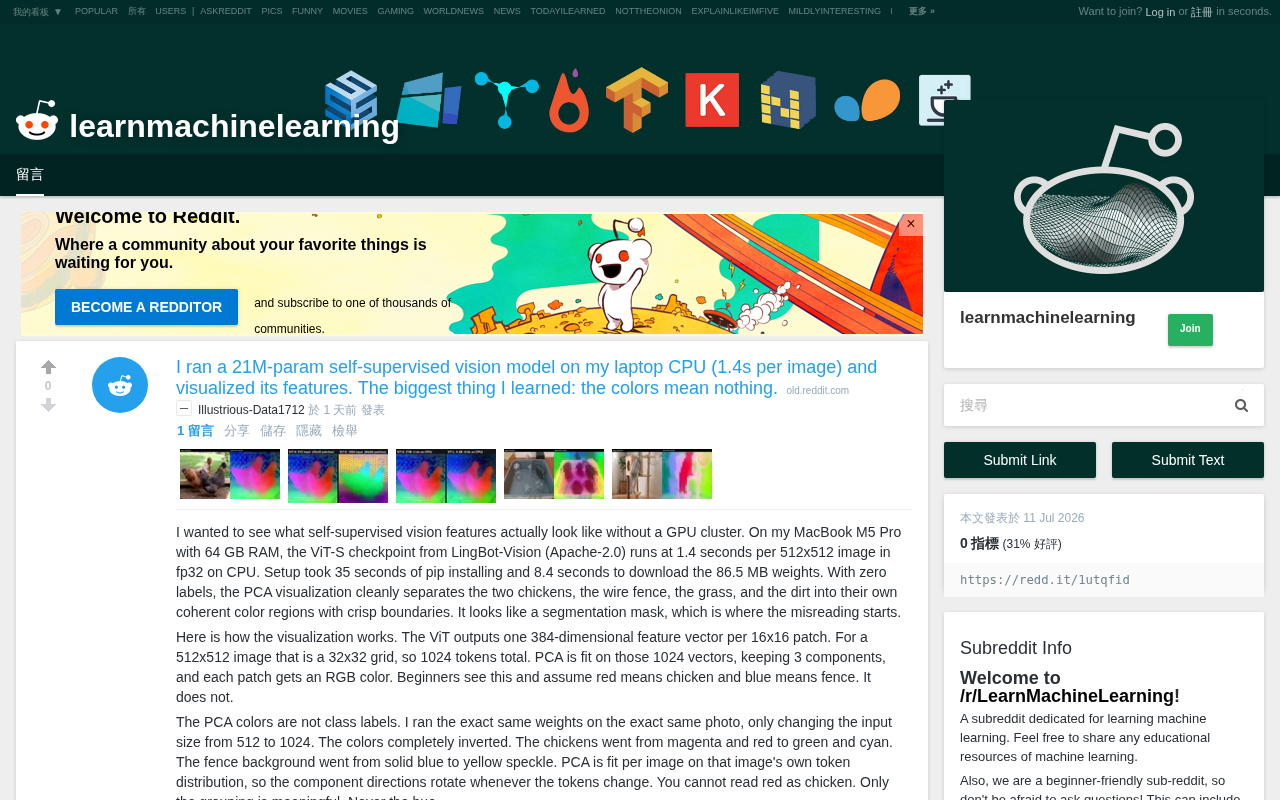
A Guide to Avoiding Pitfalls in PCA Visualization of Self-Supervised Vision Models: Why the Colors Are Meaningless
Running self-supervised vision models (SSL) on a MacBook CPU isn't hard. This article reveals the core misconception of PCA visualization through ViT-S experiments: colors can't convey semantics across images, and changing resolution reverses hues entirely.
Read more →

·3 min
Should Developers Learn Machine Learning? A Rational ROI Analysis and Learning Path Guide
Should full-stack developers learn machine learning? This article analyzes the difference between applied ML and research ML, breaks down the ROI at each stage, and offers a concrete action path.
Read more →

·7 min
Building AI Agents in Rust: The GAIA Benchmark Reveals the Capability Ceiling of Large Models
A Rust-based AI Agent evaluation framework uses the GAIA benchmark to compare GPT, Claude, DeepSeek and other models with no tools. Results show pure LLMs cap at ~25% accuracy, revealing why tool use is decisive for Agents.
Read more →
Local Coding Agents in Practice: A Com…
·6 min
Local Coding Agents in Practice: A Complete Guide to Replacing Your Claude Subscription with Open-Source Models
An in-depth look at local coding agents—core concepts, advantages, and real challenges. Compare against Claude Code and learn to build a zero-subscription, private AI coding workflow with open-weight models.
Read more →

·2 min
WisprGemma: Fully Local In-Browser Voice Input — Your Audio Never Leaves Your Device
WisprGemma is an open-source, browser-local voice input tool built on WebGPU and Transformers.js. One Gemma model handles speech recognition and text polish — your voice never leaves your device.
Read more →

·6 min
A Deep Dive into the vLLM Inference Framework: Core Principles of Throughput Optimization and Interview Guide
An in-depth analysis of the vLLM inference framework's core principles: from the meaning of throughput (tokens/s), to the bottlenecks of autoregressive generation, to KV Cache, PagedAttention, and continuous batching.
Read more →

·2 min
AI/ML Engineer Job Search Roadmap: A Systematic Preparation Guide for ECE Students
A practical job-search guide for ECE students pursuing AI/ML roles, covering direction selection, Python skills, project planning, paper strategy, and overseas opportunities.
Read more →

·3 min
ComfyUI-INT4-Fast: Running Flux Models Smoothly on 6GB GPUs
ComfyUI-INT4-Fast brings W4A4 quantized inference to ComfyUI. RTX 3060 (6GB VRAM) generates 1024×1024 images in 17s. Per-layer mixed-precision routing balances speed and quality for Flux models.
Read more →

·6 min
Why Is Qwen3 27B So Slow on a 4090? A Hands-On Guide to Local Inference Performance Optimization
RTX 4090 taking over 400 seconds to run Qwen3 27B inference? This article analyzes the core causes—VRAM overflow and CPU offloading drag—and offers targeted fixes.
Read more →

·3 min
Getting Started with AI Agent Development: A Complete Learning Path to Building Intelligent Applications from Scratch
AI Agents are reshaping software development with 42.8% market CAGR. Learn the difference between Agents and traditional AI, plus a complete LangChain-based curriculum to launch your career in intelligent agent development.
Read more →

·4 min
Electrical Engineer to AI Engineer: A Real Story and Practical Transition Roadmap
A 6-year electrical engineer from Brazil weighs transitioning to AI engineering. This deep-dive covers the stability vs. freedom tradeoff, transition advantages, and a practical roadmap for engineers with similar backgrounds.
Read more →

·7 min
50 AI Research Job Applications to FAANG, 0 Replies? Unpacking the Truth Behind the Job Search Struggle
An AI research engineer with 3 years of experience sent 50 applications to FAANG with zero replies. This article breaks down the hidden barriers of top-tech AI roles, the truth about LinkedIn ghost jobs, and the MLE vs. Research Engineer divide.
Read more →