#JSON-RPC
275 related articles

·5 min
The Definitive Guide to Claude Code: Core Methodology and Best Practices for Agentic Programming
A deep dive into Claude Code, the definitive course from DeepLearning.AI and Anthropic: from agentic principles and context optimization to three hands-on cases—RAG chatbot, Figma-to-frontend, and data analysis. Master AI-assisted coding methodology.
Read more →

·3 min
Getting Started with Codex: A Comprehensive Comparison with Claude Code and How to Choose
A deep comparison of Codex vs. Claude Code on pricing, stability, and frontend/backend strengths — plus how to choose between Cursor, Claude Code, and Codex.
Read more →

·4 min
MCP Protocol Deep Dive: Its Relationship with Function Calling and Agents, Plus a Practical Guide
Deep dive into MCP (Model Context Protocol): clarifying the three-layer relationship between MCP, Function Calling, and Agents, covering protocol roles, call flows, transport choices, and production security for AI developers.
Read more →

·5 min
Open-Source MCP Server: Automatically Verifying the Authenticity of AI-Generated Paper Citations
AI "citation hallucination" threatens academic integrity—LLMs generate perfectly formatted but nonexistent references. This open-source MCP server verifies AI citations in real time against CrossRef, PubMed, and more, catching fakes at the source.
Read more →

·4 min
Zhipu GLM-5.2 Released: China's First Open-Source Model to Cross the 'Primary Model' Threshold
Zhipu releases GLM-5.2 with 1M token context, matching GPT-5.x and Claude. Zcode 3.0 offers 3M free daily calls with one-click migration from Claude Code and Codex.
Read more →

·5 min
Hands-On with PageAgent: Add AI Agent Capabilities to Web Pages with a Single Line of Code
In-depth hands-on review of Alibaba's open-source web automation tool PageAgent: three integration methods, script execution analysis, and a full breakdown of current limitations. Add AI Agent capabilities to web pages with one line of JS.
Read more →
·6 min
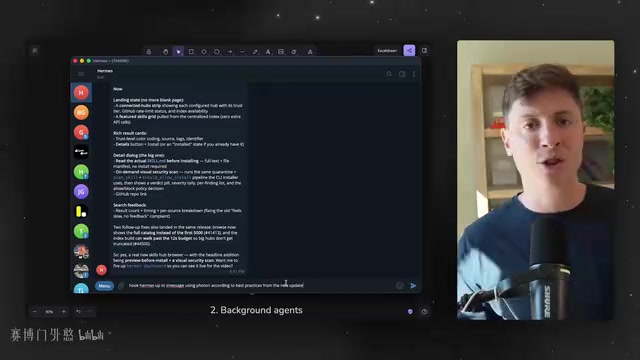
Hands-On With Hermes Agent's Eight Major Updates: A Complete Guide to AI Automation and Self-Evolution
The Hermes Agent gets a major upgrade with eight new features: native iMessage, parallel background sub-agents, Unreal Engine MCP support, a self-evolving Skill Hub, and more. A hands-on breakdown of the core changes and their real impact on personal AI automation workflows.
Read more →

·4 min
BrowserWing: A Browser Action Recorder That Offers a Pragmatic Approach to AI Web Automation
BrowserWing is an open-source browser action recorder (1300+ GitHub stars) with 78 built-in scripts for GitHub, Bilibili, Zhihu, and more. Record once, run repeatedly, and let AI Agents reliably execute fixed web workflows.
Read more →

·3 min
GPT-5.6 Sol in Action: A 3D Interactive London Website Generated in 5 Minutes
A Reddit user tested GPT-5.6 Sol with a single prompt. In the Row-Bot framework, the model built a 3D interactive London website in 5 minutes—complete with browser verification and vision analysis. A deep dive into AI coding Agents.
Read more →

·4 min
TigrimOSR: An Open-Source Agent Framework in Rust with Configurable Agent Loops
TigrimOSR is an open-source multi-agent system written in Rust, supporting full agent loop definition via YAML config files with only 250MB memory usage. A deep dive into Loop Engineering, Rust advantages, and self-hosted Agentic AI.
Read more →

·5 min
Browser Use: A Deep Dive into the Event-Driven Browser AI Agent Framework
Browser Use is an open-source AI Agent framework that lets LLMs autonomously drive browser operations via natural language. This article breaks down its four-layer architecture, core Agent loop, CDP perception layer, dynamic Tools dispatch, and its Skills, Sandbox, and MCP extension capabilities.
Read more →

·2 min
ComfyUI MCP: AI Autonomously Builds Workflows, Generate Images Locally with a Single Sentence
The open-source ComfyUI MCP project uses Anthropic's MCP protocol to let LLMs like Claude directly control ComfyUI node graphs—describe needs in natural language, AI auto-builds the workflow, and renders locally on your GPU. Zero-click AI image generation.
Read more →

·6 min
The Eight-Step Method for Agent Development: A Practical Path from Pitfalls to Production
Many enterprises fail at AI Agents due to choosing the wrong tools and lacking methodology. This article outlines an eight-step Agent development method—from cognitive foundations, scenario selection, hand-writing ReAct, and structured output to Tool Use, RAG, evaluation sets, and production fallback.
Read more →

·5 min
Local Code Indexing: Cutting AI Coding Token Costs by 94%
AI coding bills exploding? 90% of the cost hides on the input side. Learn how local code indexing + dual-path search cuts each query from 83,000 to 4,900 tokens—saving 94%.
Read more →

·3 min
Google Open-Sources Stitch Skills: A New Practice in AI Agent Skill Standardization
Google Labs open-sourced stitch-skills, a standardized skill encapsulation solution for AI Agents, compatible with Gemini CLI, Claude Code, Cursor and more.
Read more →

·5 min
AI Agent Custom Tool Development Guide: Boost Efficiency by One-Click Reuse of Repetitive Tasks
An in-depth guide on developing Custom Tools for AI agents, compressing repetitive tasks like Excel-to-Markdown conversion from 30 minutes to under 5 seconds. Covers AGENTS.md registration, tool directory setup, and AI-assisted development.
Read more →
·7 min
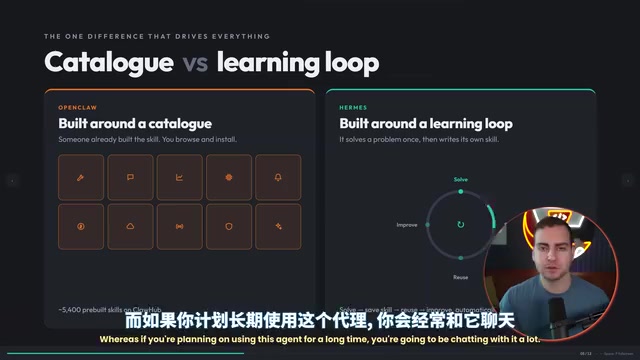
OpenClaw vs Hermes: An In-Depth Comparison and Selection Guide for AI Agent Tools
An in-depth comparison of OpenClaw and Hermes Agent, covering skill management, memory mechanisms, security, and gateway configuration to help you find the right AI agent solution.
Read more →

·6 min
AI Agent Development in Go: A Hands-On Guide to ByteDance's Eino Framework and Its Seven Core Capabilities
Build production-grade AI Agents with a pure Go stack using ByteDance's Eino framework. A deep dive into seven core capabilities: multi-Agent orchestration, long-task execution, command approval, RAG, MCP, Skills, and database reporting.
Read more →

·5 min
ECC: An Agent Enhancement Framework for AI Coding Assistants — Five Core Capabilities Explained
ECC is an agent optimization framework for AI coding assistants like Claude Code, Cursor, and Codex, enhancing them with skills, memory, security, and research-first development capabilities.
Read more →

·5 min
The Complete OpenCode Tutorial: Installation, Commands, and Advanced Practice
Systematically learn the OpenCode AI programming tool: covering both desktop and WSL installation, core commands, model and rule configuration, MCP integration, and Agent Skills.
Read more →