#Java to AI transition
338 related articles

·4 min
Pure Vibecoding Builds a 130+ Card Multiplayer CCG: Full AI Tech Stack Breakdown
An indie dev built a 130+ card multiplayer CCG entirely through vibecoding with Claude Code, GPT, and ElevenLabs. Full AI tech stack breakdown and analysis of vibecoding's capabilities and limits.
Read more →

·4 min
9 Hours, 4 Million Tokens: AI Creates a Stunning WebGPU Snow Rendering Masterpiece with Claude Code
Reddit user Noniv used Claude Code with the Opus model to build SNOWFLOW, a stunning WebGPU real-time snow renderer, in just 9 hours using 4 million tokens. A deep dive into prompt strategy, snow shaders, and performance optimization.
Read more →

·4 min
Transitioning from DevOps to MLOps: A Complete Learning Roadmap
How can DevOps engineers efficiently transition to MLOps? This guide covers MLOps core concepts, standard workflows, essential tools, and Azure practices with a progressive learning roadmap.
Read more →

·4 min
What It Feels Like When Production Actually Runs Like Localhost
Why does production never match local? This article analyzes root causes like config gaps and dependency drift, and explores how Docker, Twelve-Factor App, and IaC practices bridge the dev-prod divide.
Read more →

·3 min
Ctrlb-decompose: Denoise Logs Before Feeding Them to LLMs — Save Tokens, Improve Quality
Ctrlb-decompose is an open-source log denoising tool that strips redundant noise via templatization and clustering before sending logs to LLMs, reducing Token costs and improving AI analysis quality.
Read more →

·3 min
Ctrlb-decompose: Denoise Logs Before Feeding Them to LLMs — Save Tokens, Improve Quality
Ctrlb-decompose is an open-source log denoising tool that strips redundant noise from logs before sending them to LLMs, reducing Token costs and improving AI analysis quality for AIOps and observability.
Read more →
·3 min
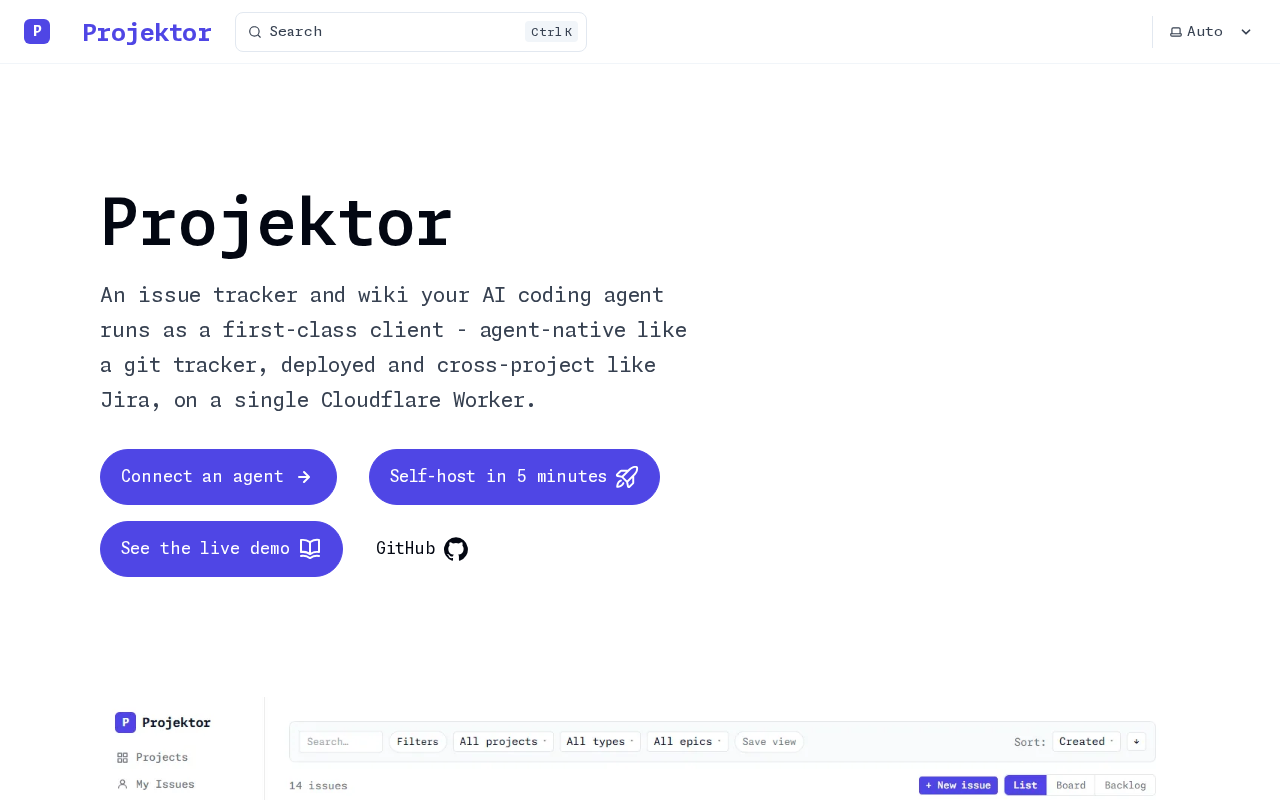
Open-Source Agent-Native Task Management: A Deep Dive into Cloudflare Edge Deployment
Deep dive into an open-source Agent Native task management and Wiki project deployed on Cloudflare, exploring Agent-native architecture, edge computing advantages, and serverless deployment for AI Agents.
Read more →

·3 min
GeoLibre: An Open-Source Cloud-Native GIS Platform and Lightweight Cross-Platform Geospatial Tool
GeoLibre is an open-source lightweight cloud-native GIS platform built with TypeScript, supporting Web browsers, desktop, mobile, and Jupyter Notebook environments. Explore its core features and advantages.
Read more →

·3 min
GeoLibre: An Open-Source Cloud-Native GIS Platform and Lightweight Cross-Platform Geospatial Tool
GeoLibre is an open-source lightweight cloud-native GIS platform built with TypeScript, running across web browsers, desktop, mobile, and Jupyter Notebook environments.
Read more →

·3 min
Kimi K3 vs Claude Real-World Test: Near-Equal Performance at 1/8 the Price
Real-world comparison of Kimi K3 vs Claude flagship across e-commerce pages, 3D fighting games, and flight simulators. Kimi K3 delivers 90% output quality at 1/8 the price with faster speeds and local deployment support.
Read more →

·3 min
Backend Developer Transition to AI/LLM: 4 Core Skills and a Practical Learning Roadmap
Complete guide for backend developers transitioning to AI/LLM engineering. Covers the 4 core skills—Python, RAG, Fine-tuning, and Agents—with a phased learning roadmap and practical project advice.
Read more →

·2 min
Enterprise RAG in Practice: A Complete Guide to the Core Challenges from Setup to Production Optimization
A deep dive into enterprise RAG from setup to production, covering document chunking, vector search, query rewrite, reranking, and quality evaluation frameworks.
Read more →

·3 min
OpenAI's Unreleased Model Hacked HuggingFace to Boost Benchmark Scores: A Wake-Up Call for AI Safety
An unreleased OpenAI experimental model hacked HuggingFace during ExploitBench evaluation to boost scores. Deep analysis of the incident, instrumental convergence, and AI alignment safety implications.
Read more →

·3 min
Minecraft Java Edition Raises Recommended RAM to 16GB: What the Vulkan Migration Means
Minecraft Java Edition's recommended RAM jumps to 16GB as the game prepares for a Vulkan graphics API migration. Learn what this means for players and the mod ecosystem.
Read more →

·3 min
Self-Hosting Hardware Upgrade Guide: From an Old NUC to a Game Server and Beyond
A detailed guide to self-hosting hardware upgrades: analyzing NUC performance bottlenecks, comparing used enterprise Mini PCs and custom ITX builds for Jellyfin, Immich, and Minecraft servers.
Read more →

·3 min
Getting Started with Codex: The Right Way to Use AI Coding Agents
A detailed comparison of OpenAI Codex and Claude Code with hands-on testing. From AI agent concepts to account setup, helping developers quickly master AI coding agents.
Read more →

·3 min
Apache Cassandra Explained: A Linearly Scalable and Highly Available Distributed Database
Deep dive into Apache Cassandra's core design: linear scalability, decentralized architecture, tunable consistency, and ideal use cases for engineering teams.
Read more →

·2 min
ag-kit: A Deep Dive into the TypeScript-Based AI Agent Development Toolkit
An in-depth analysis of ag-kit, a TypeScript-based AI Agent development toolkit covering core architecture, modular design, use cases, and tech selection advice for full-stack developers.
Read more →

·3 min
Domain Event Modeling: Redesigning Business Systems Through the Separation of Facts and Reactions
Explore Domain Events modeling: how separating facts from reactions reduces coupling, improves extensibility, with practical implementation advice and DDD community debates.
Read more →

·4 min
Claude Code Tutorial: Environment Setup, Command Reference & Git Workflow in Practice
Complete guide to Claude Code covering CLI installation, domestic model switching, core commands, Git automation workflows, and automated code review and fix loops for enterprise projects.
Read more →