#KV cache bandwidth
193 related articles

·3 min
AI Compute Prices Surge Across the Board + Rise of Two Domestic Coding Tools: The Wave of Self-Reliance Arrives
The U.S. imposes its strictest-ever export controls on top AI models, while Zhipu AI and Moonshot launch self-developed coding tools the same day—amid rising GPU and cloud compute prices. A deep dive into three trends driving cost rationality and tech autonomy.
Read more →

·4 min
From Enter to First Token: Decrypting the Full LLM Inference Pipeline (Autoregression, KV Cache & Decoding Strategies)
From pressing Enter to the first character appearing, what happens inside an LLM? This article breaks down autoregressive generation, KV cache acceleration, and decoding strategies like temperature, Top-k, and Top-p.
Read more →

·5 min
The Five Unsolved Challenges of Production MLOps: A Deep Dive into GPU Scheduling, Fault-Tolerant Training, and Model Observability
A deep dive into the five genuinely tough challenges of production MLOps: fault-tolerant training on Spot instances, cross-team GPU scheduling, data reproducibility, model observability, and inference cost optimization.
Read more →
Mesh LLM: A Practical Exploration of B…
·3 min
Mesh LLM: A Practical Exploration of Building a P2P Distributed AI Inference Network with iroh
Mesh LLM leverages the Rust P2P framework iroh to integrate compute from scattered nodes, exploring a viable path for decentralized LLM inference. This article analyzes its architecture, challenges, and prospects.
Read more →

·3 min
SlickToken: A Deep Dive into GPU Fleet and Agentic Workflow Planning
SlickToken is a GPU fleet and agentic workflow planning tool for AI teams, supporting offline simulation, load testing, and capacity planning—no internet required to protect enterprise data.
Read more →

·4 min
GPT-5.6 Released: Coding Benchmarks Surpass Rivals, Inference Speed 10x Faster
Just 12 days after a rival launch, OpenAI released GPT-5.6, scoring 91.9% on Terminal-Bench 2.1 to surpass competitors. Ultra mode supports multi-agent collaboration, inference hits 750 tokens/sec.
Read more →

·4 min
Gemini Omni Hands-On: A Deep Dive into Google's Omni-Modal Video Generation Capabilities
An in-depth hands-on review of Google's Gemini Omni omni-modal AI model, covering video generation workflows, prompting tips, visual quality, and comparisons with Sora and other competitors.
Read more →

·4 min
Unsloth Releases Qwen3.6 NVFP4 Quantization: 2.5x Faster with Zero Accuracy Loss
Unsloth releases NVFP4 quantization for Qwen3.6 using W4A4 true 4-bit Tensor Core computation, delivering up to 2.5x inference speedup over NVIDIA's official implementation with accuracy matching or exceeding BF16 on benchmarks like MMLU-Pro.
Read more →

·3 min
Benchmarking LLMs on Smartphones: A Deep Dive into the MELTing Point Benchmark
The MELTing Point paper is the first to evaluate mobile LLM performance in real user scenarios, covering iPhone, Samsung, Pixel and more, testing TinyLlama, Mistral-7B and others—revealing GPU inference gains, 47°C heat warnings, and prefill-decode disaggregation.
Read more →

·3 min
CPU-Native Language Models: Breaking Through Inference Bottlenecks with Memory Bandwidth Co-Design
SiliconLLM builds a CPU-native LLM architecture from scratch, combining selective SSM, ternary (1.58-bit) LUT MLP, and granular MoE, co-designed around the L3 cache bandwidth cliff. Ternary kernels show 4-5x speedup over fp32.
Read more →

·4 min
AMD Ryzen AI Halo Hands-On: Can x86 Architecture Challenge NVIDIA's DGX Spark?
In-depth review of the AMD Ryzen AI Halo mini AI box: powered by the Ryzen AI Max Plus 395 (Strix Halo) chip with 128GB unified memory, priced at $4,000. Compared against NVIDIA's DGX Spark across token generation, prefill speed, and x86 advantages.
Read more →

·4 min
INT4 ConvRot W4A4 Quantization: Running Large Image Models on Low-VRAM GPUs in ComfyUI
An in-depth look at INT4 ConvRot W4A4 quantization, covering conversions of Krea2, Qwen-Image, and other diffusion models to help ComfyUI users run large image models on 8GB GPUs.
Read more →

·6 min
DeepSeek Builds Its Own AI Chips: The Strategic Logic and Challenges Behind Compute Independence
DeepSeek is entering AI chip development, targeting compute autonomy. This article analyzes its motivations, software-hardware synergy, chip R&D challenges, and impact on China's AI vertical integration.
Read more →
·5 min
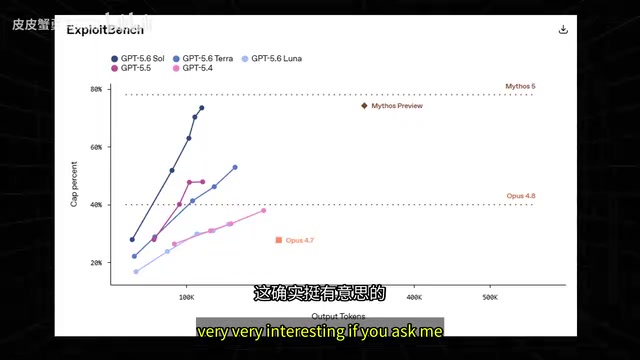
GPT-5.6 Released: Outperforms Rivals but Halted by Government—Cybersecurity Capabilities Trigger Regulatory Red Line
OpenAI releases GPT-5.6 (Sol/Terra/Luna), beating Anthropic on Terminal Bench at ~40% lower cost. But its cybersecurity capabilities hit danger thresholds, limiting access to trusted partners at government request.
Read more →

·7 min
GPT-5.6 and Grok 4.5 Launch Simultaneously, Meta Unveils Agent-Based Image Model
OpenAI GPT-5.6 expands its preview, xAI Grok 4.5 opens access at the same time, Meta releases the Agent-based Muse Image model and Muse Video model, while Apple and DeepSeek launch in-house AI inference chip programs. A quick look at the week's five biggest AI stories.
Read more →
·5 min
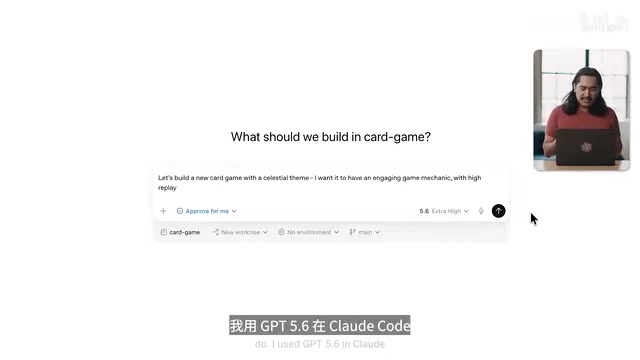
GPT-5.6 Released: Hands-On Analysis of Programmatic Tool Calling and Autonomous Agents
GPT-5.6 is officially released with core upgrades including programmatic tool calling, autonomous subagent delegation, and higher token information density. A hands-on card game build reveals its Agentic power.
Read more →
Local Coding Agents in Practice: A Com…
·6 min
Local Coding Agents in Practice: A Complete Guide to Replacing Your Claude Subscription with Open-Source Models
An in-depth look at local coding agents—core concepts, advantages, and real challenges. Compare against Claude Code and learn to build a zero-subscription, private AI coding workflow with open-weight models.
Read more →
·5 min
GPT-5.6 Triple Launch: Understanding the Positioning and Key Differences of Sol, Terra, and Luna
OpenAI released three GPT-5.6 models—Sol, Terra, and Luna—covering everything from flagship reasoning to lightweight speed. A deep dive into their positioning, performance differences, pricing, and industry signals.
Read more →

·6 min
A Deep Dive into the vLLM Inference Framework: Core Principles of Throughput Optimization and Interview Guide
An in-depth analysis of the vLLM inference framework's core principles: from the meaning of throughput (tokens/s), to the bottlenecks of autoregressive generation, to KV Cache, PagedAttention, and continuous batching.
Read more →

·7 min
Grok 4.5 Launch: Coding AI Market Reshuffle, Anthropic Claims Half the Territory
Grok 4.5 launches at just $0.49 per task, 90% cheaper than rivals. Anthropic's Claude Code claims 50% of the AI coding market. SambaNova raises $1B. Read the latest AI market shifts.
Read more →