#KV cache bandwidth
186 related articles

·2 min
DeepSeek Speculative Decoding Algorithm Merged into vLLM Main Branch — Single-User Token Speed Jumps Dramatically
DeepSeek's speculative decoding algorithm (DSpark) is now merged into vLLM main branch, natively supporting Qwen3 and Gemma. Tests show ~150× single-user token speed gains and ~40–50% throughput improvement.
Read more →

·6 min
Cursor Meets Grok 4.5: A Hands-On Test of an AI Coding Assistant That's 5x Faster with Cleaner Output
A developer deeply tests Grok 4.5 High Fast in Cursor, finding it rivals Claude Opus in quality but runs 5x faster with cleaner, filler-free output. Full hands-on review and analysis.
Read more →

·5 min
GPT-5.6 Trio Released: A Deep Dive into Sol/Terra/Luna and the Breakthrough in Design Judgment
OpenAI officially releases the GPT-5.6 series with three models: flagship Sol, balanced Terra, and economy Luna. A deep dive into its core breakthroughs—a step change in design judgment and enhanced computer-use capabilities.
Read more →

·2 min
GPT-5.6 Three-Model Showdown: A Complete Breakdown of So, Terra, and Luna
OpenAI's GPT-5.6 preview introduces So, Terra, and Luna. All three score perfect marks on long-horizon agentic tasks, with Terra priced 50% below GPT-5.5.
Read more →

·4 min
GPT-5.6 Three-Model Deep Dive: Sol, Terra, and Luna Benchmarked and Compared
OpenAI's GPT-5.6 series benchmarked: flagship Sol, balanced Terra, and lightweight Luna tested head-to-head. Agentic tasks rival top models, Luna starts at $1/M tokens. Full comparison with Fable 5 and Opus 4.8.
Read more →

·4 min
The OpenAI Codex Product Philosophy: How AI Engineers Are Shifting from Writing Code to Managing Agents
OpenAI Codex isn't about replacing engineers—it's about empowering them. A deep dive into the AI Engineer conference talk: from code completion to long-horizon agents, Value Maxing, and managing agent teams.
Read more →

·5 min
Real-World Comparison of 6 Open-Source LLMs for On-Premise Deployment: A Selection Guide to Avoid Pitfalls
A hands-on comparison of 6 open-source LLMs (DeepSeek, Qwen3, Zhipu GLM, Kimi K2, MiniMax M3, Tencent Hunyuan 3) for on-premise deployment—covering hardware cost, inference efficiency, and deployment difficulty.
Read more →

·6 min
Tencent Hunyuan HY3 Official Version Open-Sourced: The Strongest Under 300B, at 1 Yuan per Million Tokens
Tencent Hunyuan HY3 official version is open-sourced under Apache 2.0, priced as low as 1 yuan per million input tokens, with major gains in agents, reasoning, coding, and long context. On the same day, Meituan open-sourced its trillion-parameter LongCat 2.0.
Read more →

·6 min
AI's Second Half: The Decisive Battle Shifts from Models to Infrastructure
Model capabilities are converging, making inference cost and scalability the new focus of AI competition. A deep analysis of AI infrastructure's core layers.
Read more →

·7 min
Krea2 Tested: Does the FP8 vs BF16 Quality Gap Still Exist?
A Reddit user compared FP8 and BF16 precision on the Krea2 model and found almost no difference in image quality. This article analyzes the technical reasons behind the shrinking quantization gap and its real-world impact on VRAM usage and inference speed.
Read more →

·5 min
TensorRT Multi-Device Inference: Engineering Practices for Breaking Through Single-GPU Memory Bottlenecks
NVIDIA TensorRT now supports multi-device inference via pipeline and tensor parallelism, distributing large models across multiple GPUs to break through single-card memory limits.
Read more →

·7 min
Reverse-Engineering CUDA-checkpoint: The Technical Principles and Practice of Cracking GPU Cold Starts
An in-depth analysis of reverse-engineering Nvidia CUDA-checkpoint to accelerate GPU cold starts. Covers checkpoint/restore, Serverless GPU prospects, and VRAM snapshot challenges.
Read more →

·6 min
Samsung's Chip Profit in a Single Year Exceeds 40 Years Combined: The AI Wave Triggers a Memory Price Crisis
Samsung's chip division is set to earn more profit in one year than in its past 40 years combined, with quarterly profit surging 19x YoY, surpassing NVIDIA. AI data centers are seizing HBM and DRAM capacity, driving up DDR5 and SSD prices.
Read more →

·6 min
Grok 4.5 Deep Dive: Coding on Par with Top Models, at a Fraction of the Cost
A senior developer's 24-hour deep test of Grok 4.5: a 1.5T-param MoE model at $2/M input tokens, with coding benchmarks rivaling GPT-5.5. Real performance, token efficiency, and limits explained.
Read more →

·3 min
Running LLMs Locally: The Illusion vs. the Real Value of Open-Weight Models
Open weight ≠ runnable locally. This article breaks down the hardware barriers, VRAM limits, electricity costs, and parallelism constraints of models like GLM 5.2 and DeepSeek — revealing where open-weight models truly add value: driving cloud competition, not home replication.
Read more →

·5 min
Is AI Inference Really Profitable? Deconstructing the Cost Economics of Inference vs. Training
Are AI companies really losing money? This article deconstructs the fundamental differences between training and inference costs, revealing why pure AI inference services have structural profitability.
Read more →

·6 min
Rising RAM Prices Push Up Gaming Laptop Costs? A Value-Focused Buying Guide
Rising RAM and storage prices have eroded gaming laptop value. This guide breaks down the causes, cost pass-through, and offers practical buying advice plus MSI value picks.
Read more →

·6 min
Xiaomi XiaoAI 10.1-inch Smart Control Panel: Is the AI LLM Integration Worth It?
Xiaomi XiaoAI 10.1-inch Smart Control Panel features AI LLM Q&A, WeChat calling, and whole-home Mi IoT control. Priced at 839 yuan, ~679 yuan after national subsidy. An in-depth review of AI capabilities, screen experience, and smart home integration.
Read more →

·6 min
AMD Ryzen AI Halo Dev Kit: A $4,000 Local LLM Powerhouse Taking on Apple and NVIDIA
AMD officially unveils the Ryzen AI Halo local AI dev kit, priced around $4,000 with 128GB unified memory, capable of running 70B LLMs locally. An in-depth look at its specs, pricing, and market competition.
Read more →
·5 min
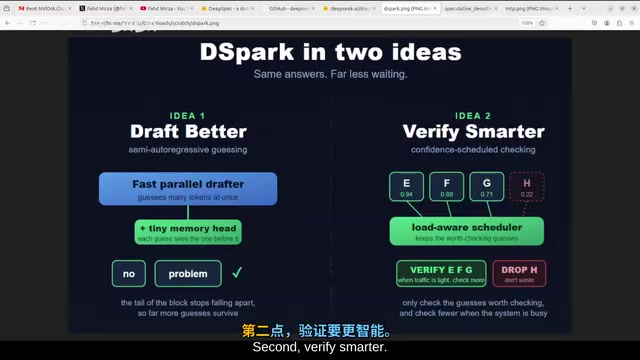
DeepSeek DSpec Hands-On: How Speculative Decoding Accelerates LLM Inference by 6x
Hands-on report on DeepSeek's open-source inference acceleration toolkit DSpec: draft model + smart scheduling delivers lossless speedup, hitting acceptance length 6 on GSM8K and reproducing official data.
Read more →