#Karpathy rules
119 related articles

·3 min
OpenAI Merges ChatGPT and Codex: The Birth of an AI OS and Four Core Strategies
OpenAI merges ChatGPT and Codex into a Super App, unveiling the early blueprint of an AI OS. A deep-dive into four core strategies: Loop workflows, tool stack economy, multi-threading, and Sites.
Read more →

·3 min
AI Code Getting Worse with Every Fix? A Three-Layer Closed-Loop Engineering Methodology to Break the Cycle
AI code spiraling out of control? This article breaks down a three-layer engineering system — Prompt rules, Skill workflows, and Harness feedback loops — with real-world results showing pass rates rising from 70% to 98%.
Read more →

·2 min
Vibe Coding: A New Way to Learn Programming from Scratch in the AI Era
What is Vibe Coding? This in-depth guide explores AI-assisted programming for beginners: skip the syntax grind, build your first project in 15 minutes, and develop with intent.
Read more →
·4 min
Building an LLM Wiki with Agents: Let AI Automatically Manage Your Knowledge Base
A deep dive into the LLM Wiki: how Agents auto-build indexes and bidirectional links to solve slow, Token-heavy retrieval in growing knowledge bases. Full breakdown of its three-layer structure.
Read more →

·6 min
Vibe Coding in Practice at Big Tech: How Frontend Engineers Can Avoid Being Replaced in the AI Era
A big-tech interviewer reveals: junior/mid frontend dev is being replaced by AI. This article breaks down 3 core Vibe Coding interview questions to help you master key skills for the AI-assisted coding era.
Read more →

·4 min
Proactive AI Agent Monitoring: Stop Fighting Fires, Catch Bugs Before Your Customers Do
A real case study: team builds AI Agent "Oogway" to auto-patrol after every job, investigate anomalies, create tickets, and update a knowledge Wiki — catching bugs before customers do.
Read more →

·3 min
Vibe-Trading: The Rise and Practice of Open-Source AI Trading Agents
HKUDS's open-source Vibe-Trading gained nearly 1,000 GitHub stars in a day. This deep dive covers its LLM+Tool Calling architecture, core modules, and the risks of AI-driven trading agents.
Read more →

·4 min
VibeCoding Prototype Delivery Framework: A Complete Guide to Bridging PRD and Development
VibeCoding's AI prototype delivery framework bridges PRD to development with requirements binding, page management, version archiving, and cloud preview — delivering Axure-level collaboration.
Read more →

·5 min
Advanced Vibe Coding: How SuperPowers and GStack Make AI Coding Truly Converge
In the age of AI-assisted programming, how do you make tools like Codex and Claude Code output more stably? This article deeply analyzes SuperPowers and GStack, covering project-level orchestration and module-level code layering to help developers master AI coding.
Read more →

·4 min
AI Weekly: GPT-5.6 Launches in Three Tiers, Open-Source Inference Frameworks and Robot Safety Break Through Across the Board
This week in AI: OpenAI launches GPT-5.6 in three tiers (Sol/Terra/Luna) hitting 91.9% on coding benchmarks; DeepSeek and PKU open-source DSpark for 85% faster inference; Prime Intellect trains trillion-param models on just 28 H200s; Anthropic Claude enters Slack.
Read more →

·7 min
6 Core Standards of a High-Value Agent Project That Impress Interviewers
Most Agent projects lack competitiveness in interviews due to missing business value and engineering depth. This article breaks down the 6 core standards of high-value Agent projects.
Read more →
·6 min
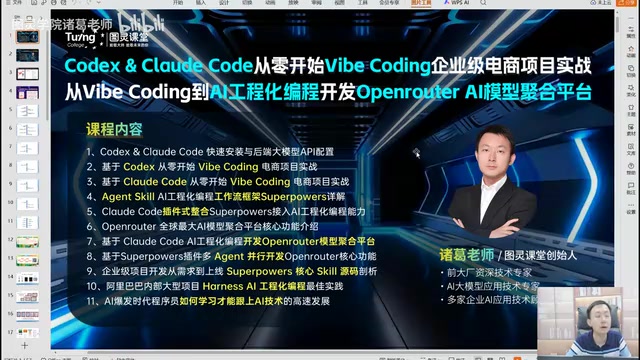
Understanding the Limits of Vibe Coding: A Practical Guide to AI Engineering-Grade Programming
An in-depth look at the difference between Vibe Coding and AI engineering-grade programming. Can AI replace programmers? From Claude Code and Codex to Cursor, revealing the real limits, enterprise pain points, and engineering solutions of AI coding tools.
Read more →

·6 min
Getting Started with Vibe Coding: Building Software with Natural Language from Scratch
Vibe Coding lets you build software with no coding background—just talk to AI in natural language. Learn its core ideas, learning path, and practical tools.
Read more →

·6 min
Vibecoding in Practice: Architecture Trade-offs and Implementation of a Dual-Engine TTS Router
Alibaba Cloud vs Volcano Engine TTS: why "I want both" is the mature engineering decision. Dual-engine routing design, priority trap debugging, and vibecoding-powered implementation.
Read more →

·7 min
Engineering Vibe Coding in Practice: Taming AI Programming with Superpowers and gstack
A deep dive into engineering Vibe Coding: using Superpowers for project-level decomposition and gstack for module layering and constraints to tame AI coding assistants like Codex and Claude Code.
Read more →

·3 min
Meta Open-Sources Astryx: The First Design System Built for AI Agents
Meta open-sources Astryx on GitHub — an Agent Ready design system built for AI coding assistants. 5,600+ Stars and growing. Learn how it tackles AI hallucination in UI code generation.
Read more →

·6 min
What Is Vibe Coding? A Complete Breakdown of the LLM + Agent + Workflow Three-Layer Architecture
Vibe Coding, coined by ex-Tesla AI Director Karpathy, redefines AI programming. This article breaks down the LLM + Agent + Workflow three-layer architecture.
Read more →

·3 min
Spec-Driven Development: Moving Beyond Vibe Coding for More Reliable AI-Generated Code
Spec-Driven Development solves inconsistent AI coding quality: generate requirements and design docs before writing code, giving AI a clear blueprint. Covers core workflow, three key practices, and AWS's Kiro tool.
Read more →

·3 min
How MCP Enables AI Agents to Automatically Follow Design Systems
How MCP connects design systems with AI Agents for real-time spec queries and automatic compliance. Covers context engineering, MCP architecture, and AI-driven development.
Read more →

·3 min
Why AI Coding Tools Haven't Delivered Real Productivity Gains: Redesigning the Software Development Lifecycle
Research shows AI coding tools actually decreased developer productivity by 20%. The issue isn't AI's coding ability—it's that the entire delivery process hasn't been redesigned around AI.
Read more →