#LLM selection
971 related articles

·3 min
How to Choose an AI Agent Platform for Your Team: 5 Evaluation Dimensions & Decision Framework
Choose an AI Agent platform by evaluating model flexibility, observability, tool integration, security compliance, and total cost. A complete decision framework to avoid vendor lock-in.
Read more →

·4 min
Opus 5 Real-World Testing: Cheaper Yet Stronger — Why It's Now My Default Coding Model
In-depth testing of Claude Opus 5's coding abilities vs Fable 5 and 5.6 Sol. Why Opus 5 outperforms pricier models at half the token cost, plus selection guide and distillation explained.
Read more →

·4 min
Kimi K2/K3 Technical Speculation: Deep Dive into RL Hyperparameters and Multi-Teacher Distillation
Deep analysis of RL hyperparameter tuning challenges and 9-policy multi-teacher distillation in Kimi K2/K3 training, exploring the shift from scale to training craft.
Read more →

·3 min
SeaTicket: An AI Agent That Automatically Resolves GitHub and Discord Issues
SeaTicket is an AI Agent that automatically resolves GitHub Issues and Discord questions. This article analyzes its architecture, use cases, challenges, and value for open-source maintenance.
Read more →

·3 min
7 Vibe Coding Agents Tested & Ranked: Which AI Coding Tool Should Beginners Choose?
Hands-on comparison of 7 Vibe Coding agents including Trae, Cursor, Claude Code, Codex, WorkBuddy & CoderWork, ranked by beginner-friendliness and performance.
Read more →

·3 min
A 9B Model Beats Frontier LLMs After Just $500 in RL Fine-Tuning
Just $500 in RL fine-tuning enables a 9B open-source model to outperform frontier LLMs on catalog review tasks. Analysis of when small-model RL works and its enterprise implications.
Read more →

·3 min
Apple Silicon LLM Inference Speed Benchmarks: A Complete Guide to Local Large Model Performance on Mac
In-depth analysis of Apple Silicon local LLM inference speed benchmarks covering M-series memory bandwidth, model quantization, MLX framework optimization, and Mac configuration guidance.
Read more →

·3 min
The Real Daily Life of MLE and MLOps Engineers: Key Differences Between Three Roles and Career Paths
An in-depth look at the real daily work of data scientists, MLEs, and MLOps engineers — covering responsibilities, essential tools, and career paths to help you find your direction in AI.
Read more →

·2 min
Kimi K3 Launches on Telnyx Inference API: A New Path for Chinese LLMs Going Global
Moonshot AI's Kimi K3 is now available on Telnyx Inference API. Explore how Chinese LLMs are entering global developer ecosystems through third-party inference platforms.
Read more →

·4 min
Getting Started with AI Agent Development: A Complete Guide from Concept to Practice
A comprehensive guide to AI Agent architecture and development, covering automated marketing, intelligent customer service, and investment analysis scenarios with single and multi-agent collaboration.
Read more →
·3 min
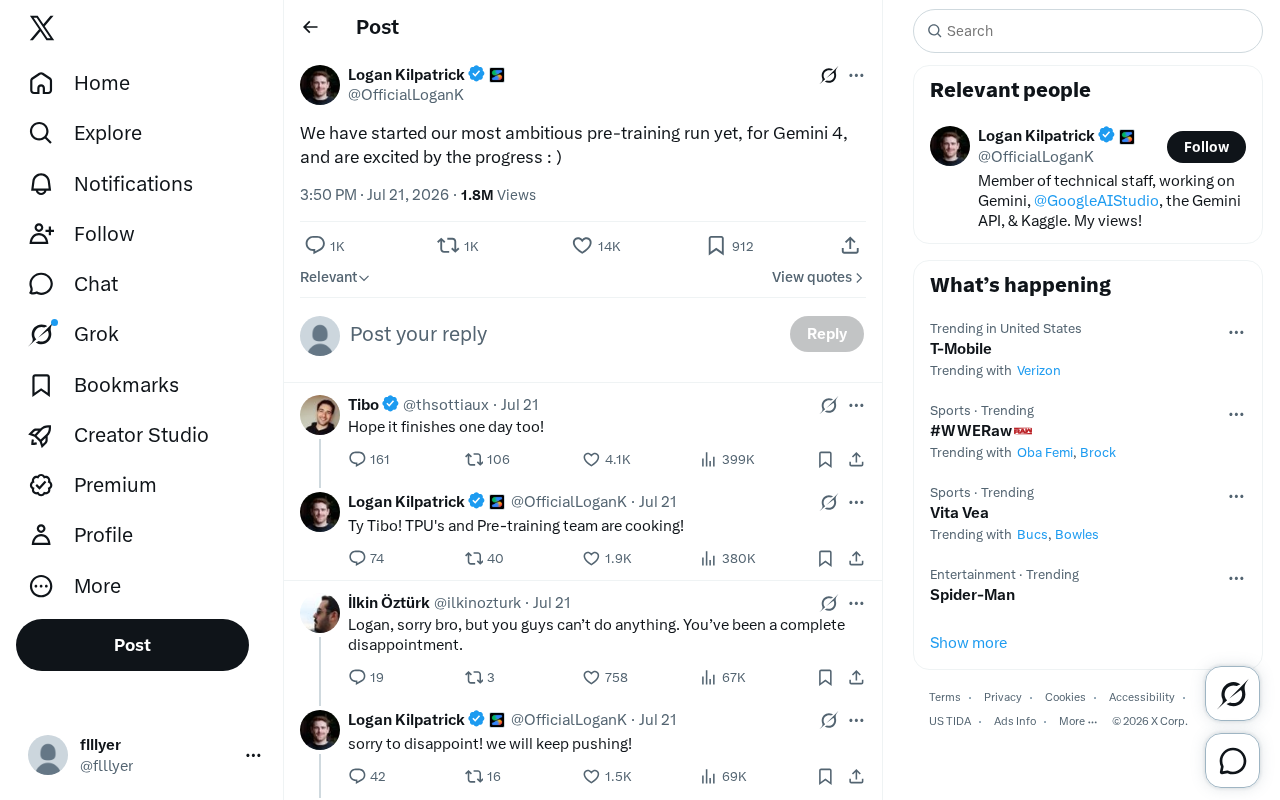
Google Launches Gemini 4 Pre-training: Its Most Ambitious AI Model Training Yet
Google DeepMind announces Gemini 4 pre-training has begun, calling it their most ambitious training yet. A deep dive into its technical direction, compute scale, multimodal breakthroughs, and competitive impact.
Read more →

·4 min
What Is the True Nature of Large Language Models? A Super Compressor Analogy to Help You Fully Understand
Large models aren't search engines — they're more like super compressors. This article explains how LLMs compress data to learn semantic patterns, and explores the phenomenon of intelligent emergence.
Read more →

·3 min
Deconstructing Agents: Task Decomposition, Context Compression, and the Case Against Heavy Frameworks
A deep engineering analysis of Agent internals: how LLMs decompose tasks via tool calling, why context compression and memory are essential, and why solo developers should avoid heavy frameworks.
Read more →

·3 min
Getting Started with Codex: A Complete Guide to AI Agent Programming Tools
Compare Codex and Claude Code AI agent programming tools. Learn AI Agent concepts, tool selection, cost analysis, and GPT account setup in this complete beginner's guide.
Read more →

·3 min
Cursor Alternatives Compared: A Guide to 5 AI Coding Tools
Compare 5 Cursor alternatives — from GitHub Copilot and Windsurf to open-source Cline and Continue — covering model freedom, workflow integration, cost, and privacy.
Read more →

·4 min
LibTV Hands-On: A Full Breakdown of How an AI Agent Produces an Animated Short in One Day
Hands-on test of LibTV's AI Agent: from script and storyboarding to video compositing, one person completes an animated short in a day. Full breakdown of the Skill library, node workflow, and Story Board features.
Read more →

·4 min
AI Agent Development in Practice: A Complete Path from Zero to Production
A systematic guide to AI Agent development covering core modules, framework selection, tool calling, data preparation, and production deployment to help developers build production-ready Agent applications.
Read more →

·3 min
Agent Skills Explained: Solving the MCP Context Bloat Problem
Deep dive into Anthropic's Agent Skills mechanism, explaining how Progressive Disclosure solves MCP context bloat and tool calling accuracy issues in AI agents.
Read more →
·3 min
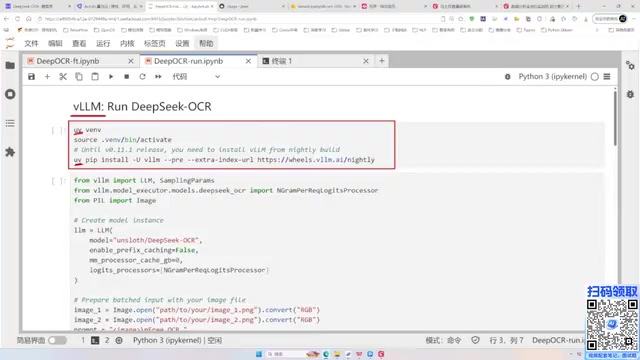
DeepSeek-OCR Deployment & Fine-Tuning in Practice: From vLLM Inference to Unsloth Fine-Tuning
Complete guide to DeepSeek-OCR from vLLM inference deployment and Unsloth model loading to fine-tuning, covering cloud server setup, GPU selection, and code examples — all on a single 4090 GPU.
Read more →

·3 min
Deep Dive into the Kimi-K3 Technical Report: A Comprehensive Analysis of Architecture, Long-Context Processing, and Reasoning Capabilities
Deep dive into Moonshot AI's Kimi-K3 technical report, analyzing its long-context processing, MoE architecture, reasoning improvements, and its position in global AI competition.
Read more →