#LangChain Expression Language
192 related articles

·3 min
Getting Started with LangChain 1.3: Building Intelligent Agent Applications with Deep Agent
Learn LangChain 1.3 core concepts including LLM model abstraction, RAG retrieval-augmented generation, and Agent orchestration. Build a Deep Agent with planners, tools, and reflection modules.
Read more →

·3 min
Waku Agent Deep Dive: The Four Core Pillars of a Local-First AI Assistant
A deep dive into Waku Agent's four pillars: Loop Engineering, three-tier Memory system, Eval assessment, and the Harness scaffold. Full walkthrough of a local-first AI assistant from task execution to memory consolidation.
Read more →
The Evolution of Coding Agents: A Para…
·2 min
The Evolution of Coding Agents: A Paradigm Shift from Reactive Response to Proactive Planning
Coding agents are evolving from reactive code completers to proactive planners. Explore the "think ahead of time" paradigm, Plan-and-Execute architecture, and its impact on developer workflows.
Read more →

·3 min
Can Small Local Models Become Software Domain Experts? A RAG Architecture Deep Dive
Can small local models (1.5B–3B) become software domain experts? This article breaks down CPT, SFT, RAG, and Agent architectures, with a layered RAG-centric design for CPU-only local deployment.
Read more →

·3 min
Introducing LLM Gateways in Production: Five Key Concerns and the Prerequisites for Trust
Introducing an LLM Gateway in LangChain production brings unified APIs and auto-fallback, but also quality drift, cost spikes, and debug black boxes. This article breaks down the five key engineering concerns and what it takes to earn trust.
Read more →

·4 min
Six Layers of Defense: Engineering Reliable Structured Output from LLMs
LLM JSON output unstable in your Agent? This guide covers 6 engineering layers: constrained decoding, validation retry, fake tool calls, Logit Masking, Schema contracts, and anti-pattern locking.
Read more →

·2 min
LangChain Chain & Memory: Building AI Applications with Persistent Memory
Learn how LangChain's Chain and Memory components overcome LLM limitations. Build intelligent AI apps with multi-step workflows and persistent memory.
Read more →

·3 min
Complete Guide to LangChain 1.3: From Models and Agents to DeepAgent Architecture
A complete guide to LangChain 1.3: LLM invocation, Agent tool calling, Harness architecture, LangGraph, RAG, and DeepAgent — build a clear, modern Agent development knowledge base.
Read more →

·3 min
AgentScope 2.0 Deep Dive: Six Core Upgrades for Production-Grade Multi-Agent Development
AgentScope 2.0 by Alibaba's Tongyi Lab delivers six major upgrades: typed event streaming, dangerous instruction interception, human-in-the-loop, concurrent execution, workspace system, and agent-as-a-service for production-grade multi-agent development.
Read more →

·3 min
AI Agents Are Reshaping Software Testing: A Practical Guide from Cursor to LangChain
A deep dive into AI-powered testing: Cursor Skills, Coze agents, and LangChain multi-agent systems for automated test case generation, BDD, and review workflows.
Read more →
·3 min
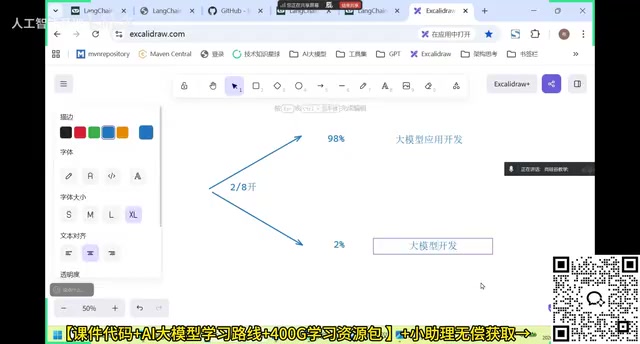
LangChain Practical Guide: From RAG Applications to Intelligent Agent Development
A comprehensive guide to LangChain: core concepts, RAG applications, Agent development, version selection (0.3/1.0), and career opportunities for Java/Python developers entering LLM development.
Read more →

·2 min
The AI Model Release Frenzy: The Industry Logic Behind the Tech Arms Race
OpenAI, Google, Anthropic and others are releasing models back to back. We analyze the competitive logic, double-edged effects, and what it means for developers, users, and creators.
Read more →

·3 min
How to Choose AI Courses: A Practical Guide to Avoiding Pitfalls and Leveling Up
How to find AI courses worth paying for amid the flood of beginner content. A guide to evaluating courses on Agentic workflows, RAG, fine-tuning, and more.
Read more →
AI Agent in 100 Lines of Lisp: Minimal…
·2 min
AI Agent in 100 Lines of Lisp: Minimal Code Reveals the True Nature of Intelligent Agents
A fully functional AI Agent in just 100 lines of Lisp reveals the essence of the ReAct loop. Deep dive into Agent architecture, Lisp's unique strengths, and minimalist engineering philosophy.
Read more →

·5 min
The Definitive Guide to Claude Code: Core Methodology and Best Practices for Agentic Programming
A deep dive into Claude Code, the definitive course from DeepLearning.AI and Anthropic: from agentic principles and context optimization to three hands-on cases—RAG chatbot, Figma-to-frontend, and data analysis. Master AI-assisted coding methodology.
Read more →

·2 min
Testing the Claude Code Job Hunting Agent: A Deep Dive into AI Job Search, the 20K-Star Open Source Project
AI Job Search is an open source, Claude Code-powered job search automation tool with over 20K GitHub stars. It offers resume tailoring, cover letter generation, dual-Agent QA, and keeps humans in control of submission.
Read more →

·5 min
How Can Working IT Professionals Learn AI Efficiently? A Practical Learning Path from Zero to Real-World Projects
Limited time but want to learn AI systematically? This guide maps out a practical learning path for working IT pros—from AI application engineering and prompt engineering to RAG and Agents.
Read more →

·5 min
Practical AI Cost Optimization: A Deep Dive into Intelligent Routing and Context Compaction
AI bills keep soaring? This article breaks down two core cost-reduction strategies: intelligent routing via an LLM Gateway, and context compaction to cut Token usage—no major refactoring needed.
Read more →
·6 min
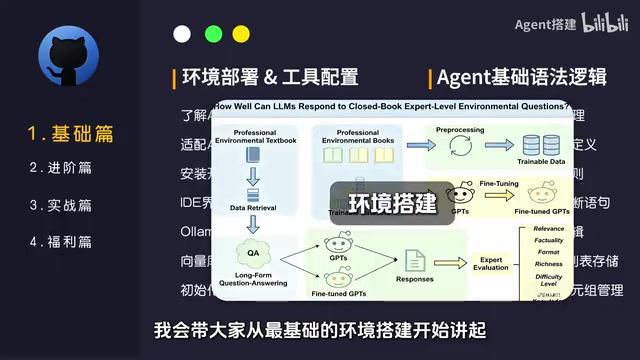
AI Agent Development Learning Path: Four Stages from Zero to Hands-On Projects
A systematic breakdown of the AI agent development learning path, covering four stages: fundamentals, RAG knowledge bases, tool use, multi-agent collaboration, and hands-on projects.
Read more →

·4 min
The Complete AI Agent Development Learning Path: From Zero to Enterprise-Grade Practice
A systematic AI Agent development learning path covering fundamentals, prompt engineering, tool calling, multi-agent collaboration, and hands-on practice with LangChain, CrewAI, and Dify.
Read more →