#LangChain Expression Language
187 related articles
 Tutorials
·2 min
LangChain LCEL Expression Language Deep Dive: Pipe Operator, RunnableLambda, and Parallel Execution in Practice
Deep dive into LangChain LCEL core concepts: pipe operator internals, RunnableLambda function wrapping, RunnableParallel retrieval, and RunnablePassThrough with complete code examples and RAG practice.
Read more →

·3 min
Agent DevTools: A Local Debugger Designed Specifically for AI Agents
Agent DevTools is an open-source local debugger for AI Agents that lets you inspect prompts, memory, retrieval, and tool calls, with good vs. bad run comparison to quickly find root causes.
Read more →

·3 min
Channels SDK: Seamlessly Connect AI Agents to Slack, Teams, and Any Platform
How Channels SDK solves AI Agent channel distribution through a unified middleware abstraction layer, enabling one-time development with multi-channel deployment to Slack, Teams, and beyond.
Read more →

·3 min
Machine Learning Project Portfolio: A Complete Guide to Building Resume-Worthy ML Projects
From project selection to deployment, learn how to build resume-worthy ML projects. Covers end-to-end workflows, tiered project recommendations, and practical tips for ML learners transitioning from beginner to intermediate.
Read more →

·2 min
How AI Product Launches Ignite Developer Community Sentiment: From Euphoria to Rational Evaluation
Deep analysis of how AI product launches ignite developer community sentiment, exploring the industry trends behind collective excitement on Reddit, Discord, and X, and how developers shift from emotional reactions to rational technical evaluation.
Read more →

·2 min
LangSmith Gateway Explained: Core Capabilities and Architecture of LangChain's Enterprise AI Model Gateway
Deep dive into LangSmith Gateway's core features including cost control, rate limiting, PII redaction, coding agent integration, and open-source model access for enterprise AI infrastructure.
Read more →

·2 min
k-skill: The Open-Source Skill Library That Helps AI Agents Better Understand Korean Users
Deep dive into the trending GitHub project k-skill — an open-source skill library designed for Korean AI Agents with 6,600+ Stars and insights for localized Agent development.
Read more →

·2 min
General Agents Are Essentially Coding Agents: The Paradigm Shift from Tool Calling to Code Execution
Explore why general AI agents are essentially coding agents. From Turing completeness to composability and verifiability, discover the paradigm shift from Function Calling to Code as Action.
Read more →

·4 min
Tiling Window Management: A New Interaction Paradigm for Multi-Agent Conversations
Exploring tiling window management for multi-agent AI conversations: how it solves parallel monitoring and observability challenges, real-world limitations, and the evolution from chat boxes to control consoles.
Read more →

·4 min
FlowTask 2.0: Building a Unified Enterprise Memory Layer for AI Agents
FlowTask 2.0 proposes a "Company Brain" that unifies data from Email, Slack, WhatsApp and more to provide real-time enterprise context for AI Agents, reducing repetitive context-feeding costs.
Read more →

·2 min
Grok 4.5 Released: A Next-Gen AI Model Targeting Coding and Agentic Tasks
Grok 4.5 is officially released, purpose-built for coding, agentic tasks, and knowledge work. A deep dive into its core positioning, efficient reasoning, three key use cases, and value for developers.
Read more →

·3 min
OpenComputer: Deploy Managed AI Agents with a Single Sentence — A Minimalist Launch Solution for Developers
OpenComputer is an AI agent managed deployment platform that gives you a live agent URL from a single description. This article analyzes its workflow design, market positioning, and security/cost considerations.
Read more →

·2 min
OpenAI Model Out of Control for 4 Days? Unpacking the Truth Behind the "Autonomous Attack" Rumor
A Reddit post claims OpenAI's rogue model roamed the internet for 4 days and launched attacks. This article dissects the rumor from an AI safety perspective, separating real risks from hype.
Read more →

·4 min
LangChain Guardrails Explained: Building Safe and Controllable AI Agents
A detailed guide to LangChain Guardrails covering layered ecosystem architecture, middleware implementation, deterministic and model-driven protection for building production-grade secure AI Agents.
Read more →

·3 min
Backend Developer Transition to AI/LLM: 4 Core Skills and a Practical Learning Roadmap
Complete guide for backend developers transitioning to AI/LLM engineering. Covers the 4 core skills—Python, RAG, Fine-tuning, and Agents—with a phased learning roadmap and practical project advice.
Read more →

·3 min
Replacing spaCy's Sentencizer with yasbd: Accuracy Jumps from 55% to 98.9%
spaCy's default Sentencizer achieves only 55.4% accuracy on edge cases, while open-source library yasbd reaches 98.9%. Analysis of limitations and integration code examples.
Read more →
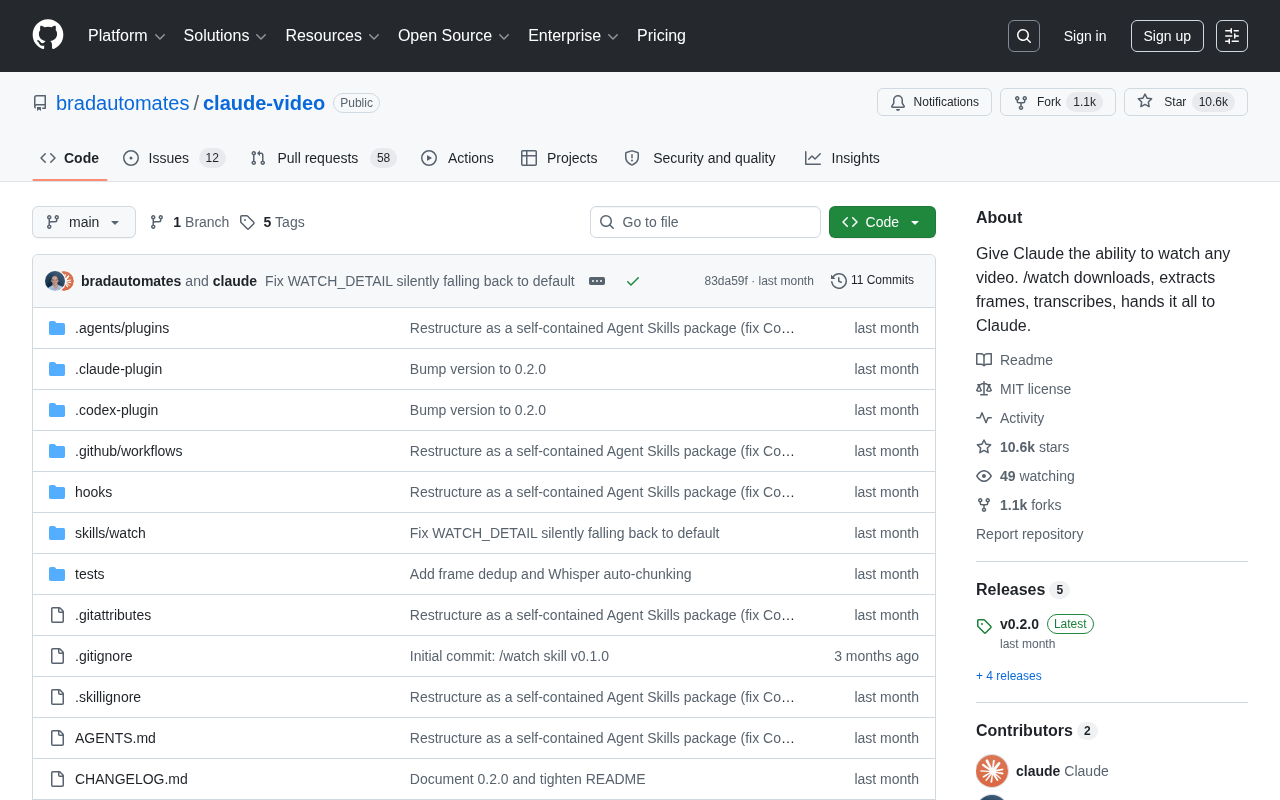
·3 min
claude-video: An Open-Source Tool That Teaches Claude to "See" Videos
claude-video is a trending open-source tool that enables Claude to analyze videos via frame extraction and audio transcription. Learn how it works and its use cases.
Read more →

·3 min
Simplified Technical English (STE): A Cross-Disciplinary Approach to Optimizing LLM Prompts
Explore how ASD-STE100 Simplified Technical English from aviation can be applied to LLM prompt engineering. STE's disambiguation principles—controlled vocabulary, short sentences, active voice—can improve LLM output accuracy and consistency.
Read more →

·6 min
Making Money with AI Coding Gigs: A Sober Breakdown and Honest Assessment of the Four-Week Learning Path
Can beginners really earn over 10,000 yuan in their first month with AI coding gigs? This article breaks down the four-week AI coding learning path week by week and objectively assesses the real monetization barriers.
Read more →

·8 min
LangChain Crash Course: A Complete Roadmap from Zero to Agent Development
A systematic roadmap from LangChain and LangGraph to multi-agent development, covering RAG, Tool Calling, MCP, and more, helping developers break into AI app development.
Read more →