#LangChain4j tutorial
275 related articles
Anthropic Open-Sources CWC Workshops: …
·2 min
Anthropic Open-Sources CWC Workshops: A Hands-On Guide to Claude Development
Anthropic open-sources cwc-workshops on GitHub — a TypeScript-based, structured workshop covering Prompt design, Tool Use, and Agent orchestration to help developers master Claude integration.
Read more →
·3 min
AI Agent 4-Week Learning Roadmap: A Complete Guide from Zero to Independent Development
A structured 4-week AI Agent learning roadmap: Week 1 covers LLMs & Prompt engineering, Week 2 ReAct paradigms, Week 3 RAG memory systems, Week 4 multi-agent architectures.
Read more →

·2 min
Agent Skills Deep Dive: From Core Concepts to Business Customization
A deep dive into Agent Skills: what they are, how they differ from Function Calling, and a 3-step guide to understanding and customizing Skills for real business use cases.
Read more →

·4 min
LangChain + LangGraph Full-Stack in Practice: A Production-Ready Guide to Six Core Modules and Agent Deployment
A systematic breakdown of LangChain's six core modules (Models/Prompts/Chains/Memory/RAG/Agent) and LangGraph's state graph, persistence, and HITL — with production deployment tips.
Read more →

·2 min
AI Large Model Learning Roadmap: A Complete Five-Stage Guide from Zero to Independent Deployment
A complete 5-stage AI large model learning roadmap — from Python basics and prompt engineering to RAG pipelines, Agent development, and private model deployment.
Read more →

·3 min
Getting Started with LangChain 1.3: Building Intelligent Agent Applications with Deep Agent
Learn LangChain 1.3 core concepts including LLM model abstraction, RAG retrieval-augmented generation, and Agent orchestration. Build a Deep Agent with planners, tools, and reflection modules.
Read more →

·3 min
Waku Agent Deep Dive: The Four Core Pillars of a Local-First AI Assistant
A deep dive into Waku Agent's four pillars: Loop Engineering, three-tier Memory system, Eval assessment, and the Harness scaffold. Full walkthrough of a local-first AI assistant from task execution to memory consolidation.
Read more →

·3 min
SJTU Professors Open-Source Agent Tutorial: A Four-Stage Path from Zero to AI Engineer
SJTU professors open-source a 4-stage Agent tutorial on GitHub, covering LLM basics, ReAct, multi-agent systems, and real-world projects — a practical path to AI engineering.
Read more →

·3 min
Enterprise AI Agent Learning Roadmap: A Complete Guide from Beginner to Production
A structured AI Agent learning roadmap covering 4 stages: foundations, core frameworks, scenario practice, and advanced product thinking. Master LangChain, tool calling, memory, and more.
Read more →

·2 min
AI Agent Beginner's Guide: A Structured Learning Path and Hands-On Project Roadmap
New to AI Agents? This guide breaks down the full learning path — covering Agent principles, Prompt Engineering, RAG, multi-Agent systems, and hands-on projects to get you building fast.
Read more →

·3 min
Can Small Local Models Become Software Domain Experts? A RAG Architecture Deep Dive
Can small local models (1.5B–3B) become software domain experts? This article breaks down CPT, SFT, RAG, and Agent architectures, with a layered RAG-centric design for CPU-only local deployment.
Read more →

·3 min
How to Choose an AI Agent Development Course? 5 Practical Screening Criteria to Avoid Common Pitfalls
How to choose a quality AI Agent development course? This guide covers 5 key criteria: complete delivery pipeline, resume-worthy projects, real engineering perspective, update frequency, and mentorship.
Read more →

·3 min
Complete AI Agent Development Learning Path: From Core Principles to Enterprise Deployment
A structured AI Agent learning path covering core principles, prompt engineering, tool use, multi-agent systems, and frameworks like LangChain, CrewAI, and Dify for enterprise deployment.
Read more →

·4 min
LangChain in Practice: Mastering the Four Core Modules of the Agent Ecosystem
A deep dive into LangChain's four core modules: LangChain components, LangGraph orchestration, Deep Agents, and LangSmith. Build your first Agent from scratch.
Read more →

·3 min
Complete Guide to LangChain 1.3: From Models and Agents to DeepAgent Architecture
A complete guide to LangChain 1.3: LLM invocation, Agent tool calling, Harness architecture, LangGraph, RAG, and DeepAgent — build a clear, modern Agent development knowledge base.
Read more →

·2 min
AI Agent Development in Practice: A Complete Guide to Framework Selection, Tool Calling, and Production Deployment
A comprehensive guide to AI Agent development: covering Agent vs. Chatbot differences, framework selection, tool calling design, RAG pipeline setup, and production deployment best practices.
Read more →

·3 min
Programmer to AI Engineer: You're Already 80% There — Here Are the 6 Skills You're Missing
Programmers transitioning to AI engineering aren't starting from scratch. Learn the 6 core skills — LLM APIs, RAG, prompt engineering, LLMOps — needed to make the leap.
Read more →

·2 min
Learning AI Large Language Models from Scratch: A Complete Roadmap That Avoids the Three Biggest Mistakes
90% of AI beginners struggle with large language models due to misdirection, poor Prompt logic, and lack of real-world deployment skills. This guide covers the complete learning path from zero to practice.
Read more →

·3 min
AI Agent Learning Roadmap: From Zero to Building Your Own Intelligent Agents
A structured AI Agent learning roadmap covering fundamentals (Agent principles, Prompt engineering), advanced topics (RAG, multi-agent collaboration), and three hands-on projects — ideal for beginners.
Read more →
·3 min
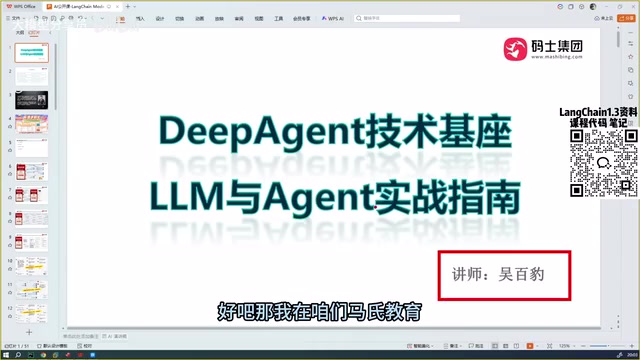
LangChain 1.3 in Practice: A Complete Learning Path from LLMs to Agent Development
A comprehensive guide to LangChain 1.3 — covering the full learning path from Models to Agent development, including Harness architecture, LangGraph, memory management, HITL, and Guardrails.
Read more →