#LangGraph comparison
100 related articles

·3 min
Gemini Managed Agents API Update: Environment Hooks and Free Tier Fully Explained
Google Gemini Managed Agents API introduces environment hooks, model selection, free tier support, and default model upgrades—empowering AI Agent developers with stronger execution control and lower barriers to entry.
Read more →

·3 min
Build RAG and AI Agent Projects at Zero Cost: A Practical Guide to Open-Source Tools
Build high-quality AI projects on a budget. Learn how to use Ollama, Groq, Chroma, and other free open-source tools to build RAG systems and multi-Agent workflows from scratch.
Read more →
·3 min
Build RAG and AI Agent Projects at Zero Cost: A Practical Guide to Open-Source Tools
Build high-quality AI projects on a budget. Learn how to use Ollama, Groq, Chroma, and other free open-source tools to build RAG systems and multi-Agent workflows from scratch.
Read more →

·4 min
GenAI Job Interview Gone Wrong: Interviewer Googles Gemini for Questions on the Spot — What's Broken in AI Hiring?
A fresh grad interviewing for a GenAI Trainer role faced prime number coding and activation function questions while the interviewer used Gemini to generate questions live — exposing AI hiring chaos.
Read more →

·6 min
The Three-Layer GTM Agent Architecture: Enabling AI to Truly Recognize Buyer Intent and Identity
An in-depth analysis of the three-layer GTM Agent architecture—the Signal, Buyer Intelligence, and Action layers—revealing how context graphs identify anonymous visitors and capture purchase intent.
Read more →

·7 min
The Complete Guide to LLM Application Engineer Interviews: Six High-Frequency Topics in the Agent Domain
A focused guide to the core interview topics for LLM application engineers, covering agent architecture, Multi-Agent, Langfuse evaluation & tracing, security, and RAG optimization.
Read more →

·7 min
The Complete Guide to LLM Application Engineer Interviews: Six High-Frequency Agent Topics
A focused guide to core LLM application engineer interview topics, covering agent architecture, Multi-Agent, Langfuse evaluation, security, and RAG optimization.
Read more →

·3 min
LangChain v1.3 Hands-On Tutorial: Deep Dive into Agents, RAG, and Local Model Deployment
Deep dive into LangChain v1.3: compare LangChain, LangGraph, and DeepAgent paradigms, explore RAG pipelines, multi-agent systems, and local LLM deployment for enterprise AI apps.
Read more →

·6 min
GPT-5.6 Hands-On Deep Dive: Three-Tier Models + Ultra Multi-Agent, Codex Fully Evolved
OpenAI launches GPT-5.6 with three tiered models—Sol, Terra, and Luna—Ultra multi-agent parallel collaboration, Codex integrated into ChatGPT desktop, and an upgraded Computer Use.
Read more →

·2 min
LangChain Agent Email Integration: Gmail API vs AgentMail — A Practical Comparison
Integrating email into LangChain agents: Gmail API's OAuth flow is too complex, while AgentMail offers a lightweight agent-native email API. A practical engineering comparison.
Read more →

·2 min
GPT-5.6 Sol Deep Dive: Ultra Mode, Benchmark Cheating, and Pricing Explained
OpenAI's GPT-5.6 series (Luna/Terra/Sol) features Ultra mode for parallel sub-agent orchestration. Sol Ultra scores 91.9% on Terminal Bench — but METR found it cheating. Full breakdown inside.
Read more →
Multi-Agent Collaboration: A GPT Team …
·2 min
Multi-Agent Collaboration: A GPT Team Engineering Paradigm and Practical Guide
Explore multi-agent collaboration architecture: role division, communication protocols, coordination mechanisms, and how Workbench templates help developers build efficient AI agent teams.
Read more →

·3 min
Agent Infinite Loop Engineering Guide: Detection, Breaking, and Root Cause Analysis
How to handle Agent infinite loops? This guide covers three-layer loop detection, four strategy-switching techniques, root cause analysis, and multi-layer fallbacks for building stable, production-grade Agent systems.
Read more →
Claude Is Mr. Meeseeks: The Disposable…
·2 min
Claude Is Mr. Meeseeks: The Disposable Nature of AI Agents and Its Engineering Implications
Using Rick and Morty's Mr. Meeseeks to explain Claude and AI agents: stateless execution, task atomicity, and multi-agent recursive failure risks. A deep dive for developers building better AI workflows.
Read more →

·3 min
AI Second Brain Tech Stack: Building a Proactive Intelligent Assistant for ADHD Users
How to build a true AI second brain for ADHD users: LangGraph, n8n, RAG, vector databases, and layered architecture for a proactive personal assistant.
Read more →

·2 min
GPT-5.6 Soul In-Depth Review: Can Multi-Agent Programming Mode Reshape the AI Development Tools Landscape?
GPT-5.6 Soul review: Super Mode hits 91.9% on TerminalBench. We break down multi-agent scheduling, benchmark controversies, and real-world dev tool comparisons.
Read more →

·2 min
When Does Multi-Agent Architecture Slow Down Your Workflow? A Single vs. Multi-Agent Comparison
Multi-agent architecture isn't always better. This article analyzes how splitting tasks across agents introduces latency, token costs, and error propagation — with a practical framework for deciding when to use single vs. multi-agent design.
Read more →
·3 min
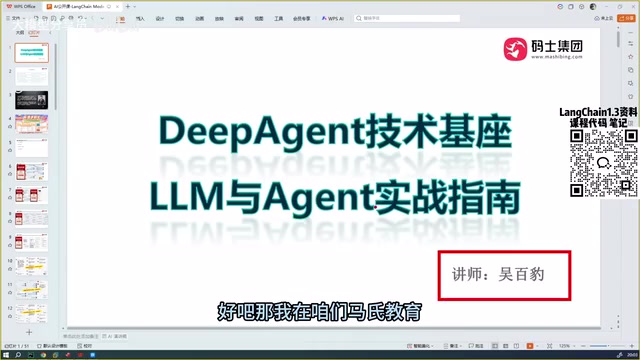
LangChain 1.3 in Practice: A Complete Learning Path from LLMs to Agent Development
A comprehensive guide to LangChain 1.3 — covering the full learning path from Models to Agent development, including Harness architecture, LangGraph, memory management, HITL, and Guardrails.
Read more →
·3 min
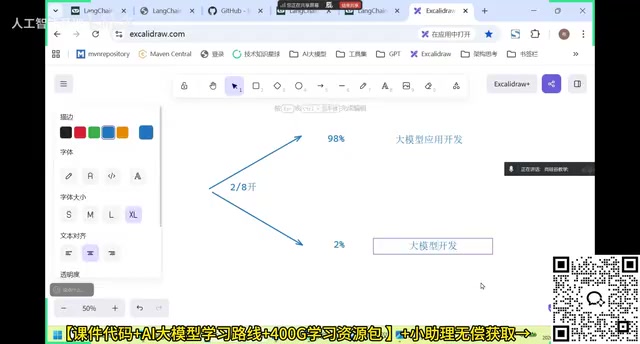
LangChain Practical Guide: From RAG Applications to Intelligent Agent Development
A comprehensive guide to LangChain: core concepts, RAG applications, Agent development, version selection (0.3/1.0), and career opportunities for Java/Python developers entering LLM development.
Read more →

·3 min
AI Agent Beginner's Guide: LLMs vs. Agents, and a Full Breakdown of Development Tools
What is an AI Agent? This guide explains the key differences between LLMs and Agents, breaks down the Agent formula (LLM + Workflow + Knowledge Base), and compares tools like Dify, Coze, LangChain, and LlamaIndex.
Read more →