#LangGraph multi-agent
425 related articles

·3 min
Agent-Manager: Unified Management of Multiple AI Coding Assistants with Tmux
Agent-Manager is an open-source Tmux-based TUI for managing multiple AI coding agents like Claude Code, Codex, and OpenCode in a unified terminal interface with quick switching and session persistence.
Read more →

·3 min
Agent-Manager: Unified Management of Multiple AI Coding Assistants with Tmux
Agent-Manager is an open-source Tmux-based terminal tool for managing multiple AI coding agents like Claude Code, Codex, and OpenCode in a unified interface with quick switching and session persistence.
Read more →

·3 min
From Linear Pipelines to State Machines: A Practical Guide to Advanced Agent Architecture
Learn how to advance from linear pipeline to state machine Agent architecture through a YouTube script-to-storyboard case study, covering fault tolerance, LLM evaluation frameworks, and LangGraph vs AutoGen selection.
Read more →

·4 min
Infrastructure Architecture for Agent Applications: Four Core Patterns Explained
A deep dive into infrastructure architecture patterns for production-grade Agent applications, covering state persistence, sandbox isolation, LLM observability, and cost control.
Read more →

·4 min
Infrastructure Architecture for Agent Applications: Four Core Patterns Explained
Deep dive into infrastructure architecture patterns for production-grade Agent applications, covering state persistence, sandbox isolation, LLM observability, and cost control.
Read more →

·3 min
Long Documents Don't Work: Why AI Agents Can't Follow Your Rules
Analysis of why AI Agents can't reliably follow long policy documents, covering context dilution, rule conflicts, and soft constraint limitations, with more reliable governance architectures.
Read more →

·2 min
agent-manager: An Open-Source Tool for Managing Multiple AI Coding Assistants with tmux
agent-manager is a lightweight tmux-based TUI tool that helps developers manage multiple AI coding assistants like Claude Code, Codex, and OpenCode from a unified interface for status monitoring, interaction, and code review.
Read more →

·3 min
The ISNAD Framework: Building a Trust Verification Layer for Multi-Agent AI Systems Using a Millennium-Old Scholarly Tradition
The ISNAD framework adapts Islamic chain-of-transmission verification to build a trust layer for multi-agent AI systems, focusing on claim verification over agent authentication to combat hallucinations and silent failures.
Read more →

·2 min
Agenta: A Detailed Look at the Open-Source Self-Hosted Claude Cowork Alternative
Agenta is an open-source AI Agent collaboration platform supporting self-hosted models and any Agent framework, positioned as an open-source Claude Cowork alternative.
Read more →

·5 min
Opus 5 Builds a No Man's Sky-Style Exploration Game in One Day: MCP and Sub-Agent Architecture Explained
A developer used Anthropic's Opus 5 model to build a No Man's Sky-style space exploration game in one day using Blender MCP and sub-agents. Deep dive into the technical architecture and industry implications.
Read more →

·3 min
Learning AI Large Language Models: A Complete Roadmap from Beginner to Practitioner
A systematic breakdown of the AI LLM learning roadmap covering prompt engineering, AI Agent development, RAG knowledge bases, model fine-tuning, and hands-on projects for beginners.
Read more →
·3 min
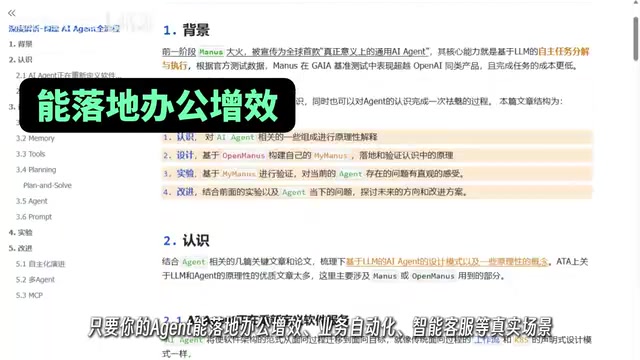
Practical Guide to Agent Development: The Complete Path from Zero to Commercial Deployment
A systematic guide to AI Agent development from beginner to deployment, covering task planning, tool calling, memory management, learning paths, and realistic commercial monetization considerations.
Read more →
·5 min
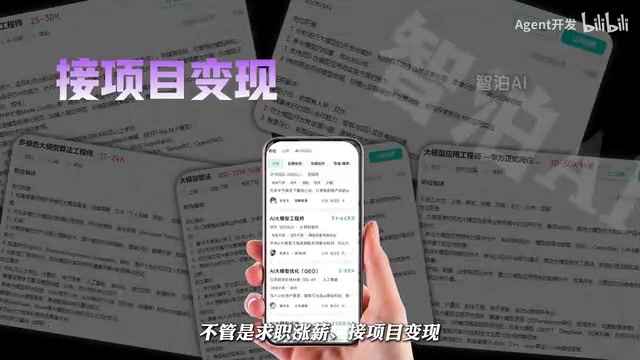
Learn AI Agent Development from Scratch: A 3-Step Practical Path to Get Started Quickly
How to learn AI Agent development from scratch? This article outlines a clear 3-step path: Python crash course, LLM theory & practice, and LangChain framework project implementation.
Read more →

·4 min
Getting Started with AI Agent Development: A Complete Guide from Concept to Practice
A comprehensive guide to AI Agent architecture and development, covering automated marketing, intelligent customer service, and investment analysis scenarios with single and multi-agent collaboration.
Read more →

·4 min
AI Agent Development in Practice: A Complete Path from Zero to Production
A systematic guide to AI Agent development covering core modules, framework selection, tool calling, data preparation, and production deployment to help developers build production-ready Agent applications.
Read more →

·3 min
Agent Skills Explained: Plug-and-Play Skill Packs for AI
A deep dive into Agent Skills architecture: modular design, progressive disclosure mechanism, and how it differs from Multi-Agent systems for AI capability extension.
Read more →

·5 min
The Complete Guide to AI Agent Development: A Four-Stage Progressive Roadmap
A systematic guide to AI Agent development across four stages: LLM fundamentals, ReAct paradigm, memory & tools, and multi-agent collaboration for developers.
Read more →
·3 min
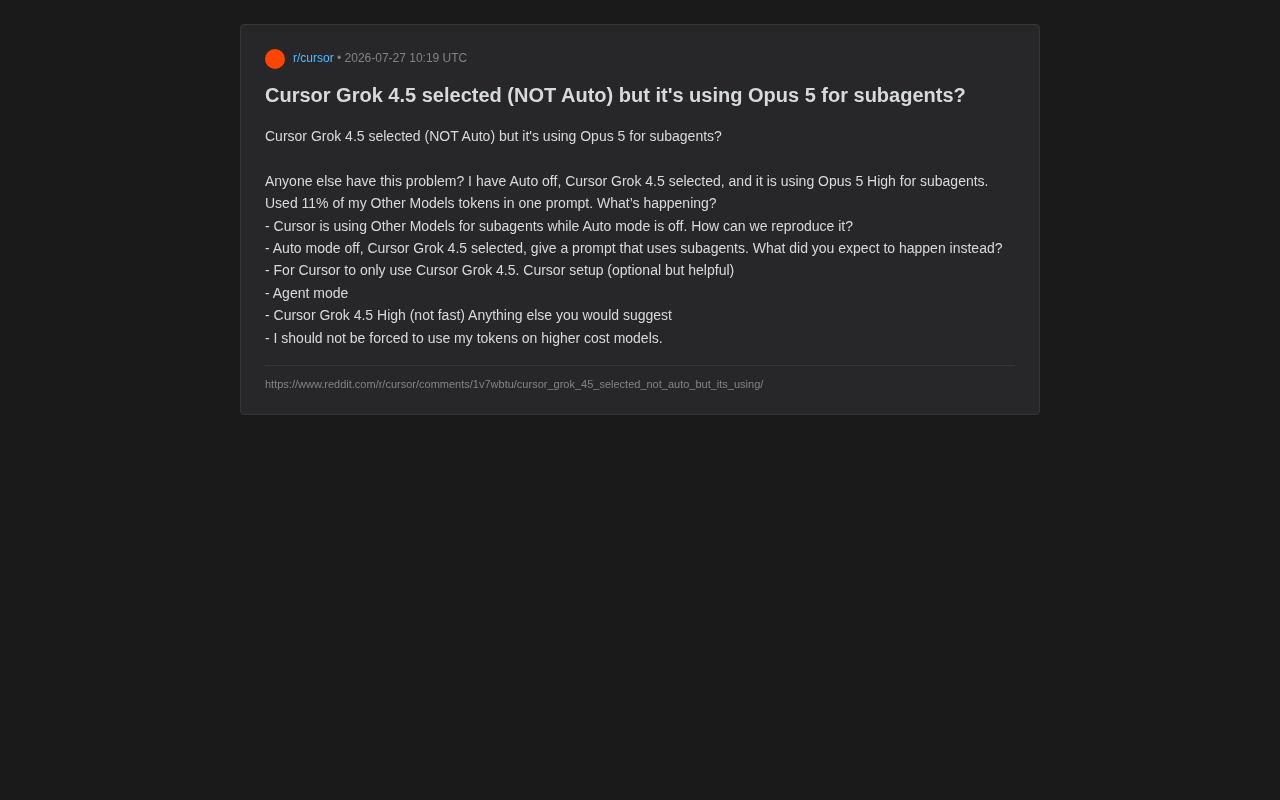
Cursor Selects Grok but Calls Opus: Subagent Model Substitution and Cost Control Issues Explained
Cursor users selecting Grok 4.5 find subagents secretly calling expensive Opus 5, consuming 11% quota per prompt. Analysis of model decoupling, cost transparency, and user strategies.
Read more →

·3 min
Build RAG and AI Agent Projects at Zero Cost: A Practical Guide to Open-Source Tools
Build high-quality AI projects on a budget. Learn how to use Ollama, Groq, Chroma, and other free open-source tools to build RAG systems and multi-Agent workflows from scratch.
Read more →
·3 min
Build RAG and AI Agent Projects at Zero Cost: A Practical Guide to Open-Source Tools
Build high-quality AI projects on a budget. Learn how to use Ollama, Groq, Chroma, and other free open-source tools to build RAG systems and multi-Agent workflows from scratch.
Read more →