#Langfuse
84 related articles

·2 min
Frugon: Local LLM Call Analysis That Pinpoints Cost-Reduction Opportunities
Frugon is an MIT-licensed, local LLM cost analysis tool that helps developers identify which API calls can be switched to cheaper models for data-driven cost reduction — no log uploads, full privacy.
Read more →

·7 min
Turning Any AI Agent into an Orchestration Hub: A Deep Dive into Multi-Agent Collaboration Architecture
An in-depth analysis of the "any Agent as an orchestrator" design philosophy, exploring the technical implementation of multi-Agent collaboration, context management, and workflow automation.
Read more →

·6 min
AI's Second Half: The Decisive Battle Shifts from Models to Infrastructure
Model capabilities are converging, making inference cost and scalability the new focus of AI competition. A deep analysis of AI infrastructure's core layers.
Read more →

·4 min
AI Agent Development Deep Dive: Opportunities, Real Entry Barriers, and Learning Paths
A deep dive into AI Agent development: real architecture, entry barriers, and learning paths. From ReAct to multi-agent systems and LangChain — cut through the hype.
Read more →
·3 min
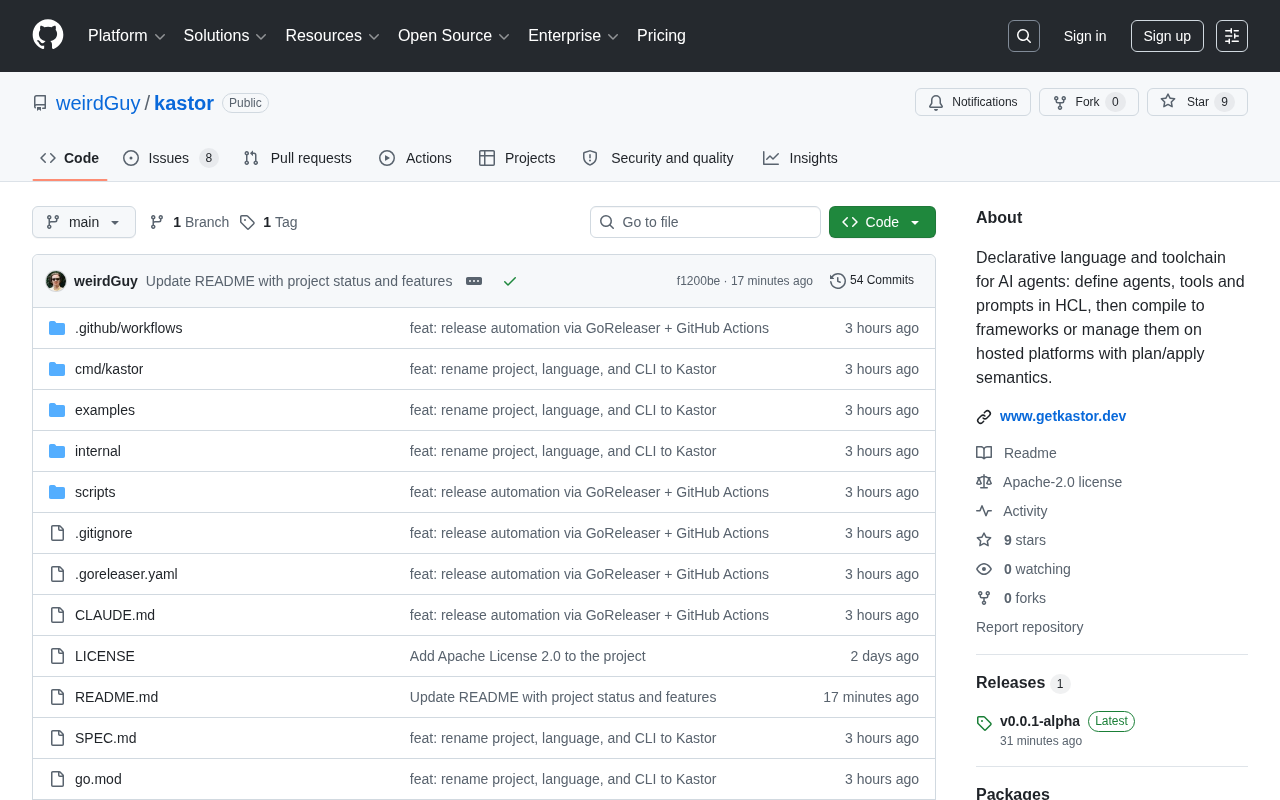
Kastor: A New Approach to Managing AI Agents with Declarative Specs
Kastor is an open-source project that brings IaC-style declarative specs to AI Agent management, inspired by Terraform — solving reproducibility, collaboration, and auditability challenges.
Read more →

·7 min
The Five Pillars of Production-Grade AI Agents: A Battle-Tested Guide from Demo to Deployment
Databricks tech lead Sandy shares a five-pillar framework for production-grade AI Agents—evaluation, observability, data foundation, orchestration, and governance—with a £85K retail banking failure case to bridge the demo-to-production gap.
Read more →

·7 min
ManagedAgents.sh: A Deep Dive into the Model-Agnostic Open-Source Managed Agent Platform
ManagedAgents.sh is a model-agnostic managed agent platform from OpenComputer, supporting Claude, Pi, and Codex runtimes with Slack and GitHub integration.
Read more →

·6 min
Deploying Enterprise AI Agents to Production: The Five Pillars from Demo to Launch
A Databricks expert breaks down the complete methodology for taking AI Agents from demo to production, covering the five pillars of evaluation, observability, data foundation, multi-Agent orchestration, and AI governance, with a real eight-week banking chatbot POC case.
Read more →

·7 min
The Agent Engineer Transition Roadmap: A Deep Dive into Three Core Skill Systems
Want to become an Agent engineer? This article systematically covers three core skill tracks—LLM fundamentals, LangChain architecture development, and enterprise deployment—to help you avoid detours.
Read more →

·7 min
Harness Engineering: The Six-Layer Engineering Framework for Enterprise AI Agent Deployment
From Prompt Engineering to Harness Engineering, a deep dive into the core challenge of truly deploying AI Agents in enterprises. This article breaks down the six-layer architecture and shares real-world Hermes Agent practice.
Read more →

·7 min
6 Core Standards of a High-Value Agent Project That Impress Interviewers
Most Agent projects lack competitiveness in interviews due to missing business value and engineering depth. This article breaks down the 6 core standards of high-value Agent projects.
Read more →

·4 min
AI Agent: A Complete 6-Week Learning Roadmap from Beginner to Production
A complete 6-week AI Agent learning roadmap covering core architecture (planning/memory/tool use), the ReAct paradigm, multi-agent collaboration, RAG integration, and production deployment.
Read more →

·7 min
HuggingFace Open-Sources ml-intern: An AI Engineer That Reads Papers and Trains Models Autonomously
Hugging Face's open-source ml-intern autonomously reads papers, writes training scripts, and finetunes LLMs, deeply integrating the HF ecosystem and smolagents. Explore its features and impact on ML careers.
Read more →

·7 min
Electron + LangGraph in Practice: Building an AI Agent Visual Orchestration App from Scratch
A hands-on guide to building an enterprise-grade AI Agent workflow orchestration app with Electron Forge and LangGraph, covering local LLM deployment (Qwen3-0.6B), node-based visual canvas design, and full Function Calling integration.
Read more →

·2 min
LLM Thought Visualization: Making AI Reasoning Transparent and Interpretable
LLM thought visualization is emerging as a key breakthrough in AI explainability. This article explores the value, technical approaches, and challenges of visualizing Chain-of-Thought reasoning.
Read more →
·3 min
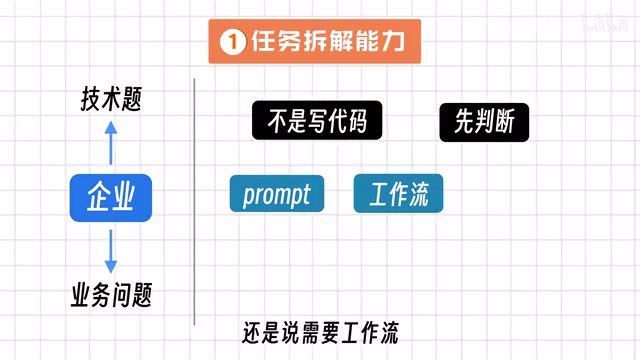
4 Core Competencies Every High-Value LLM Application Engineer Must Have
Why can't companies find qualified AI engineers? Discover the 4 core competencies every high-value LLM application engineer needs: task decomposition, tool calling, observability, and production readiness.
Read more →

·7 min
Otari: A Comprehensive Look at the Open-Source LLM Control Plane Tool
An in-depth analysis of the open-source LLM control plane tool Otari—covering unified multi-model access, cost observability, and security compliance governance to help teams build manageable, production-grade AI infrastructure.
Read more →

·6 min
Claude Comes to Azure: Three Enterprise-Grade Advantages of Microsoft Foundry's Anthropic Model Integration
Microsoft Foundry integrates Anthropic Claude models. Azure customers can now access Claude Opus 4.8 and Haiku 4.5 with unified identity auth, billing, and commitment credit deduction.
Read more →

·6 min
Claude Comes to Azure: Three Enterprise-Grade Advantages of Microsoft Foundry's Anthropic Model Integration
Microsoft Foundry integrates Anthropic Claude models, enabling Azure customers to access Claude Opus 4.8 and Haiku 4.5 with unified authentication, billing, and commitment spend drawdown.
Read more →

·3 min
Agentic AI in Practice: Core Principles, Engineering Challenges, and Practical Recommendations
A deep dive into Agentic AI: core components (planning, tool calling, memory), engineering challenges (reliability, cost, safety), and practical development recommendations for production deployment.
Read more →