#MCP persistent memory
135 related articles
Adaptive Recall: A Deep Dive into Pers…
·2 min
Adaptive Recall: A Deep Dive into Persistent Memory for AI Assistants via MCP
Adaptive Recall uses MCP (Model Context Protocol) to give AI assistants like Claude persistent memory across sessions, featuring vector storage, semantic retrieval, and adaptive forgetting.
Read more →
·4 min
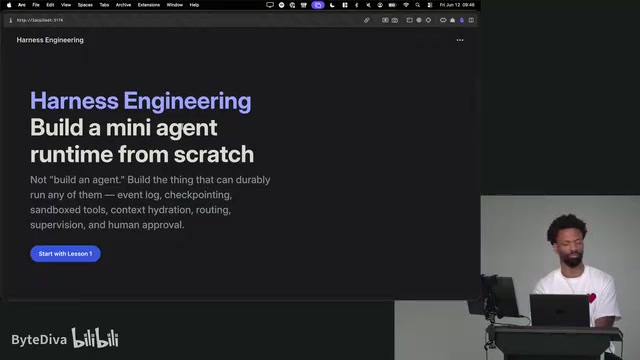
Harness Engineering: The Core Infrastructure for Taking AI Agents from Demo to Production
Deep dive into Harness Engineering: why AI Agents need memory management, durable execution, guardrails & approvals to go from demo to production.
Read more →

·4 min
Harness Engineering: The Core Infrastructure for Taking AI Agents from Demo to Production
Deep dive into Harness Engineering: why AI Agents need memory management, durable execution, guardrails & approvals to reach production. Based on Scott Moss's workshop.
Read more →

·4 min
OpenAI Employee Shares How to Build an AI Work Operating System with Codex
OpenAI's Jason Liu shares how he uses ChatGPT Workbench and Codex to build an AI work OS: Chief of Staff automation, persistent threads, Skills/Plugins, browser control, and app-building methodology.
Read more →

·5 min
Learn AI Agent Development from Scratch: A 3-Step Practical Path to Get Started Quickly
How to learn AI Agent development from scratch? This article outlines a clear 3-step path: Python crash course, LLM theory & practice, and LangChain framework project implementation.
Read more →

·4 min
AI Agent Development in Practice: A Complete Path from Zero to Production
A systematic guide to AI Agent development covering core modules, framework selection, tool calling, data preparation, and production deployment to help developers build production-ready Agent applications.
Read more →

·5 min
The Complete Guide to AI Agent Development: A Four-Stage Progressive Roadmap
A systematic guide to AI Agent development across four stages: LLM fundamentals, ReAct paradigm, memory & tools, and multi-agent collaboration for developers.
Read more →

·2 min
DeepAgents in Practice: A Deep Dive into Sandbox Backends and Agent Skills
A deep dive into DeepAgents' sandbox backend and Agent Skills: why Agents need sandbox isolation to run code, how Skills enable modular capability reuse, and how the two combine to build reliable AI Agent systems.
Read more →

·2 min
DeepAgents in Practice: A Deep Dive into Sandbox Backends and Agent Skills
A deep dive into DeepAgents' sandbox backend and Agent Skills: why Agents need sandboxes to isolate code execution, how Skills enable modular capability reuse, and how the two work together to build reliable AI Agent systems.
Read more →

·3 min
Context Engineering: Why Does More Context Make AI Dumber?
Anthropic introduces Context Engineering, revealing Context Rot: the more tokens in the window, the worse AI retrieval accuracy. Learn the three principles, just-in-time retrieval, and three moves against context overflow.
Read more →

·3 min
AI Agent in Action: Building a Local Netlist Analysis Plugin for JLCEDA from Scratch
How a Bilibili creator used AI Agent, MCP, and Playwright to build a JLCEDA local netlist analysis plugin from scratch—covering features, setup, and the full Agent-driven dev process.
Read more →

·1 min
Getting Started with Claude Code: An AI Coding Assistant That Actually Touches Your Code
Claude Code by Anthropic goes beyond chat — it reads your files, edits code, and runs commands directly. See how it compares to ChatGPT and Cursor across 5 key dimensions.
Read more →
·3 min
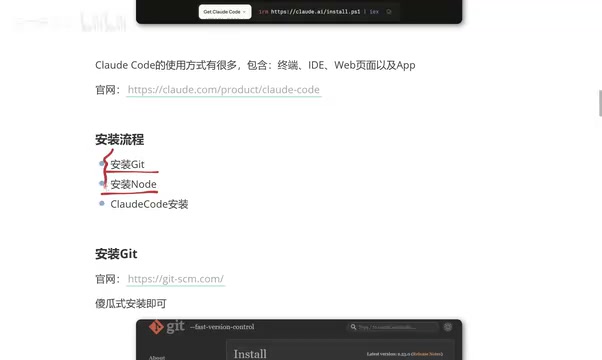
Getting Started with Claude Code: Installation, Configuration, and Three Working Modes Explained
Get started with Claude Code from scratch: detailed Windows installation, environment variable setup, China network bypass, and connecting to free Alibaba Cloud Bailian models—plus the three working modes.
Read more →

·8 min
The Complete Guide to Agent Testing: Five Core Dimensions and Automation in Practice
An in-depth analysis of the five core dimensions of AI Agent testing: command safety, tool-calling accuracy, task planning, output consistency, and error self-repair. Master automated testing methods and the transition path for test engineers.
Read more →

·6 min
Hands-On with Panel AI On-Premises Deployment: One-Click Enterprise Adoption and Unified Compute Cluster Scheduling
In-depth review of Panel AI v1.1.1: second-level installation, no-public-IP networking, batch compute cluster management. Learn how enterprise AI on-premises deployment barriers are dramatically lowered.
Read more →

·7 min
Getting Started with Claude Code: Five Dimensions That Show Why It Outperforms Ordinary AI
Claude Code isn't just a chat AI—it can directly read projects, modify code, and run commands. This article compares Claude Code with ordinary AI across five dimensions: interaction, context, execution, memory, and tool calling.
Read more →

·7 min
Getting Started with Claude Code: Five Dimensions to Understand Why It Outperforms Regular AI
Claude Code isn't just a chat AI—it can directly read projects, modify code, and run commands. This article compares Claude Code with regular AI across five dimensions to help you decide if it's worth trying.
Read more →

·3 min
AI Not Working? Learn to Diagnose Which Layer Is the Problem — Loop, Harness, or Context
AI agents underperforming? The root cause usually isn't the model. This guide breaks down Loop, Harness, and Context Engineering so you can diagnose the real issue fast.
Read more →

·6 min
30-Minute Hands-On: Building a Working AI Agent from Scratch
Skip the dry theory and get hands-on! This article demonstrates step by step how to build a working AI Agent from scratch in 30 minutes using AI coding tools—covering the agent skeleton, tool system, memory mechanism, Flask web UI, and DeepSeek API integration.
Read more →

·5 min
The Complete Claude Code Guide: Installation, Core Features, and Advanced Workflows
An in-depth guide to Anthropic's Claude Code agentic coding tool, covering installation, pricing plans, model selection, token management, CLAUDE.md global memory, MCP integration, Subagents, and more.
Read more →