#Matter protocol
501 related articles

·3 min
Long Documents Don't Work: Why AI Agents Can't Follow Your Rules
Analysis of why AI Agents can't reliably follow long policy documents, covering context dilution, rule conflicts, and soft constraint limitations, with more reliable governance architectures.
Read more →

·4 min
Pure Vibecoding Builds a 130+ Card Multiplayer CCG: Full AI Tech Stack Breakdown
An indie dev built a 130+ card multiplayer CCG entirely through vibecoding with Claude Code, GPT, and ElevenLabs. Full AI tech stack breakdown and analysis of vibecoding's capabilities and limits.
Read more →

·2 min
SteVe: A 13-Year Open-Source Charging Station Management System Earns OCA Certification
SteVe is an open-source OCPP-based charging station management system that grew from a 2013 PhD project into an OCA-certified charging platform core, offering self-hosted EV charging management.
Read more →

·3 min
Home Server Setup Guide: Self-Hosted Services Worth Deploying
From Jellyfin and Immich to Nextcloud, explore self-hosted services worth deploying on a home server, covering media, file sync, encrypted chat, and download automation.
Read more →

·3 min
Why Is Self-Hosting European Open Source Projects So Hard? Root Causes and Recommendations
Exploring why European open source projects are hard to self-host: architectural complexity, digital sovereignty compliance, documentation gaps, and practical advice for users and maintainers.
Read more →

·3 min
AI Coding Gone Wrong? Viral Reddit Post Reveals the Truth: It's a Skill Issue, Not a Tool Issue
A viral Reddit post sparks debate: AI coding failures stem from users' engineering skills, not the tools themselves. Deep analysis of how to properly harness AI coding tools like Cursor and Copilot.
Read more →

·3 min
Stacklight: A Deep Dive into the Zero-Backend Native iOS Homelab Monitoring App
Stacklight is a zero-backend, telemetry-free native iOS app with 23 service integrations, offering privacy-first mobile monitoring and control for homelabs via TOFU certificate pinning and iCloud sync.
Read more →

·3 min
Self-Hosted Team Collaboration Tools Compared: Zulip, Campfire, and Matrix in Real-World Testing
Real-world comparison of Teams alternatives for 8-15 person teams: Zulip's topic-based chat, Campfire's minimalist one-time purchase, and Matrix's decentralized deployment evaluated for features, cost, and ops.
Read more →

·3 min
Discovering Cryptographic Vulnerabilities with Claude: A New Paradigm for AI-Assisted Security Research
How Anthropic's Claude assists in discovering cryptographic implementation vulnerabilities, analyzing AI's real capabilities and limitations in code review, side-channel detection, and protocol analysis.
Read more →

·2 min
Segue: A Deep Dive into the Cross-Platform AI Conversation Context Migration Tool
Segue is an AI context migration tool that uses short handles to seamlessly transfer conversation context across ChatGPT, Claude, and other AI platforms, solving the cross-platform context reset problem.
Read more →

·4 min
Complete Guide to Pi Coding Agent: Core Usage and Extension Techniques for a Minimalist Terminal AI Coding Tool
Complete guide to Pi coding agent: design philosophy, installation, shortcuts, session management, and 7-layer customization architecture. How this 45K-star minimalist terminal tool redefines AI coding workflows.
Read more →

·4 min
Fable 5 vs GPT-5.6: An In-Depth Head-to-Head Comparison of Two Top-Tier Coding Models
In-depth comparison of Fable 5 vs GPT-5.6 (Sol) for AI coding. Covering token efficiency, code quality, design, cost, and safety based on $10K+ real usage data.
Read more →

·4 min
Fable 5 vs GPT-5.6: An In-Depth Head-to-Head Comparison of Two Top-Tier Coding Models
In-depth comparison of Fable 5 vs GPT-5.6 (Sol) for AI coding. Real-world data on token efficiency, code quality, design capability, and cost from $10K+ testing.
Read more →

·4 min
WebMCP in Practice: How MakeMyTrip Is Reshaping the Travel Booking Experience
India's largest OTA platform MakeMyTrip uses WebMCP to standardize AI Agent interaction with web apps, solving DOM scraping fragility, enabling natural language test automation, and simplifying complex international flight bookings.
Read more →

·3 min
What Happens After You Click a Link? A Complete Technical Breakdown
From DNS resolution, TCP handshake, and TLS encryption to the Blink rendering engine — a detailed breakdown of what happens after you click a link.
Read more →
·3 min
The Open-Weights Model Debate: Balancing Safety and Openness
An in-depth analysis of the open-weights model debate: public release brings transparency and innovation, but raises safety and misuse risks. Exploring tiered release, red-teaming, and governance challenges.
Read more →
·3 min
The Open-Weights Model Debate: Balancing Safety and Openness
An in-depth analysis of the open-weights model debate: publicly releasing model weights enables transparency and innovation but raises safety risks. Explores tiered release, red-teaming, and the industry dynamics behind open AI governance.
Read more →

·3 min
From Frontend to Agent Development: A Complete 6-Week Systematic Learning Path
A 6-week systematic learning path for frontend engineers transitioning to AI Agent development, covering core architecture, ReAct, multi-agent collaboration, RAG integration, and deployment.
Read more →
·3 min
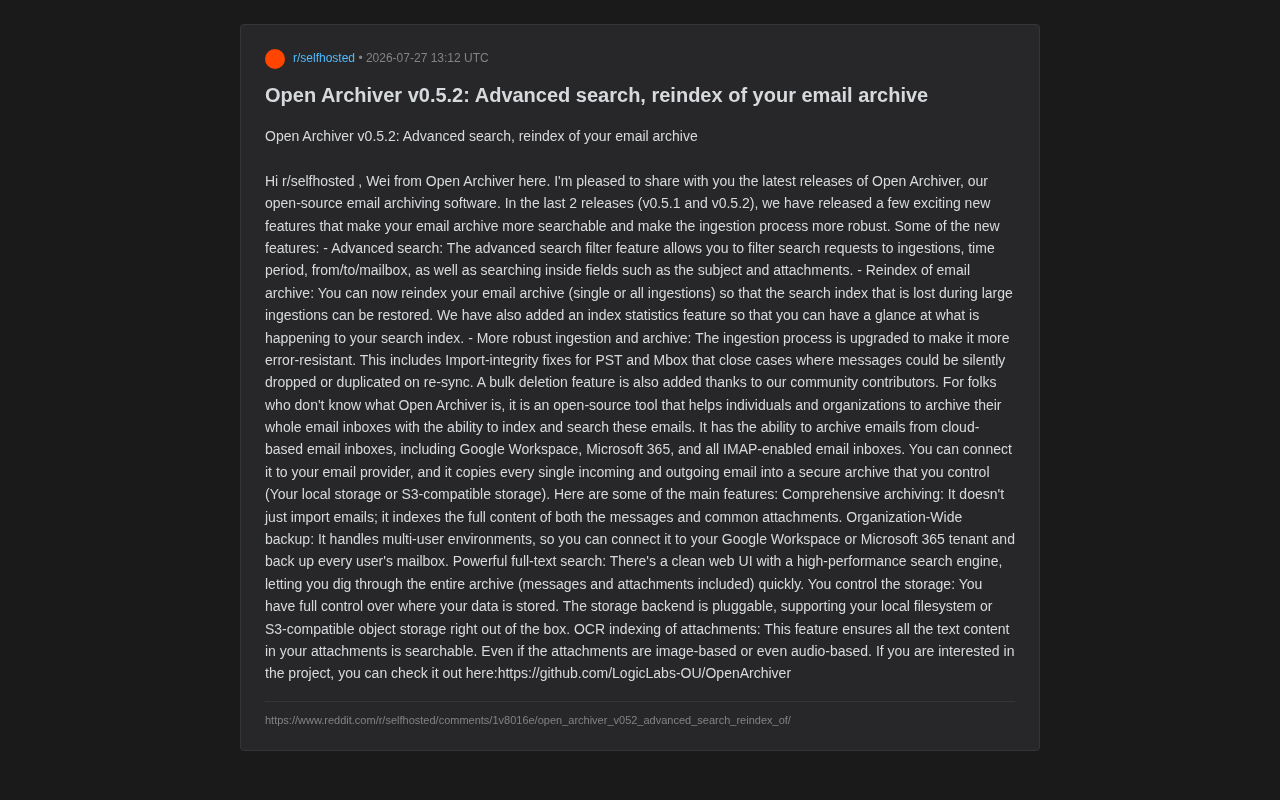
Open Archiver v0.5.2 Deep Dive: A Comprehensive Look at the New Features of This Open-Source Email Archiving Tool
Deep dive into Open Archiver v0.5.2: advanced search, index rebuilding, PST/Mbox import fixes, and more features for self-hosted email archiving and compliance.
Read more →
·3 min
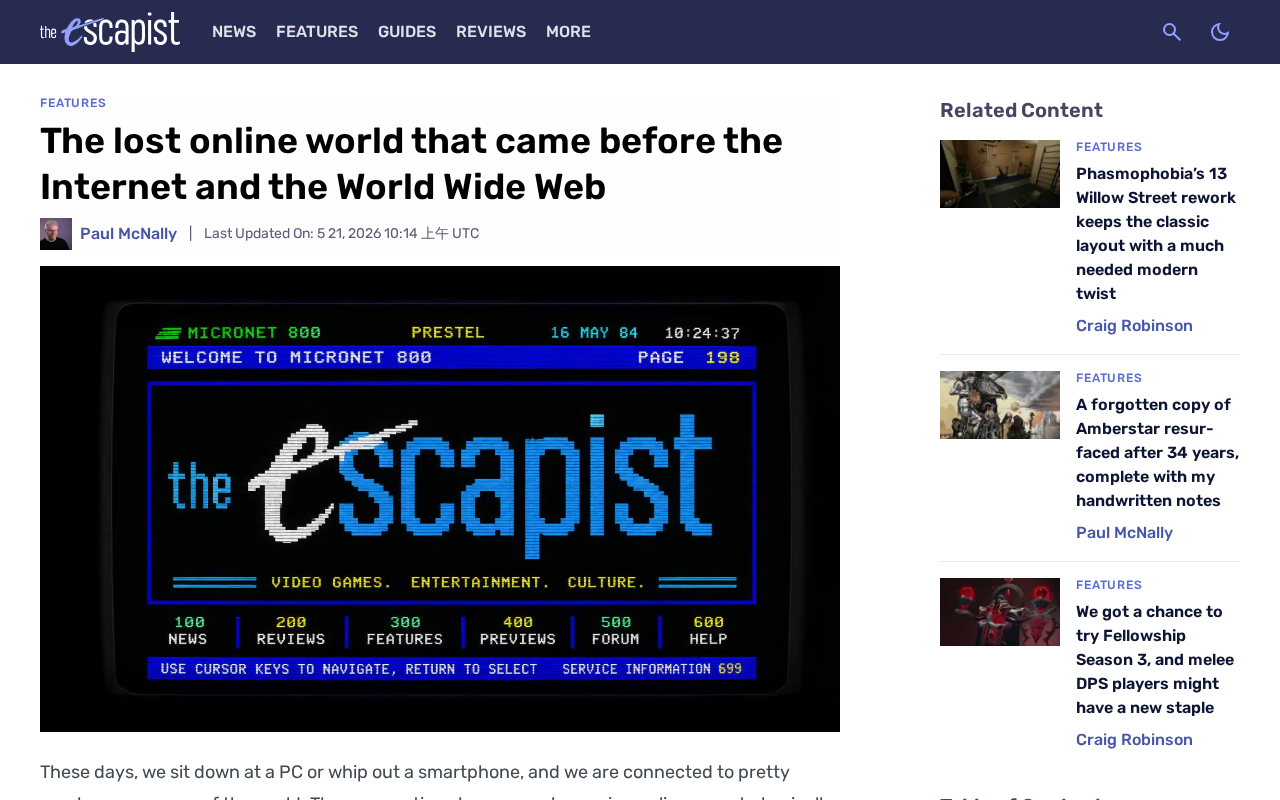
Prestel and Micronet: Britain's Lost Proto-Internet
Explore Britain's 1979 Prestel Viewdata system and its community platform Micronet 800 — an interactive online service that predated the World Wide Web by a decade, and why it lost to the open internet.
Read more →