#Multi-Agent architecture
1288 related articles

·3 min
Agent Skills Explained: Plug-and-Play Skill Packs for AI
A deep dive into Agent Skills architecture: modular design, progressive disclosure mechanism, and how it differs from Multi-Agent systems for AI capability extension.
Read more →

·5 min
Complete Breakdown of Core Competencies for AI Agent Engineers: From Demo to Production-Grade Systems
Deep breakdown of 4 core AI Agent engineer competencies: business decomposition, multi-Agent architecture, quantitative evaluation, and engineering delivery—bridging the gap from Demo to production.
Read more →

·5 min
The Complete Guide to AI Agent Development: A Four-Stage Progressive Roadmap
A systematic guide to AI Agent development across four stages: LLM fundamentals, ReAct paradigm, memory & tools, and multi-agent collaboration for developers.
Read more →

·5 min
Will Chinese Open-Source Models Burst the US AI Bubble? A Deep Dive into the Transmission Chain
Chinese open-source models like Kimi K3 and DeepSeek approach US closed-source performance at a fraction of the cost. This deep dive analyzes the transmission chain from price competition to valuation reassessment.
Read more →
·3 min
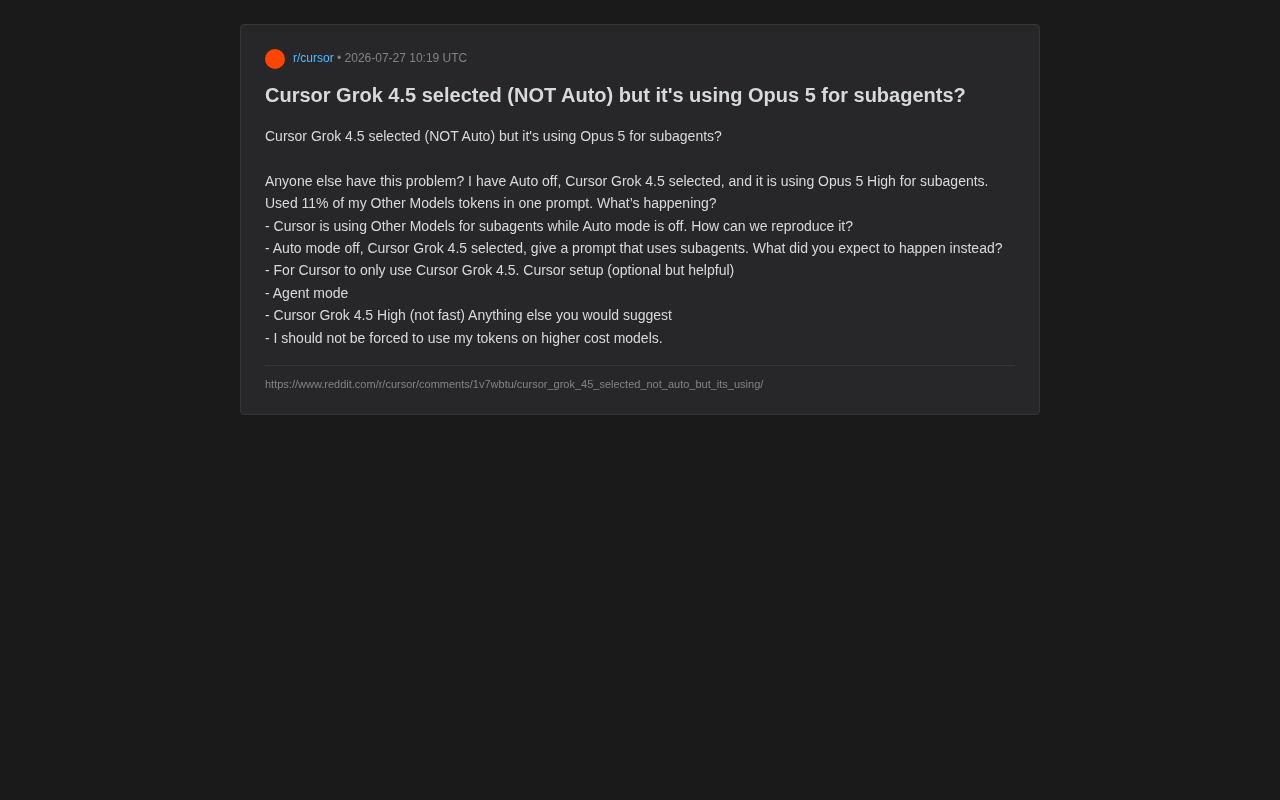
Cursor Selects Grok but Calls Opus: Subagent Model Substitution and Cost Control Issues Explained
Cursor users selecting Grok 4.5 find subagents secretly calling expensive Opus 5, consuming 11% quota per prompt. Analysis of model decoupling, cost transparency, and user strategies.
Read more →

·4 min
The More Complex the AI Agent, the More It Hallucinates? The Hidden Cost of Architectural Complexity
Why do AI Agents hallucinate more as they grow more complex? This article analyzes the causes from error accumulation, context noise, and model completion nature, with 5 practical production strategies.
Read more →

·3 min
Claude Opus 5 High Reasoning Mode: The Concerns and Insights of Overthinking
Claude Opus 5's high+ reasoning mode has been jokingly called an "anxious overthinker." This article analyzes why LLMs over-reason, the diminishing returns tipping point, and how to balance reasoning intensity.
Read more →

·3 min
Build RAG and AI Agent Projects at Zero Cost: A Practical Guide to Open-Source Tools
Build high-quality AI projects on a budget. Learn how to use Ollama, Groq, Chroma, and other free open-source tools to build RAG systems and multi-Agent workflows from scratch.
Read more →
·3 min
Build RAG and AI Agent Projects at Zero Cost: A Practical Guide to Open-Source Tools
Build high-quality AI projects on a budget. Learn how to use Ollama, Groq, Chroma, and other free open-source tools to build RAG systems and multi-Agent workflows from scratch.
Read more →

·4 min
Claude Code Tutorial: Environment Setup, Command Reference & Git Workflow in Practice
Complete guide to Claude Code covering CLI installation, domestic model switching, core commands, Git automation workflows, and automated code review and fix loops for enterprise projects.
Read more →

·4 min
GenAI Job Interview Gone Wrong: Interviewer Googles Gemini for Questions on the Spot — What's Broken in AI Hiring?
A fresh grad interviewing for a GenAI Trainer role faced prime number coding and activation function questions while the interviewer used Gemini to generate questions live — exposing AI hiring chaos.
Read more →
·3 min
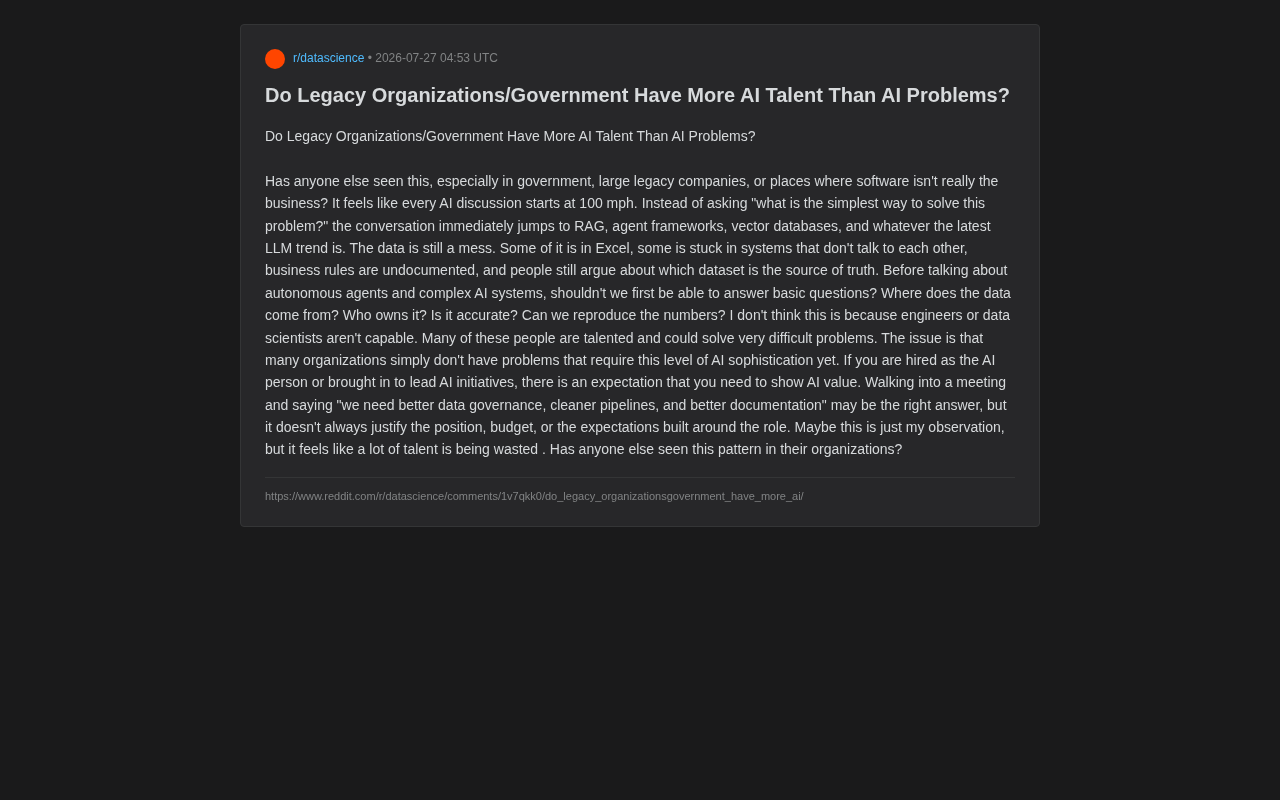
AI Talent Surplus with No Problems to Solve? The Structural Mismatch in Enterprise AI Adoption
Companies race to hire AI talent, but do traditional organizations have enough AI problems to solve? This article examines the structural mismatch in enterprise AI adoption and offers pragmatic strategy advice.
Read more →

·4 min
AI Coding Tools in Practice: Which Ones Actually Stuck with the Team?
A 12-person product team shares real-world experiences with Cursor, Codex, Claude Code, and CodeRabbit—exploring efficiency plateaus, scenario matching, and selection criteria for AI coding tools that actually stick.
Read more →

·3 min
Herder: The Open-Source Terminal Tool for Unified Management of Multiple AI Coding Agents
Herder is an open-source terminal multiplexer for macOS and Windows that unifies management of Claude Code, Codex, OpenCode, and other AI coding agents—with persistence and remote reconnection.
Read more →

·4 min
The Cursor Swarm Experiment: What AI Rebuilding SQLite from Scratch in Rust Reveals About Cost
Cursor's swarm experiment had AI teams implement a SQLite engine in Rust from scratch using only 835 pages of docs. All-frontier models cost $10K+, hybrid role division just $1.3K—a 7.9x gap.
Read more →

·3 min
The Software 3.0 Era: An AI Programming Evolution Guide for Frontend Engineers
Natural language programming is reshaping frontend development. This article explains AI code generation, Prompt formulas, pitfall avoidance, RAG, Agent orchestration, and skill maintenance.
Read more →

·3 min
Coze Agent Development in Practice: From Beginner to Multi-Agent Collaboration
Coze is ByteDance's homegrown agent-building platform. This article covers getting started with Coze, its comparison with Dify, skill system, workflow orchestration, and multi-agent collaboration.
Read more →

·3 min
Building AI Agents with Coze: From Beginner to Multi-Agent Collaboration
Coze is ByteDance's homegrown agent-building platform. This article explains getting started with Coze, comparison with Dify, its skill system, workflow orchestration, and multi-agent collaboration.
Read more →

·2 min
Deep Dive into Agent Skills Architecture: How to Extend AI Agent Capabilities
Agent Skills is a lightweight open-source format that extends AI agent capabilities with plug-and-play skill packages. This article dives deep into the Skills architecture, progressive disclosure, and how it differs from Multi-Agent design.
Read more →

·3 min
Getting Started with AI Agent Development: A Learning Path from Zero to Deployment
A systematic guide to the complete learning path for AI Agent development—covering prompt engineering, RAG knowledge bases, LangChain & LangGraph, fine-tuning, and multi-agent collaboration.
Read more →