#ONNX Runtime C++
20 related articles
·3 min
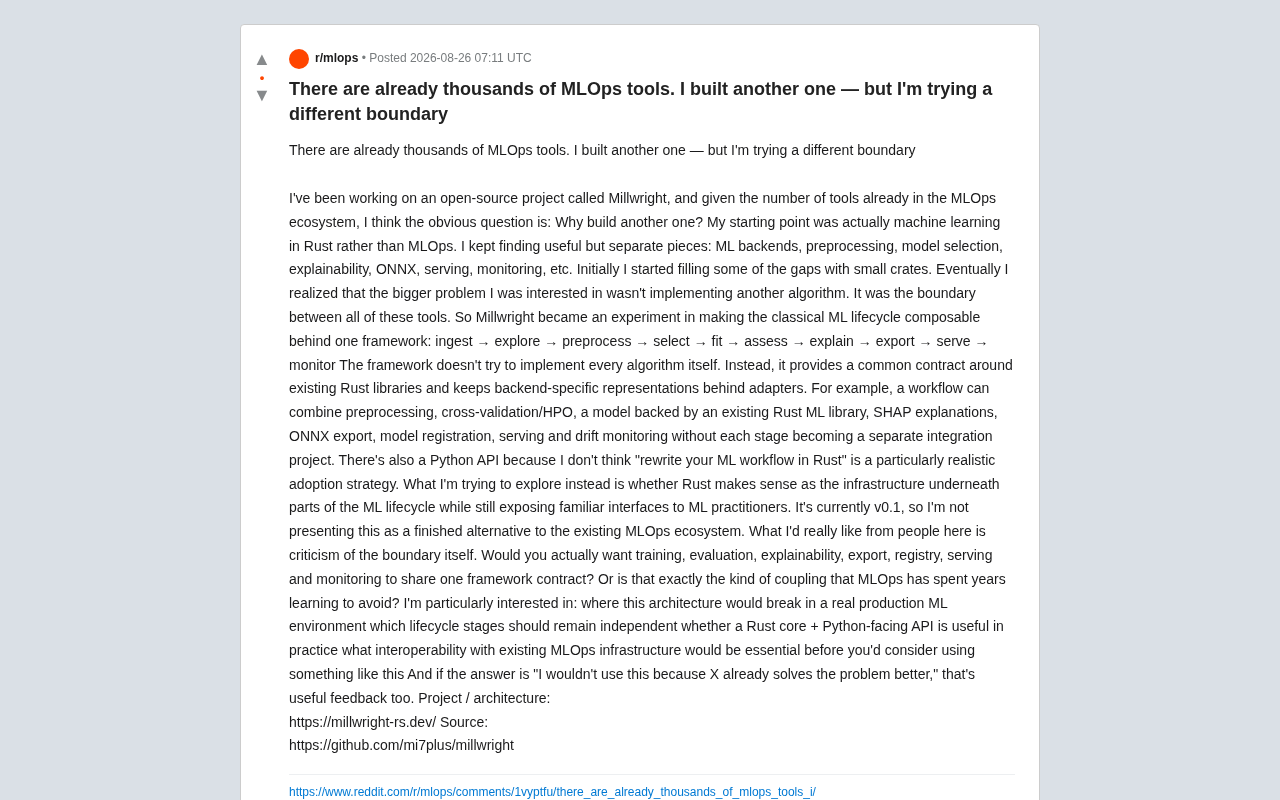
Millwright: Redefining the Boundaries Between MLOps Tools with Rust
Millwright is a Rust-based open-source MLOps framework that composes ML lifecycle stages through a unified contract layer with a Python API. We analyze its architecture and the decoupling vs. unification tradeoff.
Read more →
·3 min
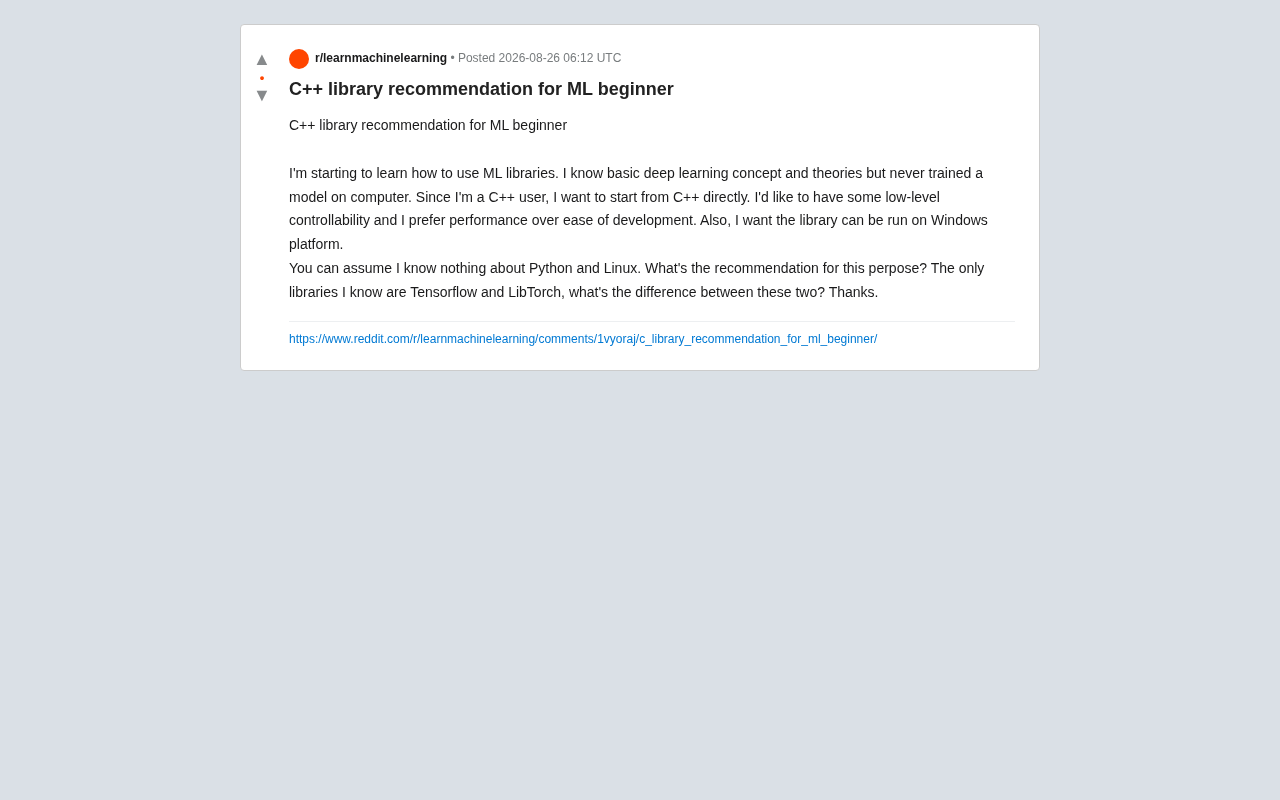
How to Choose a C++ Machine Learning Library: A Comparison Guide for LibTorch vs. TensorFlow
Compare LibTorch and TensorFlow C++ API for machine learning, covering training, Windows support, and learning curve, plus lightweight alternatives like Eigen and mlpack.
Read more →

·3 min
Complete Guide to Locally Deploying Stable Diffusion: Free Unlimited AI Image Generation
A detailed guide on locally deploying a Stable Diffusion all-in-one package, covering installation steps, hardware requirements, and model management for free unlimited AI image generation.
Read more →

·1 min
FastEmbed-rs: A Practical Guide to Local Vector Embedding Generation and Document Reranking in Rust
An in-depth guide to FastEmbed-rs, a high-performance Rust library for local vector embedding generation and document reranking, ideal for RAG systems and semantic search without cloud API dependency.
Read more →

·3 min
Hidden Barriers to Machine Learning Research on Windows and How to Overcome Them
Analysis of Windows limitations for ML research, including open-source code compatibility issues, WSL2 constraints, and why native Linux is the de facto standard. Practical environment selection advice included.
Read more →

·2 min
Mugmoji: Free Online Tool to Turn Photos into Animated Slack Emoji in One Click
Mugmoji is a free browser tool that converts photos to animated Slack emoji in 3 steps: upload, auto background removal, choose from 73 animation presets. No signup needed, runs locally for privacy.
Read more →

·2 min
SubtitleGenerator: Review of a Free In-Browser AI Subtitle Generation and Translation Tool
SubtitleGenerator is an in-browser AI subtitle tool offering 60 free videos/month. It handles generation, proofreading, translation, styling, and multi-format export—all without uploading videos to the cloud.
Read more →

·3 min
ONNX Runtime Explained: A Cross-Platform AI Inference and Training Acceleration Engine
A deep dive into ONNX Runtime's core architecture and use cases, covering execution providers, training acceleration, edge deployment, and large model inference optimization.
Read more →

·3 min
GitHub Daily · August 22: The Rise of Agent Meta-Frameworks and Local-First AI Workbenches
GitHub Trending Aug 22: Agent meta-framework ruflo leads with 68K+ stars, Apache Maka pioneers local-first Agent governance, signaling AI's shift to orchestration and observability.
Read more →

·4 min
How Should New Graduates Choose a Technical Specialization? Starting from ML Engineering Practice
How should new graduates choose a technical specialization in the AI era? Analyzing the gap between model callers and builders, Kubernetes experience transfer, C++/CUDA learning paths, and the value of deep specialization.
Read more →

·3 min
Jetson Xavier NX Frame Rate Drop Investigation: Locating & Optimizing YOLO Inference vs. Post-Processing Bottlenecks
Jetson Xavier NX running YOLOv11+TensorRT drops from 27FPS to 8FPS as object count increases. Deep analysis of post-processing bottlenecks with three optimization solutions.
Read more →

·2 min
Building Custom C/C++ Inference Engines: A Deep Dive into the Tradeoffs Between Performance, Control, and Engineering Cost
Deep analysis of why teams build custom C/C++ inference engines instead of using PyTorch or TensorRT, exploring performance, minimal dependencies, and long-term maintenance tradeoffs.
Read more →
Moonshine: A Low-Latency Speech Engine…
·2 min
Moonshine: A Low-Latency Speech Engine and Open-Source Powerhouse for Building Voice Agents
Moonshine is an open-source, C++-based low-latency speech engine combining STT, intent recognition, and TTS for building voice agents. 9,400+ GitHub Stars.
Read more →

·5 min
Embedded Linux vs. AI Agent Development: A Comprehensive Comparison of Salary, Job Availability, and Career Stability
Embedded Linux or AI Agent development? This in-depth comparison covers salary, job availability, and career stability to help developers pick the right path.
Read more →

·4 min
Ternlight: A 7MB Browser-Side Embedding Model for Server-Free Semantic Search
Ternlight is a 7MB WebAssembly-based browser-side text embedding model requiring no server or GPU. Explore its tech, use cases, and tradeoffs for private, offline semantic search.
Read more →

·6 min
14x Speedup: How Manticore Rebuilt the ONNX Embedding Inference Path
Manticore Search restructured its ONNX inference path to achieve 14x faster text embeddings. Deep dive into batching, session reuse, zero-copy memory, and thread tuning for vector search systems.
Read more →

·3 min
Programmers Pivoting to AI: Opportunities in Application Development and Pitfalls to Avoid
How can ordinary programmers break into AI? This guide breaks down the gap between algorithm engineers and AI app developers, covering Agent development, model fine-tuning, salary trends, and the three hidden risks behind the current opportunity window.
Read more →

·3 min
Java AI Framework Comparison: A Selection Guide for Spring AI, LangChain4J, and More
In-depth comparison of four Java AI frameworks — Spring AI, LangChain4J, DJL, and JBot AI — covering features, use cases, and ecosystem compatibility to guide your selection.
Read more →
 Deep Dives
·3 min
Why Is Python the Top Choice for AI Development? Three Core Reasons Explained in Depth
In-depth analysis of three core reasons Python dominates AI development: simple syntax for quick onboarding, powerful ecosystem, and industry-wide network effects.
Read more →
 Tutorials
·3 min
Unsloth Tutorial: Fine-Tune LLMs Locally with Multi-fold Speed Boost and 60% VRAM Savings
Unsloth is an open-source LLM fine-tuning tool with 63K GitHub stars, supporting Gemma 4, Qwen3, and DeepSeek. It achieves multi-fold training speedup and 60% VRAM reduction through kernel optimization, enabling fine-tuning on consumer GPUs.
Read more →