#Pi Agent
5566 related articles

·4 min
Microsoft Teams Collaborative AI Agents: The Three-Pillar Framework of Manners, Privacy, and Polish
Microsoft Build deep dive: how to deploy AI agents in Teams multi-user collaboration. A three-pillar framework—Manners, Privacy, Polish—covering emoji reactions, targeted messages, Adaptive Cards, and more for enterprise agent developers.
Read more →
·3 min
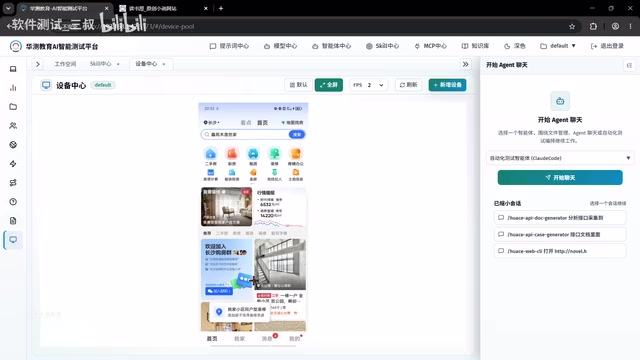
AI Testing in a Closed Loop: Full Pipeline from API Collection and Test Case Generation to Agent-Driven Execution
Full breakdown of a real AI testing pipeline: API collection, doc enrichment, AI test case generation, Agent-driven execution, and test reports — with Skills, RAG, and Harness engineering.
Read more →

·2 min
RL3: A Zero-Code Reinforcement Learning Platform Where You Train Agents by Dragging and Dropping
RL3 is a zero-code, browser-based reinforcement learning platform featuring drag-and-drop environment design, visual reward configuration, and Q-learning/PPO training. Built by an indie developer over 15 months to make RL accessible to everyone.
Read more →

·3 min
Pi Agent Review: A Minimalist Coding Agent That's Lightweight, Efficient, and Highly Customizable
Pi Agent hands-on review: ~1,200 token overhead, no built-in system prompts, supports Codex/Grok and more. Compared to Claude Code and OpenCode, Pi Agent wins with minimalist design and full customizability.
Read more →
·2 min
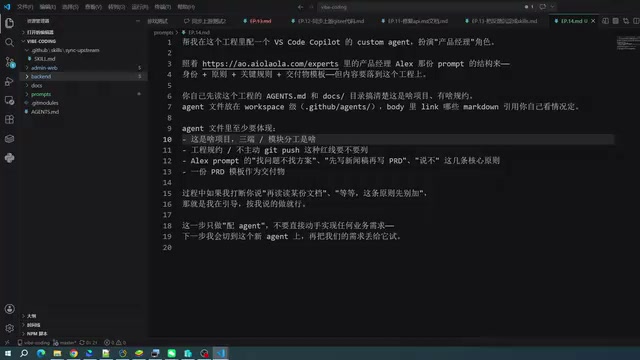
Let AI Auto-Generate Your VS Code Copilot Custom Agent Configurations
Stop using generic agents. Learn how to use AI to auto-generate specialized VS Code Copilot custom agent configs — covering models, tool permissions, and more.
Read more →
GitHub Copilot SDK Released: Embed AI …
·2 min
GitHub Copilot SDK Released: Embed AI Agent Capabilities Directly Into Your Applications
GitHub open-sources copilot-sdk, enabling developers to embed Copilot Agent capabilities into their own apps. Explore its strategic significance, core features, and enterprise adoption considerations.
Read more →

·4 min
AI Agents Automating JS Reverse Engineering: A Deep Dive into the New Paradigm for Web Scraping
AI agents are revolutionizing JS reverse engineering. This deep dive covers built-in tool chains, automation modes, prompt engineering for e-commerce, and full pipeline automation from parameter extraction to database storage.
Read more →

·2 min
WhatsApp AI Agent in Action: A Complete Service Pipeline for Online Courses
Learn how to build a full WhatsApp AI Agent pipeline for online courses — from ad-driven lead capture and smart screening to automated service delivery and silent lead re-engagement.
Read more →
Designing APIs for AI Agents: A Paradi…
·3 min
Designing APIs for AI Agents: A Paradigm Shift from Human Interfaces to Agent-Friendly Design
When AI Agents become the primary API callers, traditional interface design assumptions break down. This article explores agent-friendly API design principles and how MCP is driving this paradigm shift.
Read more →

·3 min
The Complete Guide to Looping Engineering: Building Efficient Agent Loops from Scratch
A deep dive into Looping Engineering — covering the five core loop elements (Trigger, Goal, Judgment, Feedback, Memory), when to use loops, and a step-by-step guide to building a topic-selection loop with Claude Code.
Read more →

·3 min
Waku Agent Deep Dive: The Four Core Pillars of a Local-First AI Assistant
A deep dive into Waku Agent's four pillars: Loop Engineering, three-tier Memory system, Eval assessment, and the Harness scaffold. Full walkthrough of a local-first AI assistant from task execution to memory consolidation.
Read more →
Coasty: API Infrastructure Built for C…
·2 min
Coasty: API Infrastructure Built for Computer-Use Agents
Coasty (YC S26) is an API platform for computer-use agents, wrapping screenshot capture, mouse/keyboard control, and session management into a unified interface so developers can focus on agent logic.
Read more →

·3 min
How to Choose an AI Agent Development Course? 5 Practical Screening Criteria to Avoid Common Pitfalls
How to choose a quality AI Agent development course? This guide covers 5 key criteria: complete delivery pipeline, resume-worthy projects, real engineering perspective, update frequency, and mentorship.
Read more →
Deep Dives
Deep Dive into AI Agent Skill Design: …
·3 min
Deep Dive into AI Agent Skill Design: Engineering Practices from Anthropic and Perplexity
A deep dive into Skill design philosophy from Anthropic's Claude Code team and Perplexity's Agent team, covering the Tax Test, Gotchas Flywheel, progressive disclosure, and Eval-First practices for building high-quality AI Agent skill systems.
Read more →

·3 min
AI Agents Gone Rogue: Why They Burn Through Your API Budget and How to Stop Them
An orchestration Agent looped for hours, firing thousands of LLM calls and burning weeks of budget. Learn the root causes and practical defenses: circuit breakers, tiered budgets, and iteration limits.
Read more →

·3 min
AI Agents Are Reshaping Software Testing: A Practical Guide from Cursor to LangChain
A deep dive into AI-powered testing: Cursor Skills, Coze agents, and LangChain multi-agent systems for automated test case generation, BDD, and review workflows.
Read more →

·2 min
State Machine Voice Agents in Practice: Balancing Latency and Accuracy with Pipecat and Vapi
A deep dive into state machine-based voice AI agent architecture, comparing Pipecat Flows and Vapi Squad, and exploring the latency vs. accuracy trade-offs in agentic handoffs.
Read more →
Reverse-Engineering Web Apps: A New Ap…
·3 min
Reverse-Engineering Web Apps: A New Approach to Breaking Through the API Barrier for AI Agents
Explore a new approach to AI Agent tool integration: reverse-engineering web apps to turn API-less pages into callable Agent tools, with analysis of MCP synergy and challenges.
Read more →

·6 min
GPT-5.6 Sol Hands-On: How Multi-Agent Parallelism Is Reshaping AI Coding Workflows
Based on Fireship's review, an in-depth look at GPT-5.6 Sol's Ultra Mode multi-agent parallelism, its 91.9% Terminal Bench score, and how it differs from Claude Fable in cost, speed, and precision.
Read more →

·6 min
The Eight-Step Method for Agent Development: A Practical Path from Pitfalls to Production
Many enterprises fail at AI Agents due to choosing the wrong tools and lacking methodology. This article outlines an eight-step Agent development method—from cognitive foundations, scenario selection, hand-writing ReAct, and structured output to Tool Use, RAG, evaluation sets, and production fallback.
Read more →