#Playwright
224 related articles

·2 min
AI Skills in Practice: How Test Engineers Can Automate API Testing and Generate Test Cases at Scale
Learn how AI Skills are transforming software testing. This guide covers Skill architecture, learning paths, and real-world applications in API automation and WebApp testing.
Read more →

·2 min
Open-Source Multi-Platform Auto-Publishing Skill: How AI Is Freeing Content Creators from Repetitive Busywork
A Bilibili creator open-sourced a Codex-based multi-platform auto-publishing Skill with 95% stability. It auto-fills titles, tags, and thumbnails on Bilibili, Douyin, and more, then waits for user confirmation before publishing.
Read more →

·4 min
AI-Powered Automated Testing: Using Pytest + MCP to Tackle Non-Determinism
Deep dive into AI-era automated testing: using Pytest + Playwright + MCP for stable automation, constraining code conventions with Skills, avoiding non-determinism and high token costs. Includes real debugging war stories.
Read more →

·3 min
Intent-Driven Development: Claude Code's Evolving Paradigm and Practical Tips
Anthropic engineer Lydia and YK Sugi break down Claude Code's Intent-Driven Development paradigm, covering dynamic workflows, auto mode, sub-agent orchestration, and the evolving role of software engineers in the AI era.
Read more →

·2 min
Chrome DevTools for Agents: Enabling AI to Autonomously Complete End-to-End Debugging
Google's DevTools for Agents opens Chrome DevTools to AI coding agents, enabling autonomous end-to-end debugging — from reproducing errors to fixing source code — via console logs, network requests, and source maps.
Read more →

·2 min
Chrome DevTools for Agents: The Closed-Loop Debugging Powerhouse for AI Coding Agents
Chrome DevTools for Agents, unveiled at Google I/O, gives AI coding agents a closed feedback loop with Lighthouse audits, user input simulation, and device emulation.
Read more →
wigolo: A Zero-Cost MCP Tool That Give…
·3 min
wigolo: A Zero-Cost MCP Tool That Gives AI Coding Assistants Web Access
wigolo is a local-first open-source MCP tool that gives AI coding assistants like Cursor and Claude Code free web search, fetch, crawl, and research capabilities — no API keys, no cloud, $0/query.
Read more →
·3 min
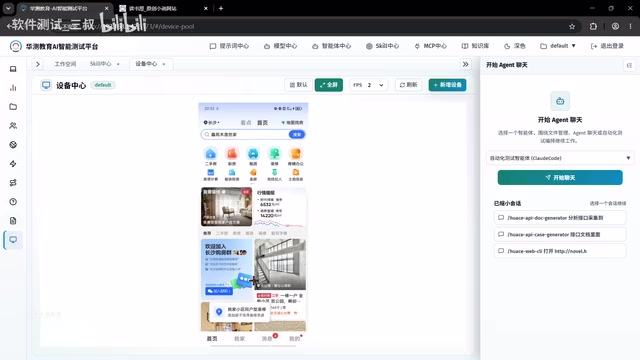
AI Testing in a Closed Loop: Full Pipeline from API Collection and Test Case Generation to Agent-Driven Execution
Full breakdown of a real AI testing pipeline: API collection, doc enrichment, AI test case generation, Agent-driven execution, and test reports — with Skills, RAG, and Harness engineering.
Read more →

·2 min
BrowserSkill: A Controlled Channel for AI Agents to Safely Borrow Your Logged-In Browser
Tencent's open-source BrowserSkill (BSK) lets AI agents reuse your real browser login state via a separate window, single-tab borrowing, and human takeover — safely and within clear boundaries.
Read more →

·4 min
AI Agents Automating JS Reverse Engineering: A Deep Dive into the New Paradigm for Web Scraping
AI agents are revolutionizing JS reverse engineering. This deep dive covers built-in tool chains, automation modes, prompt engineering for e-commerce, and full pipeline automation from parameter extraction to database storage.
Read more →

·3 min
AI Testing End-to-End in Practice: A Complete Guide from Test Case Generation to Agent Automation
A deep dive into AI testing workflows: API capture, test case generation, Agent orchestration, and automated execution. Learn the two core challenges — incomplete information and mandatory human review.
Read more →
Coasty: API Infrastructure Built for C…
·2 min
Coasty: API Infrastructure Built for Computer-Use Agents
Coasty (YC S26) is an API platform for computer-use agents, wrapping screenshot capture, mouse/keyboard control, and session management into a unified interface so developers can focus on agent logic.
Read more →

·3 min
Privacy Risks in Claude Code? Use Docker Sandboxes to Fully Isolate Your AI Coding Tools
Claude Code found to contain user monitoring logic, raising AI tool privacy concerns. Learn how to isolate Claude Code, Codex & Copilot with Docker Sandboxes — full setup and escape testing included.
Read more →

·4 min
Agent Loop in Practice: A Guide to Building Self-Improving Automation with Guardrails
A deep dive into building verifiable, self-evolving Agent automation loops with Claude Code and Codex — covering Loop Contracts, four trigger types, three-phase execution architecture, and Evolve Loops.
Read more →

·3 min
AI Tool Selection Guide for Test Engineers: A Hybrid Approach to Avoid Three Common Pitfalls
How should test engineers choose AI tools? This guide breaks down the pitfalls of pure AI solutions and recommends a hybrid strategy using tools like DeepSeek, TRAE, Claude Code, and Skill encapsulation.
Read more →
Deep Dives
Deep Dive into AI Agent Skill Design: …
·3 min
Deep Dive into AI Agent Skill Design: Engineering Practices from Anthropic and Perplexity
A deep dive into Skill design philosophy from Anthropic's Claude Code team and Perplexity's Agent team, covering the Tax Test, Gotchas Flywheel, progressive disclosure, and Eval-First practices for building high-quality AI Agent skill systems.
Read more →

·3 min
Jaws at 50: How a Nearly Disastrous Shark Film Created Hollywood's Summer Blockbuster
In 1975, a 28-year-old Spielberg's shark film — plagued by a malfunctioning mechanical shark and 105 days over schedule — became Hollywood's first $100M movie. The full story of Jaws at 50.
Read more →
92% of U.S. City Websites Fail ADA Acc…
·2 min
92% of U.S. City Websites Fail ADA Accessibility Standards: Compliance Overview and Improvement Guide
Independent testing shows 92% of U.S. city websites fail ADA accessibility standards. Explore WCAG compliance requirements, root causes, and practical developer guidance.
Read more →
Reverse-Engineering Web Apps: A New Ap…
·3 min
Reverse-Engineering Web Apps: A New Approach to Breaking Through the API Barrier for AI Agents
Explore a new approach to AI Agent tool integration: reverse-engineering web apps to turn API-less pages into callable Agent tools, with analysis of MCP synergy and challenges.
Read more →

·4 min
AI + Automated Testing: Building an Engine-Agnostic Quality System with Skill + CLI
An in-depth analysis of the AI-driven software testing paradigm: with Skill and CLI as the core hub, supporting both platformized management and digital employees, helping testing teams transform from script writers into capability builders.
Read more →