#Processing
4725 related articles

·3 min
How to Do Research in the AI Era: Avoid Outsourcing Your Thinking to Machines
When AI can instantly read papers and generate code, how can researchers avoid cognitive atrophy? This article explores the traps of AI-assisted research and offers practical advice for rebuilding methodology.
Read more →

·4 min
Advancing Your Self-Taught Machine Learning Journey: Three Paths Forward After Completing Foundational Projects
After completing MNIST implementation and paper reproduction, how should self-taught ML learners advance? This article outlines three paths: computer vision, NLP, and math foundations.
Read more →

·3 min
Complete Practical Guide to Developing Power Automate Cloud Flows with GitHub Copilot
Learn how to use GitHub Copilot's Power Platform Skills plugin to generate, modify, and debug Power Automate cloud flows with natural language, including setup, Azure auth, demos, and cost analysis.
Read more →

·3 min
ChatGPT Voice Mode Suddenly Screaming? A Deep Technical Analysis of AI Abnormal Behavior
A user's ChatGPT Voice Mode suddenly screamed in terror late at night, then denied it happened. This article explains the technical causes behind AI voice anomalies, including audio hallucinations and context disruption.
Read more →

·3 min
LLM Learning Roadmap: A Three-Phase Practical Guide
A systematic LLM learning roadmap: from Python basics to LangChain & LlamaIndex frameworks, RAG, Agent, and fine-tuning core skills, plus hands-on projects to master LLM app development in 3 months.
Read more →

·3 min
FreqMark Text Watermarking Technology: How Frequency-Domain Watermarks Detect AI-Generated Content
Deep dive into FreqMark frequency-domain text watermarking: how Fourier transforms embed covert signals in AI-generated text for content tracing and detection.
Read more →
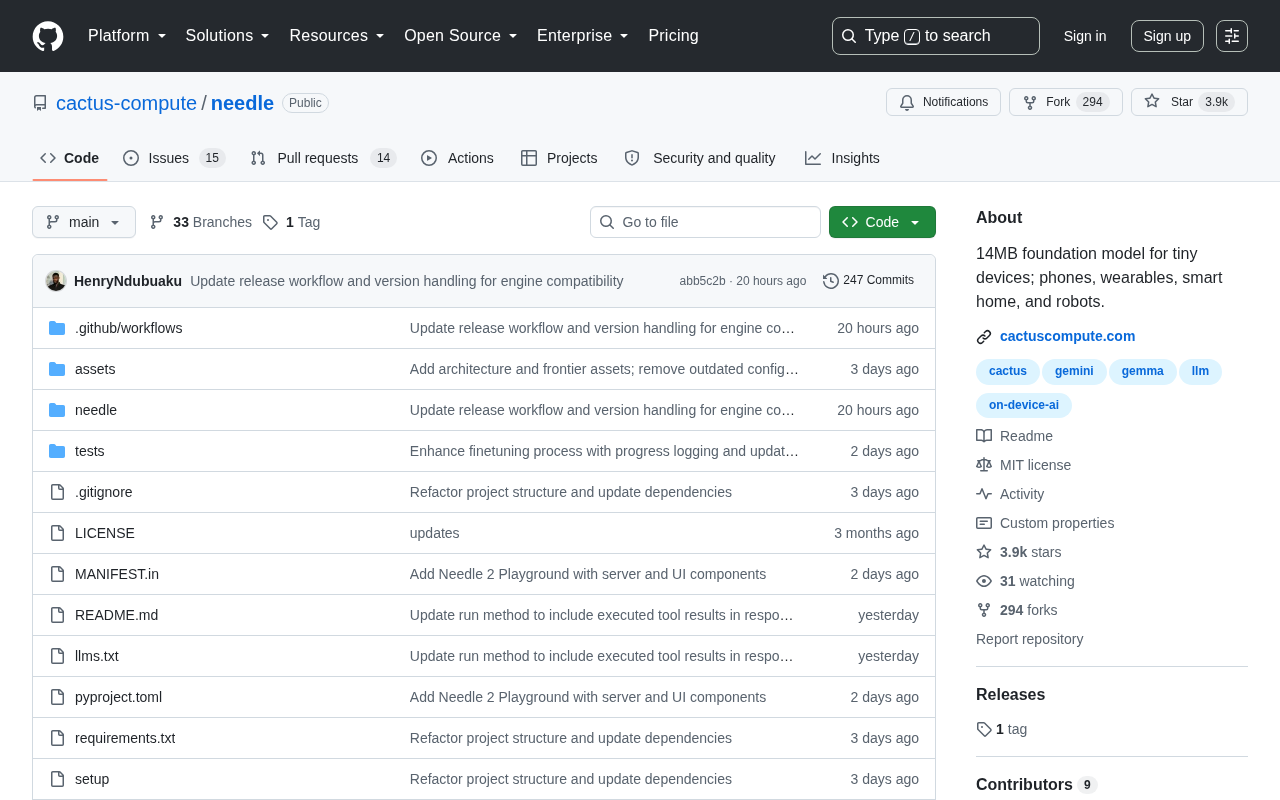
·3 min
Needle: How a 14MB Foundation Model Is Unlocking Edge AI Deployment
Needle is a 14MB open-source foundation model from cactus-compute, designed for phones, wearables, smart home devices, and robots. Explore its edge AI potential.
Read more →

·3 min
Macro Open Source Project: Building an All-in-One Team Collaboration Platform with Shared AI Memory
Macro is an open-source team collaboration workspace built in Rust that integrates email, chat, docs, tasks, CRM and more through @-linking and shared AI memory to eliminate information silos.
Read more →

·2 min
NVIDIA Open-Sources Switchyard: An AI Task Scheduling Engine Built with Rust
NVIDIA-NeMo team open-sources Switchyard, a high-performance AI task scheduling engine built in Rust. Explore its technical positioning, why Rust was chosen, and its strategic role in the NeMo ecosystem.
Read more →

·2 min
LTX-2 Open Source: A Complete Analysis of the Unified Audio-Video Generation Model
Deep dive into Lightricks' open-source LTX-2 unified audio-video generation model, covering its Python inference toolkit, LoRA fine-tuning trainer, and synchronized audio-visual generation capabilities.
Read more →

·5 min
Harness: The Operating System That Takes LLM Agents from Demo to Production
Deep dive into Harness technology: how context engineering, memory management, and multi-agent architecture transform LLM agents from stochastic demos into stable production systems.
Read more →

·3 min
Java Backend to AI: A Practical Guide to Multi-Agent Collaboration with Spring AI
How can Java backend engineers transition to AI Agent development? This guide covers the evolution from Chat to Agentic AI, ReAct decision-making, MCP tool calling, and multi-Agent orchestration with Spring AI.
Read more →

·4 min
Getting Started with LangChain 1.3: Ecosystem Architecture & Agent Development Complete Guide
Complete guide to LangChain 1.3 ecosystem: four core modules (LangChain, LangGraph, DeepAgent, LangSmith), from setup to building your first Agent with tools, prompts & memory.
Read more →

·3 min
ml-pipes: Building Software Engineering Best Practices Into ML Inference Pipelines
ml-pipes is an open-source framework that builds pre-run validation, pipeline inspection, tracing, and benchmarking into ML inference pipelines, bridging the MLOps engineering gap.
Read more →

·2 min
Aquifer Open Source: A Traffic Smoothing Solution for Peak Shaving Bursty GPU Inference Workloads
Aquifer is an open-source traffic smoothing runtime that uses durable queue buffering and backend backpressure to solve burst traffic challenges in GPU inference services, enabling peak shaving and cost reduction.
Read more →

·4 min
AI Mass-Producing Sales Videos: The Horse Racing Revolution in Content Commerce
Breaking down an explosive overseas AI content commerce strategy: batch-generating sales videos via AI workflows and horse-race testing them on TikTok and Instagram with CLI + Codex automation.
Read more →

·4 min
6 Must-Do Tasks Before Deploying Enterprise AI Agents: A Complete Guide to Observability + Evaluation
A detailed guide to 6 critical engineering challenges for enterprise AI Agents before production, covering Langfuse-based tracing, observability, evaluation stages, prompt governance, and high-concurrency architecture.
Read more →

·5 min
Building Data Agents with BigQuery and ADK: AgentOps in One Line of Code
Deep dive into Google Cloud's complete stack for building data Agents with BigQuery and ADK, covering MCP Toolbox parameterized SQL, managed MCP servers, and Agent Analytics one-line observability.
Read more →

·3 min
Tutorial: Connect Claude, Codex, and Other LLMs to Copilot in VSCode
Learn how to connect Claude, Codex, and other LLMs to VSCode's Copilot Chat via a third-party API proxy plugin. Four steps: get a Key, install plugin, manage models, and switch freely.
Read more →

·2 min
Struggling to Choose a Gemini Model? Analyzing UX Pain Points in the Multi-Model AI Era
Facing Gemini Pro, Flash, Ultra and many variants, users often suffer choice paralysis. This article analyzes AI model naming confusion, information asymmetry, and proposes UX solutions like smart defaults and intent-first design.
Read more →