#Python image compression
71 related articles
 Tutorials
·1 min
Python Image Compression Tool: AI-Generated Code Achieves 60% Size Reduction with Virtually No Quality Loss
Use DeepSeek AI to generate Python image compression code with Pillow. Achieve 30%-60% file size reduction with virtually no quality loss, all processed locally for complete privacy.
Read more →

·4 min
Getting Started with Machine Learning: How to Overcome Math Anxiety and Find a Pragmatic Learning Path
Scared off by math when starting ML? This article addresses beginners' math anxiety, clarifies how much linear algebra, calculus, and statistics you actually need, and provides a pragmatic top-down learning path with recommended resources.
Read more →

·3 min
Math First or Build Cool Projects? A Deep Dive into Technical Learning Paths
An Indian undergrad faces a tech path dilemma: stick with math-first fundamentals or pivot to flashy projects? Deep analysis of math vs. project experience for quant research and OR careers.
Read more →

·4 min
SAM 3 Auto-Labeling in Practice: Six Lessons Where Preprocessing Matters More Than the Model
Practical lessons from building a SAM 3 auto-labeling pipeline: vision embedding reuse, resolution handling, prompt engineering, threshold sweeping, and more.
Read more →

·3 min
Microsoft's TRELLIS.2 Goes Open Source: How Compact Structured Latents Are Reshaping 3D Generation
Deep dive into Microsoft's open-source TRELLIS.2 and its core innovation — Native Compact Structured Latents (SLAT) — exploring how it breaks through 3D generation efficiency bottlenecks for gaming, e-commerce, VR, and more.
Read more →

·4 min
Spring AI 1.0 Practical Guide: A Java Developer's Fast Track to Building AI Applications
Spring AI 1.0 is here — Java developers can now build AI apps without switching to Python. This guide covers LLM integration, RAG, intelligent customer service, and Agent patterns for enterprise deployment.
Read more →
Kronos Financial Foundation Model: Usi…
·7 min
Kronos Financial Foundation Model: Using AI to Read the Market Language of Candlesticks
Kronos is the first open-source foundation model treating candlestick data as the "language of financial markets," using an autoregressive Transformer and earning 32K GitHub Stars. A deep dive into its principles, applications, and limits.
Read more →
Agentty: An 11MB Lightweight Claude Co…
·2 min
Agentty: An 11MB Lightweight Claude Code Alternative Built with C++26
Agentty is an open-source AI coding assistant written in C++26, compiling to just 11MB. Positioned as a drop-in alternative to Claude Code, it explores lightweight, native-first AI tooling.
Read more →
TurboVec: A Deep Dive into the Rust-Po…
·3 min
TurboVec: A Deep Dive into the Rust-Powered High-Performance Vector Index Library
TurboVec is a Rust-based vector index library powered by TurboQuant, with Python bindings for RAG, semantic search, and AI applications. A deep-dive into its architecture.
Read more →

·2 min
Forge: Adding Reliability Guardrails to Local Model Tool Calling
Forge is an open-source Python middleware for local models (Ollama, llama.cpp, vLLM) that boosts tool-calling reliability via three-layer guardrails: validation, rescue parsing, and retry.
Read more →
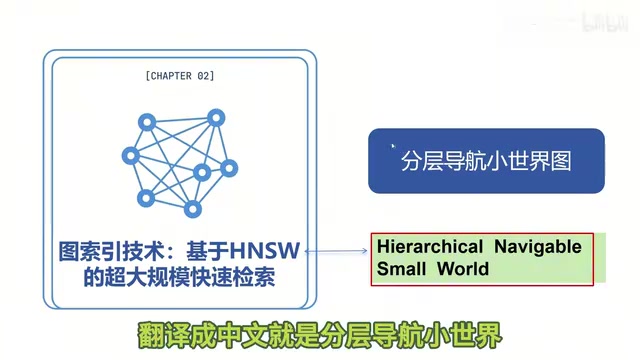
·5 min
A Deep Dive into Vector Search for AI Agents: The Technical Foundations of RAG and Long-Term Memory
An in-depth look at the core tech behind AI Agents: how the HNSW, IVF, and PQ vector search algorithms power RAG and long-term memory. Understand where a model's "memory" and "knowledge" come from.
Read more →

·2 min
Hombre: An Open-Source Visual Dashboard for Honcho AI Memory Server
Hombre is an open-source web GUI for self-hosted Honcho AI memory servers. Features workspace management, semantic search, real-time sync, and RBAC — built with FastAPI and native frontend, MIT licensed, Docker-ready.
Read more →

·2 min
Local Image-to-3D on Apple Silicon: 20 Seconds, 2GB RAM — Modelr Open-Source App Tested
A developer ports Tencent's Hunyuan3D to Apple MLX. M4 Max benchmarks: shape generation in 20s, 5.6GB peak RAM. Quantized versions run on iPhone. Modelr is the first local image-to-3D app for Apple Silicon.
Read more →

·4 min
A Deep Dive into Claude Cookbooks: A Guide to the Official 47K-Star Hands-On Code Repository
Anthropic's open-source Claude Cookbooks project offers runnable Jupyter Notebook examples covering RAG, Tool Use, multimodal processing, and more—helping developers master Claude API best practices.
Read more →

·4 min
AI Agents Powering the Full Research Pipeline: A Practical Guide to Automation from Topic Selection to Publication
Learn how to use AI Agents to link the entire research pipeline—from literature management, data analysis, and paper writing to scientific illustration and dissemination—building a reusable research automation workflow with NotebookLM, N8N, and Ollama.
Read more →

·3 min
ComfyUI-INT4-Fast: Running Flux Models Smoothly on 6GB GPUs
ComfyUI-INT4-Fast brings W4A4 quantized inference to ComfyUI. RTX 3060 (6GB VRAM) generates 1024×1024 images in 17s. Per-layer mixed-precision routing balances speed and quality for Flux models.
Read more →

·4 min
Tencent Open-Sources Agent Memory: A Fully Local AI Long-Term Memory Solution with Zero External Dependencies
Tencent Cloud open-sources TencentDB Agent Memory — a fully local AI Agent memory system with a 4-tier progressive pipeline, zero external API dependencies, and 8,100+ GitHub Stars. Ideal for finance, healthcare, and privacy-sensitive use cases.
Read more →

·6 min
GPT-5.6 Hands-On Deep Dive: ChatGPT and Codex Merge, Full Analysis of the Sol Model
GPT-5.6 is officially released, merging ChatGPT and Codex into one app and launching the three-tier Sol, Terra, and Luna models. A detailed breakdown of 16 hands-on tests plus Worker mode and Codex dev upgrades.
Read more →

·8 min
GPT-5.6 Hands-On: Farm Automation, Mathematical Breakthroughs, and End-to-End AI Execution
GPT-5.6 (Sol, Terra, Luna) hands-on testing: a Hokkaido farmer controls a greenhouse with AI, a NYC small business builds custom software, and a Polish mathematician breaks a 3-year problem. A deep dive into end-to-end autonomous execution.
Read more →

·5 min
Runs on Low VRAM! A Hands-On Look at the ID LoRA Face-to-Video Workflow
A face-to-video workflow built on GGUF quantized models and ID LoRA runs on just an RTX 3060 with 6GB VRAM. This article breaks down its core principles, four-step process, and how it tackles facial consistency in AI video.
Read more →