#Rust frontend toolchain
95 related articles

·4 min
Next.js Deep Dive: A Full-Stack Framework Selection Guide Behind 140K+ Stars
A deep dive into Next.js: SSR, React Server Components, App Router, and Turbopack. Learn the key differences from plain React, ideal use cases, and how to make the right framework decision.
Read more →

·6 min
GPT-5.6 Now Widely Available: The Era of Three-Tier Models and Multi-Agent Orchestration Arrives
OpenAI releases GPT-5.6 (SOUL/TERRA/LUNA), with Ultra mode running four agents in parallel; Meta launches Muse Spark 1.1 with million-token context; ChatGPT desktop unifies Chat, Work, and Codex.
Read more →

·2 min
Agent Skills: Bringing Production-Grade Engineering Capabilities to AI Coding Agents
Google engineer Addy Osmani's open-source project agent-skills (76k+ GitHub stars) injects production-grade engineering skills into AI coding agents, covering performance, security, and code quality.
Read more →

·3 min
GitHub Daily · July 11: Agent Skills Ecosystem Explodes, AI Programming Enters the Era of 'Skill Standardization'
July 11 GitHub Daily: Three Agent Skills projects surge on the same day, signaling AI programming's shift to skill standardization, with cross-platform open standards and local Agent memory leading the way.
Read more →

·4 min
Hackathons Are Back: The Value and Lessons of Community-Driven AI Innovation
Behind every hackathon lies a deeper story about AI innovation ecosystems. This article examines why hackathons are surging in the generative AI era, their core value, and key lessons for AI developers and founders.
Read more →
·6 min
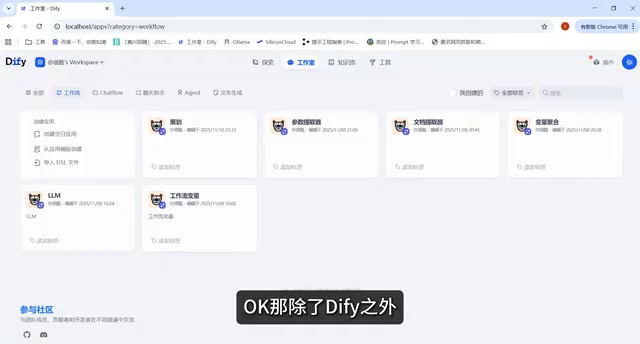
Complete Guide to Deploying Dify Locally: Docker + Ollama + RAG Setup Tutorial
A detailed guide to deploying the Dify agent platform locally: from Docker setup and integrating Ollama + DeepSeek local LLMs to workflow orchestration and RAG knowledge base construction.
Read more →

·7 min
6 Core Standards of a High-Value Agent Project That Impress Interviewers
Most Agent projects lack competitiveness in interviews due to missing business value and engineering depth. This article breaks down the 6 core standards of high-value Agent projects.
Read more →

·5 min
Python Learning Roadmap for Beginners: A Three-Stage System to Avoid 90% of Detours
Learning Python from scratch? This article breaks down the three learning stages—Fundamentals, Intermediate, and Practice—covering variables, OOP, scraping, and data analysis to help you plan a systematic Python path.
Read more →

·6 min
From Frontend Engineer to AI Agent Developer: A Complete High-Paying Skill Tree Breakdown
Pure frontend roles are shrinking; AI Agent development is the high-salary divide. This guide breaks down the full skill tree for frontend engineers pivoting to AI: TypeScript, frameworks, AI productivity, and Agent core concepts (MCP, Tool Calling, Skill).
Read more →

·3 min
WASM for Data Processing: Can Browsers Really Handle Big Data?
Can WASM really handle big data? This deep dive covers DuckDB-WASM's in-browser SQL capabilities, edge data processing architectures, and where WebAssembly fits in modern data engineering.
Read more →

·6 min
10 Billion Tokens in Practice: An In-Depth Review of Codex's Long-Horizon Engineering Capabilities
Creator Ajiang burned 10B Tokens on Codex to migrate cc-haha from Tauri 2 to Electron. A deep dive into Codex's long-horizon engineering, Computer Use, costs, and practical advice for developers.
Read more →

·6 min
Playwright's Three Test Agents: A Deep Dive into Planner, Generator, and Healer
Playwright's three new Test Agents—Planner, Generator, and Healer—cover the full pipeline from test design to script generation and auto-repair, integrated with VS Code, Claude Code, and more.
Read more →
Devin Adds Kimi K2.7 and GLM 5.2 — Bot…
·2 min
Devin Adds Kimi K2.7 and GLM 5.2 — Both Models Free With No Quota Until July 5
Devin now supports Kimi K2.7 and GLM 5.2 on Desktop and CLI. Pro, Max, and Teams users can use both models quota-free until July 5. Strong FrontierCode Extended benchmark results make this a perfect evaluation window.
Read more →

·7 min
Linked Context: How AI Agent Skills Can Point to the Entire Open Web
Deep dive into Skill Studio's "Linked Context" mechanism—skill files become real-time URL fetches instead of pre-loaded copies, extending AI Agent progressive disclosure to the entire open web.
Read more →

·2 min
AI-Generated Deployment Docs + Cloudflare in Practice: The Full MokerSaaS Launch Workflow
How MokerSaaS used AI tool Cosmo to auto-generate Cloudflare deployment docs, then followed the document-driven workflow to bundle, deploy, and launch.
Read more →

·3 min
Paseo: A Unified Cockpit for Remotely Controlling Coding Agents from Your Phone
Paseo is a locally deployed remote console for coding Agents, enabling mobile monitoring of Claude Code, Codex, Copilot and more. Learn about its architecture, use cases, and security considerations.
Read more →
·4 min
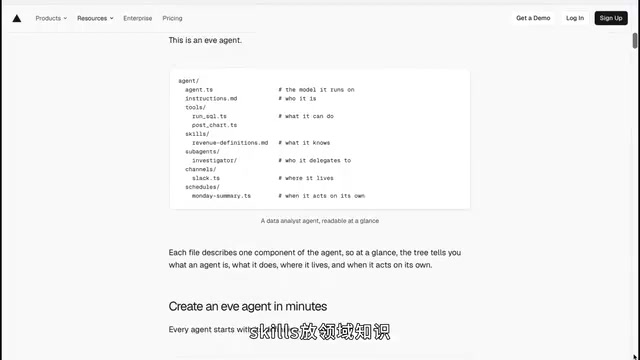
Deep Dive into Six AI Development Tools: Loop Recipe Library, Vercel Agent Framework, and More
Deep analysis of Loop workflow recipes, Vercel's open-source Agent framework, Pyker AI-native project management, Arrow P2P tool, DBX database client, and NVIDIA's Skill Spectre security tool.
Read more →

·4 min
Hands-On Tutorial: Building an AI Trending News Dashboard from Scratch with Claude Code
Learn to build an AI trending news dashboard from scratch with Claude Code — no coding required. Covers CC setup, domestic model integration, and full-stack development.
Read more →

·3 min
Cloudflare Acquires VoidZero: How the Vite Ecosystem Changing Hands Reshapes the Cloud Development Landscape
Deep analysis of Cloudflare's VoidZero acquisition: why the Vite ecosystem is key, how it fixes Cloudflare's DX gap, and what it means for cloud platform competition in the AI Agent era.
Read more →
·3 min
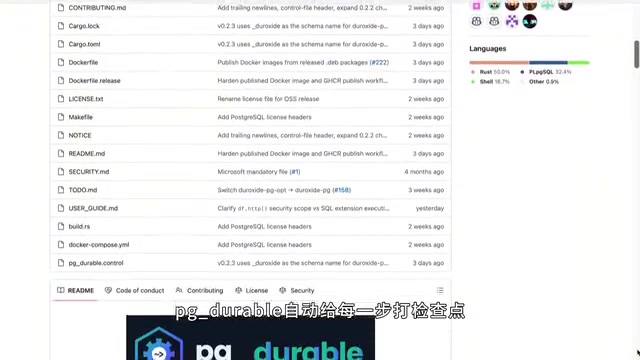
Semantic Code Diff, In-Database Workflows & Mac-Native Containers: Open Source Projects Worth Watching This Week
This week's roundup covers five open source projects: SAM semantic code diff boosting AI Agent accuracy 2.3x, Microsoft's PG Durable for PostgreSQL workflows, Apple Container, Mattermost, and Extend UI.
Read more →