#SSE vs STDIO
66 related articles
 Tutorials
·2 min
MCP Transport Protocols Explained: SSE vs. Streamable HTTP vs. STDIO
Explore MCP's three transport protocols — SSE, Streamable HTTP, and STDIO — their differences, use cases, and configuration tips for developers.
Read more →

·6 min
Hands-On with Panel AI On-Premises Deployment: One-Click Enterprise Adoption and Unified Compute Cluster Scheduling
In-depth review of Panel AI v1.1.1: second-level installation, no-public-IP networking, batch compute cluster management. Learn how enterprise AI on-premises deployment barriers are dramatically lowered.
Read more →

·7 min
Getting Started with Claude Code: Five Dimensions to Understand Why It Outperforms Regular AI
Claude Code isn't just a chat AI—it can directly read projects, modify code, and run commands. This article compares Claude Code with regular AI across five dimensions to help you decide if it's worth trying.
Read more →

·7 min
Getting Started with Claude Code: Five Dimensions That Show Why It Outperforms Ordinary AI
Claude Code isn't just a chat AI—it can directly read projects, modify code, and run commands. This article compares Claude Code with ordinary AI across five dimensions: interaction, context, execution, memory, and tool calling.
Read more →
wigolo: A Zero-Cost MCP Tool That Give…
·3 min
wigolo: A Zero-Cost MCP Tool That Gives AI Coding Assistants Web Access
wigolo is a local-first open-source MCP tool that gives AI coding assistants like Cursor and Claude Code free web search, fetch, crawl, and research capabilities — no API keys, no cloud, $0/query.
Read more →
·3 min
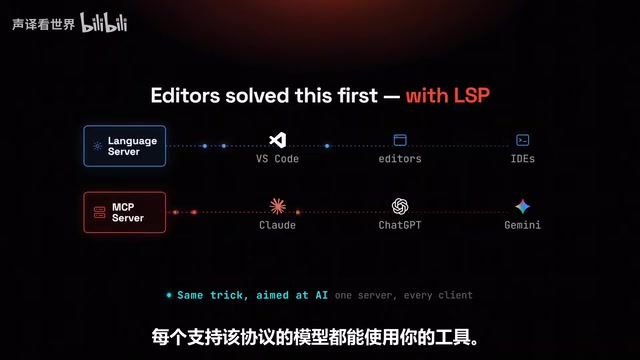
Build an MCP Server in 10 Minutes: Let AI Call Your Code Directly
MCP (Model Context Protocol) is the open standard for AI tool integration. Build your own MCP server with ~20 lines of Python. Learn tools, resources, prompts, and both local and remote deployment.
Read more →

·3 min
Dify + MCP in Practice: Building a Multi-Scene Life Assistant Agent with ModelScope MCP Marketplace
Build a multi-scene life assistant Agent using ModelScope MCP Marketplace and Dify. Integrates Amap, LeetCode, recipe, and news MCP Servers with Qwen3 via Chatflow.
Read more →

·4 min
MCP Protocol Deep Dive: Its Relationship with Function Calling and Agents, Plus a Practical Guide
Deep dive into MCP (Model Context Protocol): clarifying the three-layer relationship between MCP, Function Calling, and Agents, covering protocol roles, call flows, transport choices, and production security for AI developers.
Read more →

·4 min
Zhipu GLM-5.2 Released: China's First Open-Source Model to Cross the 'Primary Model' Threshold
Zhipu releases GLM-5.2 with 1M token context, matching GPT-5.x and Claude. Zcode 3.0 offers 3M free daily calls with one-click migration from Claude Code and Codex.
Read more →

·7 min
Unity Custom MCP Tool Development Guide: Enabling AI Agents to Precisely Control the Editor
Learn how to develop custom tools based on the Unity MCP Relay Server, enabling AI agents like Cursor to directly control the Unity editor. Covers setup, tool building, parameter validation, and MCP Pro comparison.
Read more →
·6 min
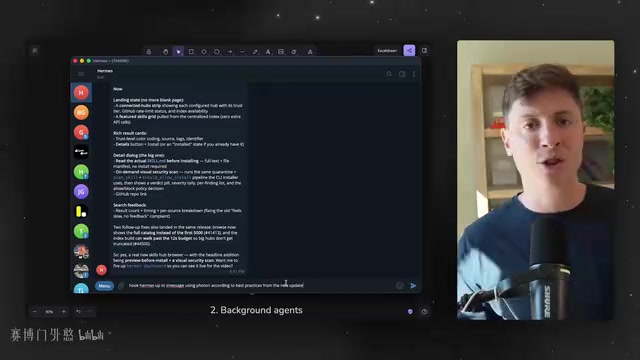
Hands-On With Hermes Agent's Eight Major Updates: A Complete Guide to AI Automation and Self-Evolution
The Hermes Agent gets a major upgrade with eight new features: native iMessage, parallel background sub-agents, Unreal Engine MCP support, a self-evolving Skill Hub, and more. A hands-on breakdown of the core changes and their real impact on personal AI automation workflows.
Read more →
·6 min
The Eight-Step Method for Agent Development: A Practical Path from Pitfalls to Production
Many enterprises fail at AI Agents due to choosing the wrong tools and lacking methodology. This article outlines an eight-step Agent development method—from cognitive foundations, scenario selection, hand-writing ReAct, and structured output to Tool Use, RAG, evaluation sets, and production fallback.
Read more →

·6 min
The Complete Beginner's Guide to Claude Code: From Installation to Advanced Usage
Claude Code is one of the most powerful AI coding agents, running in the terminal to write code, batch operations, build web projects, and more. This guide covers installation, connecting local models via CC Switch, permission modes, CLAUDE.md, Skills, MCP, Subagents, and more.
Read more →

·6 min
Skill vs MCP: The Essential Difference Between Two Types of AI Agent Capabilities and How They Work Together
Skill and MCP are two core concepts for building AI Agents. Skill encapsulates task execution methodology, while MCP provides a standardized protocol for connecting external tools. This article breaks down their core differences, abstraction levels, and collaboration.
Read more →

·7 min
Geosql: A Vertical Skill Pack That Teaches AI Geospatial Data Analysis
Geosql is a geospatial SQL skill pack designed for AI coding assistants like Claude and Codex, enabling LLMs to accurately generate PostGIS queries and handle coordinate transformations and spatial analysis.
Read more →

·7 min
Rowboat: An Open-Source, Local-First Alternative to Claude Desktop
Rowboat is an open-source, local-first AI desktop client positioned as a Claude Desktop alternative. Local data storage and fully transparent code help developers control privacy and workflows.
Read more →

·6 min
From Frontend Engineer to AI Agent Developer: A Complete High-Paying Skill Tree Breakdown
Pure frontend roles are shrinking; AI Agent development is the high-salary divide. This guide breaks down the full skill tree for frontend engineers pivoting to AI: TypeScript, frameworks, AI productivity, and Agent core concepts (MCP, Tool Calling, Skill).
Read more →
·7 min
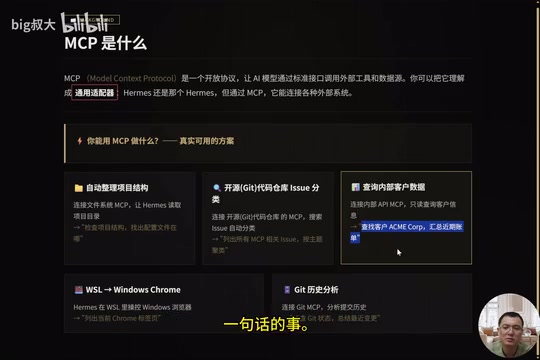
Connecting Hermes Agent to MCP: One Protocol to Unify All External Systems
Learn how to extend Hermes Agent's external system capabilities via MCP (Model Context Protocol): setup, whitelist permissions, WSL-to-Chrome bridging, and multi-server orchestration for AI Agent developers.
Read more →

·7 min
Gemini CLI: The AI Development Powerhouse in Your Terminal, Ending Tool Fragmentation
Gemini CLI is Google's open-source AI terminal tool that deeply integrates Gemini model capabilities into the command line—supporting code generation, file operations, Shell execution, and MCP protocol extensions, with 1,000 free daily requests.
Read more →

·7 min
The Complete Guide to OpenCode: Installing, Configuring, and Using the Terminal AI Coding Assistant
An in-depth guide to installing, configuring, and extending OpenCode, the terminal AI coding assistant. Covers desktop and WSL installation, model config, MCP integration, and custom Agents.
Read more →