#Semantic Kernel RAG
233 related articles

·7 min
Dify Local Deployment in Practice: A Complete Guide with BT Panel + Docker
A step-by-step guide to locally deploying the open-source Dify AI platform using the BT Panel on a VMware virtual machine—covering Ubuntu setup, Docker config, and image pull troubleshooting.
Read more →

·7 min
Harness Engineering: Why a Powerful Model Isn't Enough — Here's What Really Matters
A data-deletion disaster reveals the biggest AI Agent risk: the problem isn't the model, it's Harness design. Learn context management, process standards, and permission isolation.
Read more →
WrenAI: An Open-Source GenBI Tool for …
·4 min
WrenAI: An Open-Source GenBI Tool for Querying Databases with Natural Language
WrenAI is an open-source GenBI tool by the Canner team that converts natural language into trusted SQL, charts, and dashboards via a semantic layer. Supports 20+ data sources including BigQuery and Snowflake. 16,000+ GitHub stars.
Read more →

·6 min
The Evolution of Claude Code: From Manual Review to 65% Fully-Automated PRs
Anthropic engineers reveal Claude Code's 18-month evolution: system prompt cut by 80%, 65% of PRs shipped automatically by AI, Claude Tag collaboration, and the safety logic behind auto mode.
Read more →

·3 min
OWASP Agentic Security Top 10 Deep Dive: Understanding ASI01–ASI10 Risks and Mitigations
A comprehensive breakdown of the OWASP Agentic Security Top 10 framework, covering ASI01–ASI10 risks including goal hijacking, tool misuse, identity abuse, supply chain vulnerabilities, and cascading failures — with practical mitigations for AI agent systems.
Read more →
Can LLMs Really Understand Computer Ar…
·3 min
Can LLMs Really Understand Computer Architecture Papers? A Deep Dive into Comprehension Capabilities
Can LLMs truly understand computer architecture papers? This article analyzes core challenges—from surface pattern matching to deep reasoning—and defines their capability limits for researchers.
Read more →

·4 min
The Local AI Inflection Point: Edge Deployment, Multi-Model Collaboration, and the Open-Source Ecosystem
AI Engineer Summit deep dive: Local AI hits a real inflection point, driven by privacy and cost. Multi-model collaboration goes mainstream, NVIDIA + ExoLabs achieve 10x gains, open-source ecosystem accelerates.
Read more →
Tailscale SSH Critical Vulnerability T…
·2 min
Tailscale SSH Critical Vulnerability TS-2026-009: Restricted Users Can Escalate to Root
Tailscale discloses critical vulnerability TS-2026-009 in its built-in SSH feature. Insecure argument handling lets restricted users bypass ACLs and gain root. Learn the technical details and how to respond.
Read more →
TurboVec: A Deep Dive into the Rust-Po…
·3 min
TurboVec: A Deep Dive into the Rust-Powered High-Performance Vector Index Library
TurboVec is a Rust-based vector index library powered by TurboQuant, with Python bindings for RAG, semantic search, and AI applications. A deep-dive into its architecture.
Read more →

·2 min
19-Year-Old AI Learner: How to Balance Passion and Employability?
A 19-year-old AI learner torn between passion for LLMs and job market pressure. This article breaks down AI Engineering vs. research paths and offers actionable strategies.
Read more →

·4 min
DSpark Open Source: DeepSeek's Inference Acceleration Tech That Doubles LLM Speed
DeepSeek and Peking University open-source DSpark, an inference acceleration technology using semi-autoregressive architecture and dynamic scheduling to boost LLM speed by 50%+ and double GPU concurrency without quality loss.
Read more →

·4 min
OpenAI Reveals Agent Sandbox Cloud: Design Philosophy from microVMs to Global Orchestration
A deep dive into OpenAI's Agent sandbox cloud architecture: the security evolution from Fork and containers to gVisor and microVMs, plus copy-on-write snapshots and global orchestration.
Read more →

·3 min
Bun Rewrote a Million Lines of Code in 11 Days with Claude Code: A New Paradigm for AI-Assisted Programming
Bun author Jared Sumner used Claude Code's dynamic workflows to rewrite 1M+ lines of Zig code into Rust in 11 days for $165K — what 3 engineers would need a year to do.
Read more →
Smart Proxy: The Key Architecture for …
·3 min
Smart Proxy: The Key Architecture for Running AI Coding Agents Safely and Autonomously
Too much AI permission is risky; too little kills productivity. A smart proxy acts as a controllable middleware layer — intercepting, auditing, and policy-gating AI agent actions in tools like Claude Code and Cursor for safe autonomous operation.
Read more →
·3 min
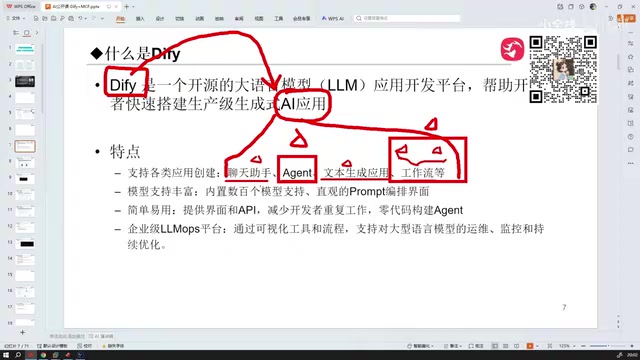
Getting Started with Dify: A Complete Guide to Building Enterprise-Grade AI Apps with Low-Code
A complete guide to Dify, the low-code AI app platform: five app types, multi-model setup, Docker deployment, and enterprise data security. Build LLM-powered workflows and Agents at minimal cost.
Read more →

·2 min
Womprat: Open-Source Small Aerial Target Tracking Without a GPU
Womprat is an open-source lightweight aerial target tracking tool by Punk Labs. Runs fully on CPU — no GPU or trained models required. Uses classical CV algorithms.
Read more →

·2 min
From Beginner to Advanced AI Agent Development: A Deep Dive into One Essential Hands-On Book
A deep dive into a hands-on AI Agent development book covering component architecture, RAG, multi-agent systems, Function Calling, and production observability.
Read more →

·3 min
The Deterministic Factual Substrate for Multi-Agent AI: A Deep Dive into Knowledge Kernel's Reproducible Grounding Design
A deep dive into how Knowledge Kernel builds a deterministic factual substrate for multi-agent AI through layered decoupling of reality, evidence, facts, and reasoning — with dataset_hash fingerprinting, atomic reloads, and observable telemetry.
Read more →

·4 min
Claude Code vs. Codex vs. Cursor: A Deep Comparison of Three AI Coding Tools
Claude Code, Codex, or Cursor? This in-depth comparison covers each tool's positioning, ideal users, and how to combine them for maximum productivity in your AI coding workflow.
Read more →

·3 min
Anthropic's Project Glass Wing: The Arms Race in AI Code Security Auditing
Anthropic launches Project Glass Wing—its Mythos Preview model found over 10,000 critical infrastructure vulnerabilities in hours, spanning 150 organizations across 15 countries. A deep dive into AI security auditing.
Read more →