#Tree of Thoughts
143 related articles

·3 min
200KB Minimalist CI/CD Tool: A Lightweight Deployment Solution for Indie Developers to Ditch Jenkins
A minimalist CI/CD tool built with Python+Flask — just 200KB, event-driven, and decentralized. Deploy automatically without Jenkins or GitHub Actions in 5 minutes.
Read more →

·4 min
AI-Powered Chrome Extension Monetization: A No-Code Practical Guide
No coding skills? Learn how to build Chrome extensions for global markets using AI — from finding demand and generating code to publishing on the Chrome Store and earning subscription revenue.
Read more →

·7 min
Getting Started with LangGraph Multi-Agent Development: Architecture Analysis and Three Practical Case Studies
Learn LangGraph multi-agent development covering Supervisor and Collaboration architectures, with three hands-on projects: code assistant, prompt assistant, and WebRTC digital human.
Read more →

·6 min
The New Normal of AI Programming: How Autonomous Agent Development Is Reshaping Software Engineering
AI Agent autonomous programming is evolving from niche experiments to the industry default. This article analyzes the three stages of AI-assisted programming, its impact on developer skills, process restructuring, and key challenges.
Read more →
6 Free GitHub Security Settings Every …
·4 min
6 Free GitHub Security Settings Every Maintainer Should Enable
GitHub offers 6 free security settings for open source maintainers: 2FA, Dependabot alerts, secret scanning, branch protection, permission reviews, and code scanning. Configure once, benefit long-term.
Read more →

·3 min
AI Agent Core Principles Fully Explained: Decision Loops and the Three Key Components in Practice
A deep dive into AI Agent core principles: the Perceive-Plan-Act-Observe decision loop, plus Planning, Memory, and Tools — the three key components explained with practical examples.
Read more →

·3 min
Python Self-Study Roadmap: A Three-Phase Learning Method from Zero to Hands-On Projects
A detailed Python self-study roadmap in three phases: fundamentals, OOP & intermediate skills, and hands-on projects including web scraping and office automation.
Read more →
·3 min
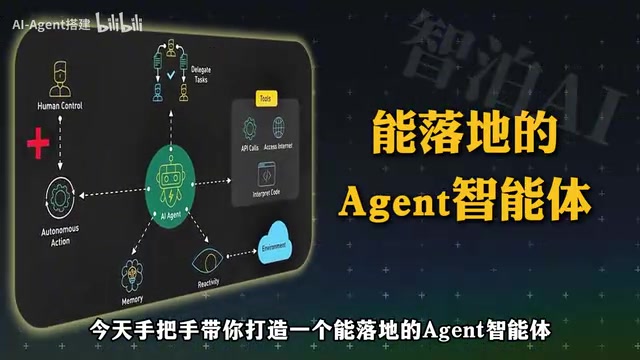
AI Agent Beginner's Guide: A Complete Four-Stage Learning Path
A complete learning path for AI Agent development from scratch, covering core theory, ReAct paradigm, multi-agent collaboration, Prompt optimization, and hands-on projects across four stages.
Read more →

·3 min
Getting Started with AI Agent Development: Core Concepts, Architecture, and Practical Essentials
A comprehensive guide to AI Agent development covering core concepts, the Perception-Brain-Action architecture, key differences from chatbots, four essential components, and mainstream framework selection.
Read more →

·3 min
Spec Website: An Open-Source Website Specification Checklist
Spec Website is an open-source website specification checklist covering page structure, accessibility, security, SEO, privacy, and AI agent readability to help developers verify standards compliance before launch.
Read more →

·4 min
Spring AI Alibaba Agent in Practice: Building Enterprise-Grade AI Agents Natively in Java
Deep dive into Spring AI Alibaba Agent framework covering core architecture, tool calling, RAG integration, multi-agent collaboration, and production deployment for Java developers.
Read more →

·4 min
Mastering Claude Code: Five Hardcore Strategies to Transform It from Intern to Architect
A systematic guide to advanced Claude Code usage covering context management, plan mode, parallel development, and security — transforming your AI coding assistant into a virtual architect.
Read more →

·4 min
Deconstructing the Core Principles of AI Agents: A Deep Dive into the Control, Perception, and Action Modules
A systematic breakdown of the three core AI Agent modules (Control, Perception, Action), with deep analysis of AutoGPT, BabyAGI, HuggingGPT, LlamaIndex architectures and Chain-of-Thought reasoning.
Read more →

·4 min
AI Agent Development: A Complete Six-Week Systematic Learning Roadmap
A systematic six-week learning roadmap for AI Agent development covering core architecture, ReAct paradigm, multi-agent collaboration, RAG integration, deployment, and hands-on projects.
Read more →

·3 min
AI Agent Loops in Practice: Four PRs Auto-Merged While I Slept
From manual AI prompting to building automated loops — let Agents prompt, review, and merge code themselves. A real-world case: one message triggers four PRs auto-reviewed and merged overnight.
Read more →

·3 min
The Complete Guide to Prompt Engineering: From Zero to Practical Application
A complete guide to learning Prompt Engineering, covering LLM selection, prompt writing techniques, zero-shot/few-shot prompting, chain of thought reasoning, and Python API development.
Read more →

·3 min
What Happens to Developer Jobs When AI Writes 80% of the Code? A Deep Dive into Anthropic's Landmark Report
Anthropic's latest report reveals over 80% of its codebase is AI-written and engineer output has grown 8x. A deep analysis of AI's impact on software development, the taste moat, AI bubble stages, and loop engineering.
Read more →

·2 min
Frontend to AI Agent Architect: A Complete 3-Month Learning Roadmap
How can frontend engineers transition to AI Agent development? A systematic 3-month roadmap covering AI concepts, model selection, team productivity, and Agent architecture.
Read more →

·3 min
Codex CLI vs. Desktop App: Choosing the Right Dev Mode by Task Type
In-depth comparison of Codex CLI vs. desktop app capabilities, analyzing the best choice for large projects, multi-file refactoring, quick bug fixes, and more.
Read more →

·3 min
Loopcraft Explained: Loop-Stacking Architecture Design in AI Agent Development
Deep dive into Loopcraft loop-stacking architecture for AI Agent development, covering retry, self-validation, and meta-learning loops to boost reliability.
Read more →