#Unix philosophy
297 related articles

·6 min
Decoding the Obfuscated Bash Script on a Uniqlo T-Shirt: Tech Easter Eggs and Security Lessons
A tech enthusiast decoded an obfuscated Bash script on a Uniqlo T-shirt. This article breaks down the reverse-analysis approach, obfuscation tricks, and safe-execution principles.
Read more →

·7 min
Free Mermaid Diagram Editor: An Essential Code-Based Diagramming Tool for Developers
Explore the core features and use cases of the free Mermaid Diagram Editor. Supporting flowcharts, sequence diagrams, Gantt charts and more, it follows the 'diagrams as code' philosophy to enable version-controlled technical documentation for developers and architects.
Read more →

·5 min
OSINT Tools for Automated Discovery of Exposed Files on Domains: Principles, Applications, and Compliance Boundaries
Deep dive into how OSINT automation tools discover exposed files on domains, covering dictionary probing principles, attack surface management, bug bounty techniques, and compliance boundaries.
Read more →

·6 min
Claude Code Programming from Scratch: A Beginner-Friendly Git Setup Guide for Windows
A beginner-friendly guide to setting up Git on Windows before using Claude Code for AI programming. Covers git.git install, Git for Windows setup, common pitfalls, and verification.
Read more →

·3 min
Building LangGraph from Scratch in TypeScript: A Complete Agent Development Guide for Frontend Engineers
How can frontend developers get into AI Agent development with TypeScript? This guide covers a four-stage path from API calls to building LangGraph from scratch, including Zod, state management, and node-edge design.
Read more →

·5 min
Python Learning Roadmap for Beginners: A Three-Stage System to Avoid 90% of Detours
Learning Python from scratch? This article breaks down the three learning stages—Fundamentals, Intermediate, and Practice—covering variables, OOP, scraping, and data analysis to help you plan a systematic Python path.
Read more →

·6 min
Getting Started with Vibe Coding: Building Software with Natural Language from Scratch
Vibe Coding lets you build software with no coding background—just talk to AI in natural language. Learn its core ideas, learning path, and practical tools.
Read more →

·7 min
The Birth of Claude Code: Design Philosophy from Internal Tool to AI Programming Assistant
An in-depth look at Claude Code's development and design philosophy: why the CLI form, how the "minimal scaffolding" architecture works, and how it balances safety with autonomy in AI programming.
Read more →

·5 min
Agent Skills Specification: Standardization and Reusability Practices for AI Agent Capabilities
The agentskills open-source project aims to solve AI Agent ecosystem fragmentation through standardized skill specifications enabling portable, composable, and reusable agent capabilities.
Read more →
·7 min
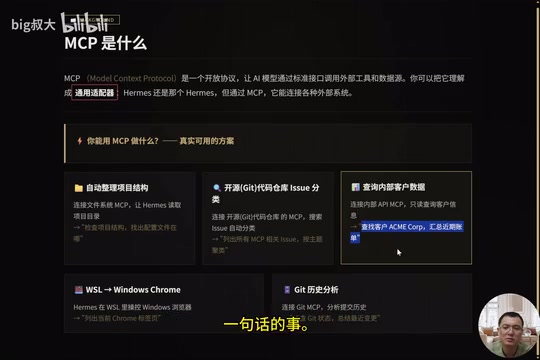
Connecting Hermes Agent to MCP: One Protocol to Unify All External Systems
Learn how to extend Hermes Agent's external system capabilities via MCP (Model Context Protocol): setup, whitelist permissions, WSL-to-Chrome bridging, and multi-server orchestration for AI Agent developers.
Read more →

·4 min
Claude Code /cd Command: The Hidden Trick for Switching Directories Without Losing Context
Learn how Claude Code's /cd command lets you switch working directories without losing conversation context — perfect for microservices, monorepos, and multi-module development.
Read more →

·4 min
ctx: An Open-Source Tool for Searching Your Local AI Coding Assistant History
ctx is a local-first open-source tool that lets developers search and reuse conversation history from Claude Code, Cursor, and GitHub Copilot without uploading data to the cloud.
Read more →

·5 min
OfficeCLI: A Command-Line Tool for AI Agents to Read and Write Office Documents
OfficeCLI is a command-line office suite for AI agents, supporting reading and writing of Word, Excel, and PowerPoint files—enabling efficient Office document automation without complex glue code.
Read more →

·6 min
Getting Started with LangChain: Unified Interfaces and Agent Development Explained
A beginner's guide to the LangChain open-source framework: explaining how to use the init_chat_model unified interface, tips for disabling DeepSeek's thinking mode, and core essentials of Agent development.
Read more →

·7 min
The C Readability Crisis: Engineering Reflections Behind Clever Tricks
Why do C programmers keep creating readability disasters? An in-depth look at macro abuse, fancy pointer tricks, and over-nesting—and how coding standards, static analysis, and code review protect maintainability.
Read more →

·7 min
The Complete Guide to OpenCode: Installing, Configuring, and Using the Terminal AI Coding Assistant
An in-depth guide to installing, configuring, and extending OpenCode, the terminal AI coding assistant. Covers desktop and WSL installation, model config, MCP integration, and custom Agents.
Read more →

·7 min
Claude Code Command Orchestration: One-Click Content Research and Auto-Publishing
Learn how to orchestrate Claude Code custom commands to chain content research and social media publishing agents into a fully automated workflow with one command.
Read more →

·3 min
Fix Codex Reconnecting Loop: Switch Network Protocol via Environment Variables
Codex's Reconnecting 5/5 loop is caused by WebSocket being the default protocol. Learn how to set .env environment variables to switch Codex to HTTP/HTTPS and eliminate the wait.
Read more →

·6 min
herder: A Terminal Multiplexer for Multiple Coding Agents — Say Goodbye to Session Management Chaos
herder is a terminal multiplexer for coding agents like Claude Code and Codex, combining tmux power with mouse support, agent state awareness, and session persistence for efficient multi-agent workflows.
Read more →
Stronger Models, Worse Tools? The Hidd…
·4 min
Stronger Models, Worse Tools? The Hidden Pitfalls of Tool Calling in Claude's New Models
Developers found Claude's flagship models Opus and Sonnet perform worse with third-party editing tools than older versions — likely due to RL over-optimization on built-in tools degrading generalization.
Read more →