#agent execution tracing
281 related articles
·3 min
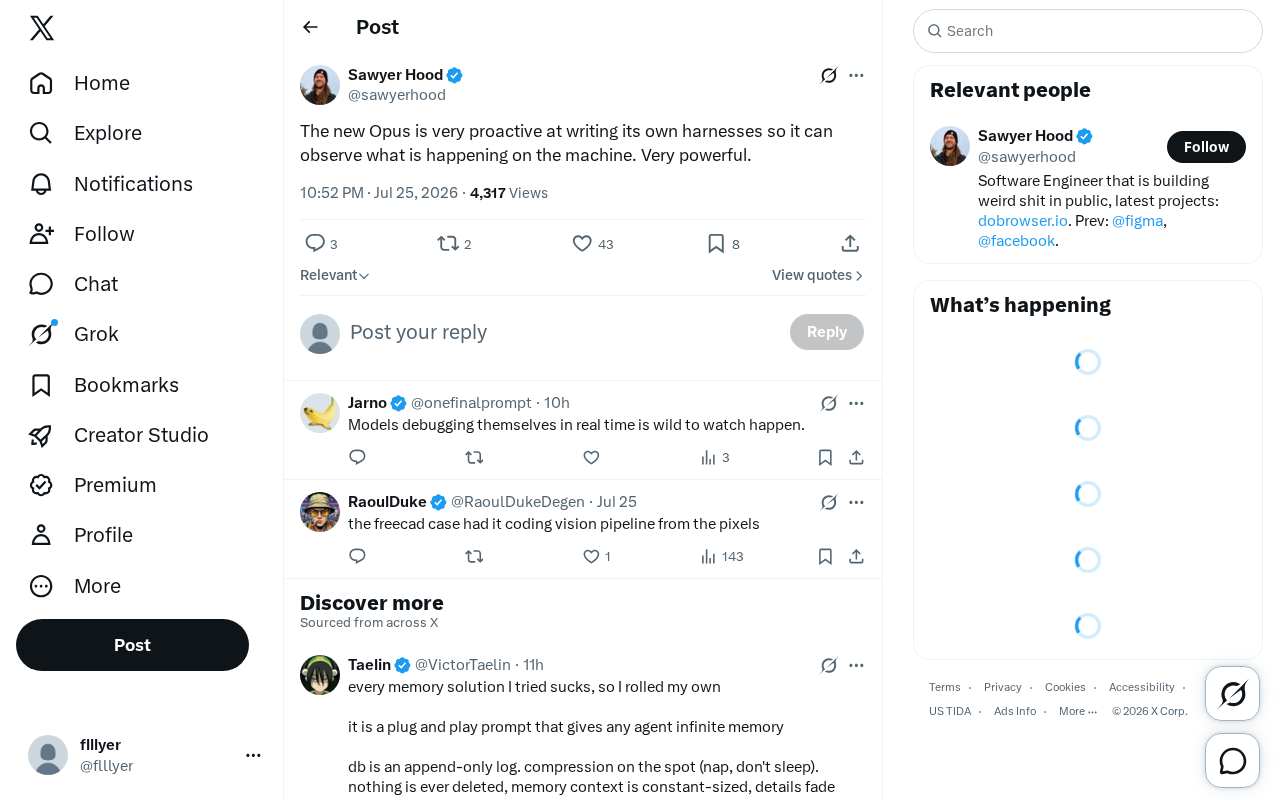
Claude Opus's Autonomous Debugging Capabilities: What It Means When AI Proactively Writes Test Harnesses
New Claude Opus proactively writes test harnesses to observe runtime behavior. We analyze how this shift from passive code generation to autonomous debugging marks a key evolution in AI programming.
Read more →

·3 min
AI Project Memory Systems: Building a Continuously Accumulating Context Architecture in Four Stages
As models get stronger, why does the experience feel worse? The root cause is missing context. This article breaks down four stages—project descriptions, progressive disclosure, intra-memory, and three guardrails—to build a sustainable AI project memory system.
Read more →
·2 min
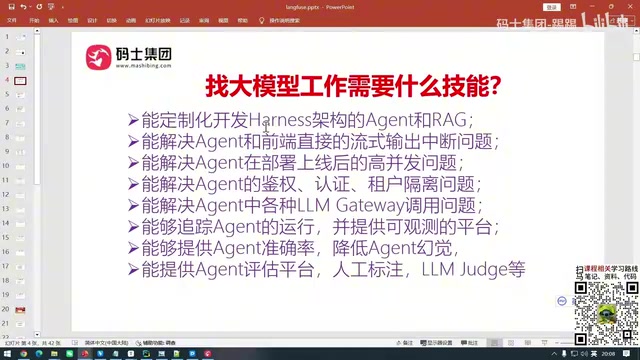
The New Bar for AI/LLM Roles: A Practical Guide to Agent Observability and Evaluation
Enterprise AI/LLM roles now demand engineering skills: streaming recovery, high concurrency, multi-tenancy, LLM gateways, Langfuse observability, and evaluation platforms. Master these 8 core competencies.
Read more →

·3 min
Pinterest Medic: Engineering an AI Agent for Automated Spark Failure Diagnosis
How Pinterest engineers built Medic for Apache Spark — a multi-agent auto-diagnosis tool — covering the evolution from a single ReAct agent, observability, log denoising, and end-to-end testing.
Read more →

·7 min
Enterprise AI Agent Security Isolation and Memory Design: NanoClaw Founder Breaks Down Real-World Lessons
NanoClaw founder David Boyd breaks down the core engineering of enterprise autonomous Agents: a triple security isolation model, LLM Wiki memory design, and the real-world path from personal Agents to team-scale deployment.
Read more →

·8 min
A Complete Guide to Agent Testing: Five Core Dimensions and Automation in Practice
In-depth analysis of the five core dimensions of AI Agent testing: command safety, tool-calling accuracy, task planning, output consistency, and error self-repair. Master automated testing and the transition path for test engineers.
Read more →

·8 min
The Complete Guide to Agent Testing: Five Core Dimensions and Automation in Practice
An in-depth analysis of the five core dimensions of AI Agent testing: command safety, tool-calling accuracy, task planning, output consistency, and error self-repair. Master automated testing methods and the transition path for test engineers.
Read more →

·3 min
AI-Assisted GeeTest Four-Image CAPTCHA Reverse Engineering: A Complete Efficiency Guide
A complete walkthrough of AI-assisted GeeTest four-image CAPTCHA reverse engineering: from capturing the w parameter to AI analyzing obfuscated code and generating runnable scripts in minutes.
Read more →

·7 min
The Complete Guide to LLM Application Engineer Interviews: Six High-Frequency Topics in the Agent Domain
A focused guide to the core interview topics for LLM application engineers, covering agent architecture, Multi-Agent, Langfuse evaluation & tracing, security, and RAG optimization.
Read more →

·7 min
The Complete Guide to LLM Application Engineer Interviews: Six High-Frequency Agent Topics
A focused guide to core LLM application engineer interview topics, covering agent architecture, Multi-Agent, Langfuse evaluation, security, and RAG optimization.
Read more →

·7 min
Harness Engineering: Why a Powerful Model Isn't Enough — Here's What Really Matters
A data-deletion disaster reveals the biggest AI Agent risk: the problem isn't the model, it's Harness design. Learn context management, process standards, and permission isolation.
Read more →

·3 min
LangChain v1.3 Hands-On Tutorial: Deep Dive into Agents, RAG, and Local Model Deployment
Deep dive into LangChain v1.3: compare LangChain, LangGraph, and DeepAgent paradigms, explore RAG pipelines, multi-agent systems, and local LLM deployment for enterprise AI apps.
Read more →

·3 min
Dify Getting Started Guide: A Complete Walkthrough of Low-Code AI App Development
Dify is a low-code AI app platform supporting chatbots, Agents, and workflows. Compatible with DeepSeek, ChatGPT, and more. Learn cloud and local deployment options.
Read more →

·2 min
Spring AI Alibaba Admin: A Deep Dive into the Java Visual AI Workflow Platform
Spring AI Alibaba Admin is a visual AI workflow platform for Java, comparable to Dify. It supports Dify-to-Graph migration, multi-model integration, and code export. This article covers core features and local deployment tips.
Read more →

·3 min
Frontend Developers Transitioning to AI: A Complete Three-Phase Minimalist Roadmap
A structured 3-phase roadmap for frontend developers transitioning to AI: master Transformer fundamentals, build RAG & Agent skills, then advance to model fine-tuning.
Read more →
Multi-Agent Collaboration: A GPT Team …
·2 min
Multi-Agent Collaboration: A GPT Team Engineering Paradigm and Practical Guide
Explore multi-agent collaboration architecture: role division, communication protocols, coordination mechanisms, and how Workbench templates help developers build efficient AI agent teams.
Read more →

·2 min
From Workflow Graphs to Distributed Protocols: Dissecting Multi-Agent System Architecture Paradigms
How does Cosmonapse replace LangGraph's graph structure with event-driven distributed protocols? A deep dive into two multi-agent architecture paradigms, their trade-offs, and when to use each.
Read more →

·4 min
MiniMax M2 Local AI Knowledge Base Test: Source Tracing, Deduplication, and Fact Verification
Build a local AI knowledge base with MiniMax M2 in OpenCode: source tracing, fact vs. opinion separation, conflict preservation, and timeliness management.
Read more →
Kimi CLI Open-Sourced: Moonshot AI's C…
·2 min
Kimi CLI Open-Sourced: Moonshot AI's Command-Line AI Coding Agent
Moonshot AI open-sources Kimi CLI, a command-line AI coding agent for code generation, debugging & refactoring. Hits 9K+ GitHub Stars, competing with Claude Code and Gemini CLI.
Read more →

·2 min
Karma: An AI Coding Agent Orchestration Tool for Building Multi-Agent Collaborative Systems
Karma is an orchestration layer for AI coding agent frameworks, solving multi-agent collaboration, task decomposition, state management, and observability challenges. Compatible with Aider, OpenHands, and more.
Read more →