#async coding agent
331 related articles

·4 min
OpenAI Build Week Kicks Off: Turning Your Ideas Into Reality with Codex
OpenAI launches Build Week, a global developer event centered on Codex AI coding tool, featuring live sessions and community events to help developers ship ideas fast.
Read more →

·4 min
Kun: An Open-Source AI Coding Agent Deeply Optimized for DeepSeek
Kun is an open-source AI coding agent optimized for DeepSeek and domestic users, with nearly 5,000 GitHub stars. Features include requirements drafting, inline diffs, cost visualization, and mobile monitoring. Real-world cache hit rates reached 97%, keeping costs extremely low.
Read more →

·6 min
AI's Second Half: The Decisive Battle Shifts from Models to Infrastructure
Model capabilities are converging, making inference cost and scalability the new focus of AI competition. A deep analysis of AI infrastructure's core layers.
Read more →

·3 min
AI Application Development Learning Roadmap: From Agents and RAG to Real-World Career Success
Want to break into AI application development? This guide covers the full learning path — from Agents and RAG to Prompt Engineering — helping you master LLM engineering skills and land the job.
Read more →

·6 min
The Complete Beginner's Guide to Claude Code: From Installation to Advanced Usage
Claude Code is one of the most powerful AI coding agents, running in the terminal to write code, batch operations, build web projects, and more. This guide covers installation, connecting local models via CC Switch, permission modes, CLAUDE.md, Skills, MCP, Subagents, and more.
Read more →

·4 min
Complete Guide to Dify Local Deployment: Build a Private AI Workflow Platform from Scratch
Step-by-step guide to deploying Dify locally: Docker setup, Docker Compose installation, source code configuration, .env file setup, and container startup for Windows, macOS, and Linux.
Read more →

·3 min
GitHub Daily · July 10: The Agent Skills Ecosystem Explodes — AI Coding Enters the 'Skills Library' Era
July 10 GitHub Daily: The Agent Skills ecosystem explodes as over half of trending projects revolve around AI coding Agent skill libraries, with MCP as the standard interface.
Read more →
·6 min
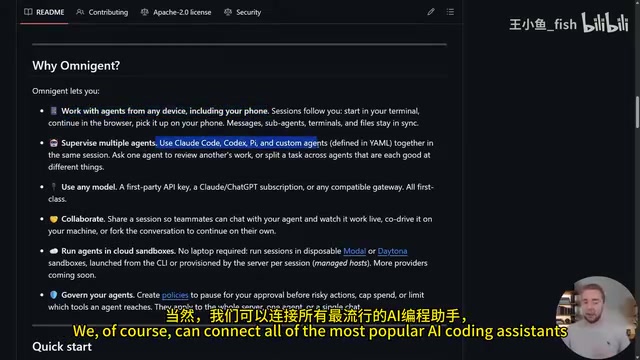
Omnigent Open-Sourced: A Meta-Harness for AI Coding Agents Built by Databricks
Databricks open-sources Omnigent, a Meta-Harness for orchestrating Claude Code, Codex, and more AI coding assistants together—with built-in guardrails, cross-model workflows, and real-time collaboration. Get started in 10 minutes.
Read more →

·7 min
The Four-Stage Learning Path for AI Agent Development: From Beginner to Real-World Deployment
A systematic four-stage roadmap for AI Agent development: fundamentals, core principles, enhancement, and real-world deployment. Build complete Agent skills.
Read more →

·7 min
From Vibe Coding to Engineered AI Programming: A Practical Guide to Enterprise Development
AI coding tools are changing development, but Vibe Coding hides risks in code quality and maintenance. This article explores Engineered AI Programming, compares Codex and Claude Code, and reveals real enterprise development paths.
Read more →

·4 min
AI Weekly: GPT-5.6 Launches in Three Tiers, Open-Source Inference Frameworks and Robot Safety Break Through Across the Board
This week in AI: OpenAI launches GPT-5.6 in three tiers (Sol/Terra/Luna) hitting 91.9% on coding benchmarks; DeepSeek and PKU open-source DSpark for 85% faster inference; Prime Intellect trains trillion-param models on just 28 H200s; Anthropic Claude enters Slack.
Read more →

·6 min
Playwright E2E Builder: Engineering AI-Driven Web Automation Testing
Playwright E2E Builder is an AI Skill installed in Cursor that transforms UI automation from throwaway scripts into sustainable engineering assets through a four-step workflow, with built-in locator health checks.
Read more →

·6 min
Getting Started with Dify: A Complete Guide to Deployment, Configuration, and Workflow Practice
A systematic guide to Dify's three deployment methods (Docker/source/online), five application types, and hands-on workflow nodes—covering LLM integration, MySQL config, and app publishing.
Read more →

·7 min
Getting Started with LangChain: The Core Framework Connecting LLMs and AI Applications
A deep dive into LangChain's positioning and value—why do LLMs need a middle layer? How does LangChain serve as the 'glue' unifying multi-model interfaces and supporting Agent development? Learn its core modules and learning path.
Read more →

·7 min
Zero-Basis Learning Path for AI Agents: A Three-Stage Journey from Beginner to Deployment
A systematic zero-basis learning path for AI Agent development, covering Python and LLM fundamentals, five core capabilities like task planning and RAG, and LangChain hands-on practice.
Read more →
·6 min
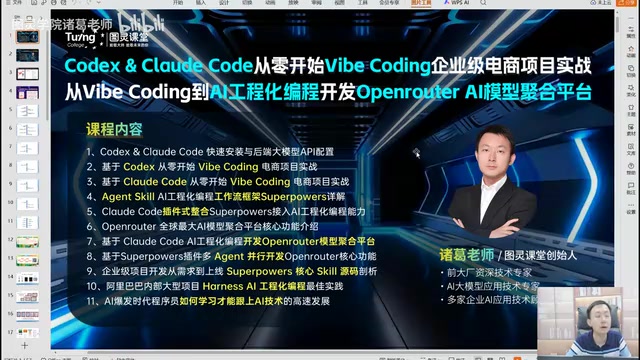
Understanding the Limits of Vibe Coding: A Practical Guide to AI Engineering-Grade Programming
An in-depth look at the difference between Vibe Coding and AI engineering-grade programming. Can AI replace programmers? From Claude Code and Codex to Cursor, revealing the real limits, enterprise pain points, and engineering solutions of AI coding tools.
Read more →

·6 min
LangChain 1.3 in Practice: A Complete Guide to DeepAgent Architecture and the Harness Philosophy
An in-depth look at LangChain 1.3's core modules and DeepAgent architecture—covering the Harness philosophy, LangGraph internals, HITL, memory management, and guardrails to master production-grade AI Agent development.
Read more →

·5 min
Context Graphs: The Key Technology for AI Agents to Remember and Reuse Past Decisions
Context Graphs use graph structures to store decisions, causal relationships, and outcomes, enabling AI agents to accumulate experience and reuse historical decisions without modifying model weights.
Read more →

·5 min
Claude Cowork Arrives on Mobile and Web, with Max Users Getting Early Access
Anthropic's AI collaboration platform Claude Cowork officially expands to mobile and web, breaking free from desktop-only limits. Max subscribers get early access, with other plans rolling out over the coming weeks.
Read more →

·4 min
Shellular: A New Way to Remotely Control Claude Code and Other AI Coding Assistants from Your Phone
Shellular lets developers remotely control AI coding assistants like Claude Code and Codex from their phones. A deep dive into the problem it solves, its architecture, and the real demand for mobile AI coding.
Read more →