#coding preferences
537 related articles

·3 min
Prosed Review: Source Map Feature Makes AI Book Writing Fully Transparent
Prosed is a transparency-focused AI book service featuring Source Map technology that color-codes creator originals vs AI additions, ensuring 90%+ creator-sourced content.
Read more →

·2 min
How Much Work Can You Delegate to AI Agents? A Complete Guide to Delegation Boundaries and Trust Strategies
Explore AI agent delegation boundaries: from code completion to autonomous agents across three levels, analyzing verifiability, error costs, and context to build pragmatic trust strategies.
Read more →

·2 min
Real User Feedback: Claude Opus 5 vs Gemini 3.1 Pro — Does Speed Determine the Experience?
A Reddit user's hands-on comparison of Claude Opus 5 vs Gemini 3.1 Pro reveals that response speed and interaction fluidity may matter more than raw intelligence in choosing an LLM.
Read more →

·3 min
MiniMax Code vs Cursor: Analyzing the Design Advantage of Side-by-Side Code and Agent Layout
In-depth comparison of MiniMax Code and Cursor UI layouts. MiniMax Code's side-by-side code and Agent design reduces view switching and boosts code review efficiency. Choose the right AI coding tool.
Read more →

·3 min
MiniMax Code vs Cursor: Analyzing the Design Advantages of Side-by-Side Code and Agent Layout
In-depth comparison of MiniMax Code and Cursor's UI layouts. MiniMax Code's side-by-side code and Agent design reduces view switching for better code review efficiency, while Cursor's editor-centered approach suits deep coding.
Read more →

·3 min
Why Are Uncensored Open-Source LLMs More Optimistic? A Deep Dive into Alignment Side Effects
Research finds uncensored open-source LLMs are measurably more optimistic than base models. This article analyzes how uncensoring changes model personality and the coupling effects of alignment.
Read more →

·4 min
Kimi K3 Released: 2.8 Trillion Parameter Open-Source Model Tops Global Coding Leaderboard
Moonshot AI releases Kimi K3, a 2.8 trillion parameter open-source model using MoE architecture that tops the global frontend coding arena at under $1 per task, beating GPT and Claude.
Read more →

·4 min
OpenAI Employee Shares How to Build an AI Work Operating System with Codex
OpenAI's Jason Liu shares how he uses ChatGPT Workbench and Codex to build an AI work OS: Chief of Staff automation, persistent threads, Skills/Plugins, browser control, and app-building methodology.
Read more →

·5 min
Learn AI Agent Development from Scratch: A 3-Step Practical Path to Get Started Quickly
How to learn AI Agent development from scratch? This article outlines a clear 3-step path: Python crash course, LLM theory & practice, and LangChain framework project implementation.
Read more →

·2 min
ChatGPT Voice Upgrade: Driving Complete Workflows Through Natural Conversation
OpenAI demos ChatGPT voice on desktop driving full workflows — blog drafting, code debugging, and team collaboration through natural conversation.
Read more →

·4 min
Kimi K3 Deep Dive: 2.8 Trillion Parameter Open-Source Model Closes the Gap with Closed-Source Frontier for the First Time
Moonshot AI releases Kimi K3 open-weight model with 2.8T parameters and 1M token context. Our deep dive covers coding, 3D dev, agent capabilities, and safety concerns.
Read more →

·3 min
Why Kimi K3's Open-Source Model Has OpenAI and Anthropic Running Scared
Deep analysis of the AI industry shockwave triggered by Kimi K3: the double standard behind distillation accusations, performance comparisons with GPT-5.5, real security concerns, and how open-source models threaten closed-source giants.
Read more →

·3 min
The Real Daily Life of MLE and MLOps Engineers: Key Differences Between Three Roles and Career Paths
An in-depth look at the real daily work of data scientists, MLEs, and MLOps engineers — covering responsibilities, essential tools, and career paths to help you find your direction in AI.
Read more →

·5 min
A Beginner's Guide to Prompt Engineering: From One-Off Instructions to a Systematic Methodology
A beginner's guide to prompt engineering covering the four functions of prompts, the key differences from prompt engineering, a six-step systematic workflow, and critical technical and practical limitations.
Read more →

·3 min
A Beginner's Guide to AI Agents: Two Learning Paths for Developers and Practitioners
How to learn AI Agents from scratch? This guide covers two clear paths: developers go from Python to LLMs to open-source framework source code; practitioners use Claude Code or similar tools to get results fast.
Read more →
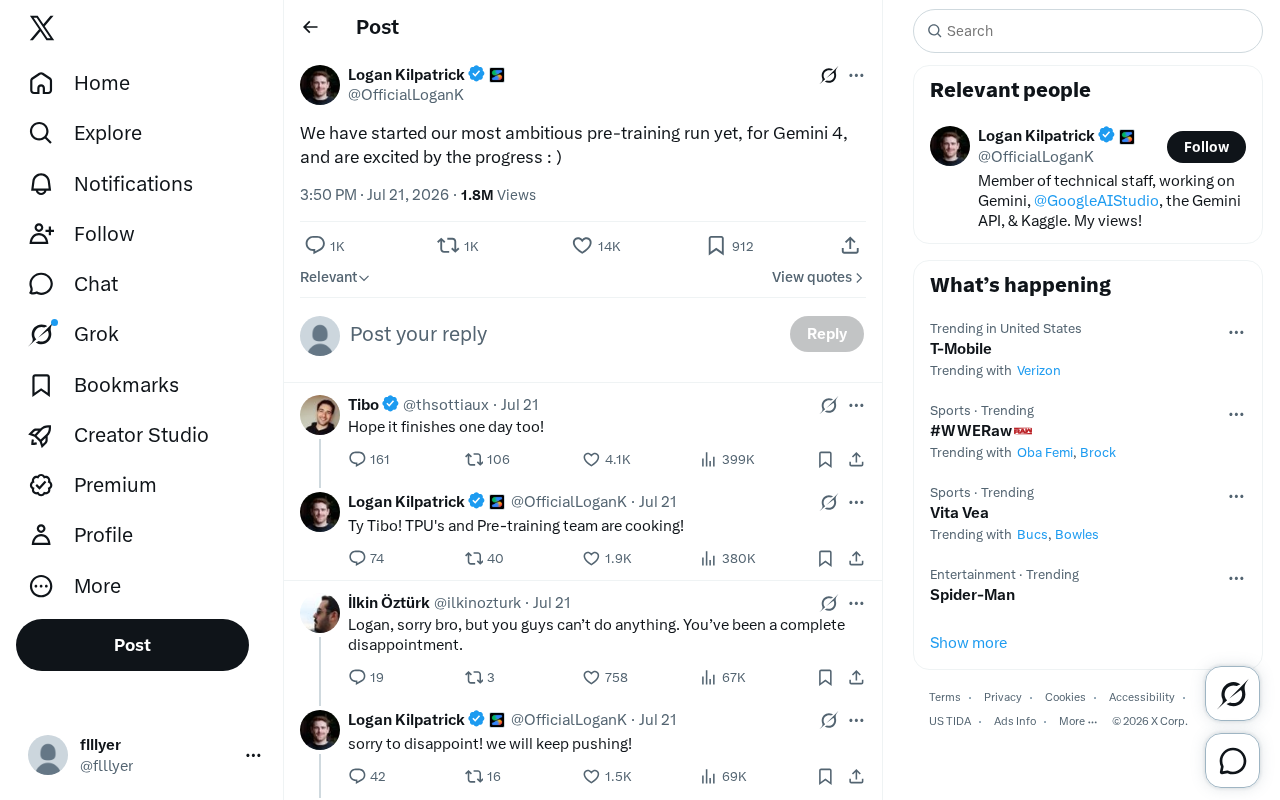
·3 min
Google Launches Gemini 4 Pre-training: Its Most Ambitious AI Model Training Yet
Google DeepMind announces Gemini 4 pre-training has begun, calling it their most ambitious training yet. A deep dive into its technical direction, compute scale, multimodal breakthroughs, and competitive impact.
Read more →

·3 min
Grok 4.5 Feels Weaker in Cursor? A Deep Dive into AI Coding Tool Integration Differences
Users report Grok 4.5 underperforms in Cursor vs. the official terminal. We analyze how system prompts, context management, parameters, and tool calling create AI coding tool integration gaps.
Read more →

·3 min
Chinese Open-Source AI Conquers Silicon Valley: The Industry Upheaval Behind a 58% Compute Share
Chinese open-source AI models surged from under 10% to 58% of U.S. AI consumption. Kimi K3, DeepSeek, and Qwen are reshaping AI cost structures as DoorDash, Airbnb, and other Silicon Valley giants adopt them at scale.
Read more →

·3 min
Cursor Alternatives Compared: A Guide to 5 AI Coding Tools
Compare 5 Cursor alternatives — from GitHub Copilot and Windsurf to open-source Cline and Continue — covering model freedom, workflow integration, cost, and privacy.
Read more →

·2 min
Interview Prep Strategy for Senior Data Scientists: How to Prepare Efficiently Without Burning Out
Senior data scientist interviews are broad and multi-round. Learn an efficient evergreen fundamentals + targeted sprint strategy covering ML, SQL, system design, and mindset tips.
Read more →