#concurrent Agent execution
376 related articles

·3 min
Claude Code Rewrites Claude App: Where Are the Limits of AI Coding Agents?
Anthropic developer Boris Cherny used Claude Code to rewrite the Claude App, revealing AI coding agents' real capabilities and limits on production codebases.
Read more →

·3 min
Hoplite: A Deep Dive into the Cloud-Based Coding Agent Deployment Platform
Deep analysis of YC S26 project Hoplite, a platform for cloud coding agent deployment and orchestration. Learn how it addresses execution isolation, scalable orchestration, and the AI programming infrastructure market.
Read more →

·2 min
Murmell: A Cloud Canvas Tool for Multi-AI Agent and Team Collaboration
Murmell is a cloud-first AI collaboration tool supporting Claude Code, Codex and other agents running simultaneously, using file claiming to resolve conflicts, with all output committed to Git.
Read more →

·3 min
Nanocodex: Building High-Performance AI Agent Foundation Components with Rust
Deep dive into how Nanocodex uses Rust to build high-performance foundation components for OpenAI Agents, exploring Rust's advantages in performance, memory safety, and modular design for AI infrastructure.
Read more →

·2 min
Claude Opus 5 Arrives on Devin: Fable-Level Performance at Half the Cost
Devin integrates Claude Opus 5, achieving near Fable-level performance on FrontierCode 1.1 at half the cost. The model excels at difficult debugging and root-cause analysis across Desktop, CLI, and Cloud.
Read more →

·3 min
GPT-5.6 Slashes Prices by 80%: The Industry Logic Behind the AI Price War and Opportunities for Developers
OpenAI's GPT-5.6 series sees massive price cuts—Luna drops 80% to $0.20/M input tokens. Deep analysis of the AI price war's tech drivers, competitive landscape, and impact on developer costs and model selection.
Read more →

·3 min
GPT-5.6 Price Cut of 80%: The Industry Logic Behind the AI Price War and Opportunities for Developers
OpenAI's GPT-5.6 series sees major price cuts with Luna dropping 80% to $0.20/M input tokens. Analysis of the AI price war's technical drivers, competitive landscape, and impact on developer costs.
Read more →

·2 min
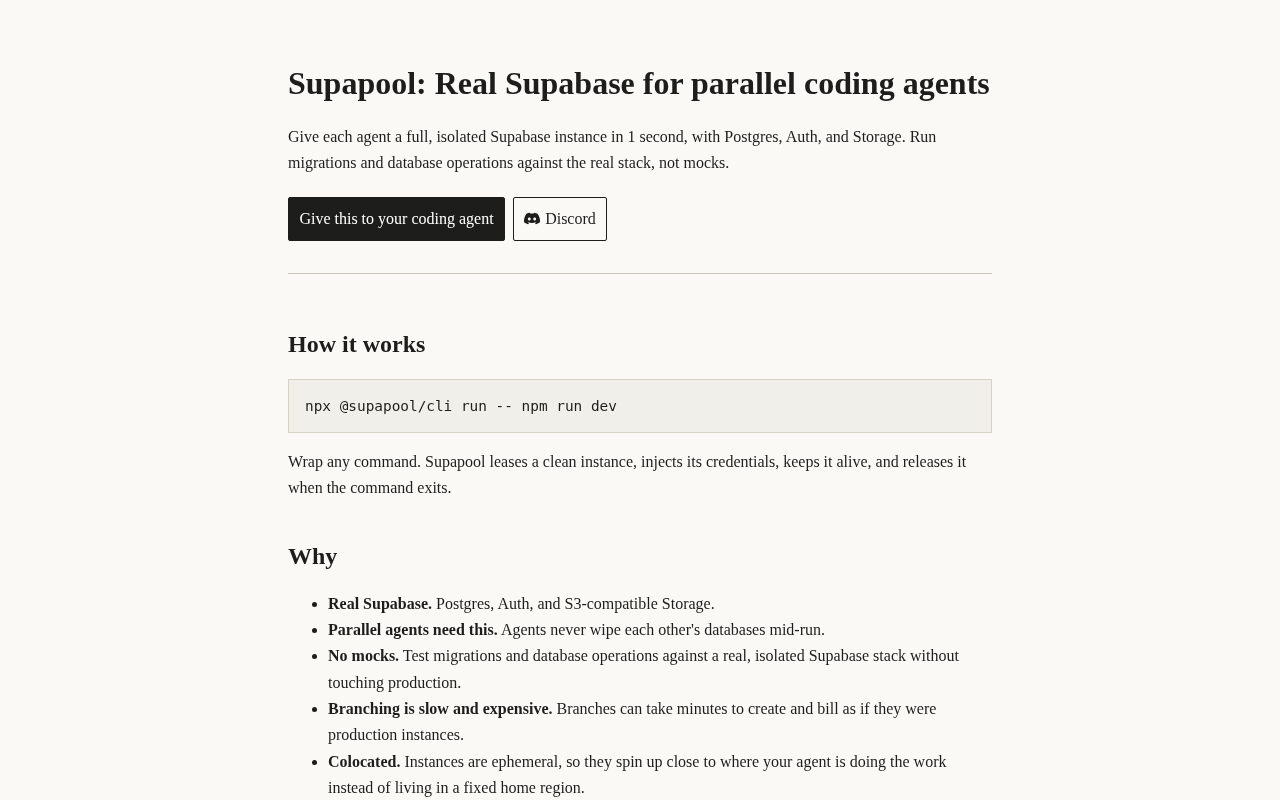
Supapool: Creating Isolated Databases for AI Coding Assistants in 400 Milliseconds
Supapool uses pool prewarming to create isolated Supabase database instances in 400ms for AI coding assistants like Claude, Cursor, and Devin—a prime example of AI-native infrastructure.
Read more →
·2 min
Supapool: Creating Isolated Databases for AI Coding Agents in 400 Milliseconds
Supapool uses pool prewarming to create isolated Supabase database instances in 400ms for AI coding agents like Claude, Cursor, and Devin, solving the database isolation challenge.
Read more →

·3 min
Jina v3 Matryoshka Embeddings in Practice: Cut Vector Storage Costs by 75%
Use Jina v3 Matryoshka embeddings to truncate 1024-dim vectors to 256-dim, cutting Pinecone storage costs by 75% while maintaining retrieval quality with task-specific LoRA adapters and circuit breakers.
Read more →

·3 min
Building a Streaming LLM Backend in Go: Deep Dive into the SDK and React Frontend Library
Deep dive into an open-source Go SDK for building streaming LLM backends, covering streaming responses, tool-calling architecture, and companion React library for end-to-end integration.
Read more →

·3 min
Jina v3 Matryoshka Embeddings in Practice: Cut Vector Storage Costs by 75%
Use Jina v3's Matryoshka embeddings to truncate 1024-dim vectors to 256-dim, cutting Pinecone storage costs by 75%. Covers dimension truncation, task-specific LoRA adapters, and circuit breakers for reliable RAG systems.
Read more →

·4 min
Infrastructure Architecture for Agent Applications: Four Core Patterns Explained
A deep dive into infrastructure architecture patterns for production-grade Agent applications, covering state persistence, sandbox isolation, LLM observability, and cost control.
Read more →

·4 min
Infrastructure Architecture for Agent Applications: Four Core Patterns Explained
Deep dive into infrastructure architecture patterns for production-grade Agent applications, covering state persistence, sandbox isolation, LLM observability, and cost control.
Read more →

·5 min
Learn AI Agent Development from Scratch: A 3-Step Practical Path to Get Started Quickly
How to learn AI Agent development from scratch? This article outlines a clear 3-step path: Python crash course, LLM theory & practice, and LangChain framework project implementation.
Read more →

·3 min
How to Choose an AI Agent Platform for Your Team: 5 Evaluation Dimensions and a Decision Framework
Choose the right AI Agent platform by evaluating model flexibility, observability, tool integration, security compliance, and total cost. A complete decision framework to help technical leaders avoid vendor lock-in.
Read more →

·3 min
How to Choose an AI Agent Platform for Your Team: 5 Evaluation Dimensions & Decision Framework
Choose an AI Agent platform by evaluating model flexibility, observability, tool integration, security compliance, and total cost. A complete decision framework to avoid vendor lock-in.
Read more →

·3 min
Getting Started with AI Agent Development: A Learning Path from Zero to Deployment
A systematic guide to the complete learning path for AI Agent development—covering prompt engineering, RAG knowledge bases, LangChain & LangGraph, fine-tuning, and multi-agent collaboration.
Read more →
·2 min
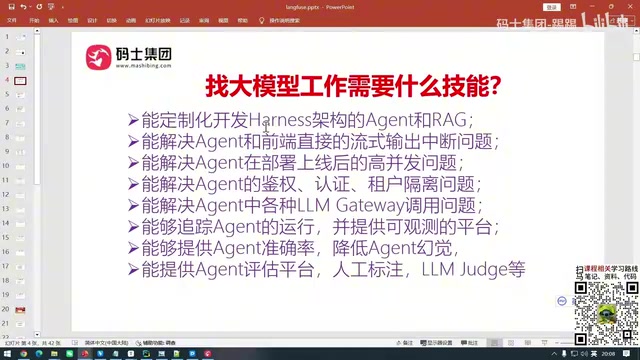
The New Bar for AI/LLM Roles: A Practical Guide to Agent Observability and Evaluation
Enterprise AI/LLM roles now demand engineering skills: streaming recovery, high concurrency, multi-tenancy, LLM gateways, Langfuse observability, and evaluation platforms. Master these 8 core competencies.
Read more →

·8 min
A Complete Guide to Agent Testing: Five Core Dimensions and Automation in Practice
In-depth analysis of the five core dimensions of AI Agent testing: command safety, tool-calling accuracy, task planning, output consistency, and error self-repair. Master automated testing and the transition path for test engineers.
Read more →