#continuous AI agents
1896 related articles
 Research
·4 min
MEME Benchmark Reveals Critical Flaws in LLM Memory Systems: Dependency Reasoning Accuracy Below 50%
MEME benchmark first evaluates LLM memory dependency reasoning across 6 major systems—best accuracy only 42%. Deep analysis of cascade and missing task failures reveals path to next-gen AI memory.
Read more →
 Tutorials
·4 min
Shopify Agent Cold Start in Practice: A Three-Step Method for Training Production-Grade AI with Zero Conversation Data
Shopify's production AI Agent cold start approach: zero real conversation data, reverse-engineering training samples from existing business workflows, fine-tuning Qwen-32B for 2.2x speed gain and 60% cost reduction.
Read more →
 Research
·4 min
Continual Harness: AI Automatically Builds Scaffolding to Beat Pokémon RPGs
Princeton and Google DeepMind propose Continual Harness, enabling LLM agents to automatically build and optimize scaffolding to beat multiple Pokémon RPGs without human intervention, cutting costs by 40%.
Read more →
 Deep Dives
·4 min
Five Core Concepts of AI Programming: A Complete Guide from Prompt to Harness Engineering
A clear breakdown of five core AI programming concepts — Prompt Engineering, Context Engineering, Agent, Skill, and Harness Engineering — with real-world use cases and advice for indie developers.
Read more →
 Product Reviews
·3 min
MeMo Open-Source AI Agent Platform In-Depth Review: Long-Term Memory + MCP Protocol + Multi-Bot Collaboration in Practice
In-depth review of MeMo, an open-source AI Agent platform. Covers long-term memory, MCP protocol, multi-Bot container isolation, omni-channel deployment, with setup tutorials and usage tips.
Read more →
 Research
·4 min
Skills-Oriented Programming: Domain Knowledge Engineering for Efficient Code Generation by Code Agents
Alibaba Mama's Skills-Oriented Programming methodology uses three-layer Skill structures, progressive disclosure, and four-layer anti-corruption systems to achieve 90%+ code generation accuracy for Code Agents in complex enterprise codebases.
Read more →
 Deep Dives
·4 min
A2A Protocol Explained: Complementing MCP to Build a Standard Communication Layer for Multi-Agent Collaboration
Deep dive into Google's A2A protocol core mechanisms (Agent Card, Task, Transport), comparing A2A vs MCP roles, and tracing the evolution from tool calling to multi-agent team collaboration.
Read more →
 Deep Dives
·3 min
Deep Dive into OpenAI Agent Kit: Can It Really Replace Dify and n8n?
Deep analysis of OpenAI's Agent Kit visual workflow system: feature breakdown, comparison with Dify/n8n, scenario limitations, and the strategic intent behind its launch.
Read more →
 Deep Dives
·3 min
Deep Dive into OpenAI Agent Kit: Can It Replace Dify or n8n?
In-depth analysis of OpenAI's Agent Kit visual workflow tool vs Dify, n8n, and Coze—examining its real capabilities, strategic intent, and actual impact on the AI workflow automation ecosystem.
Read more →
 Product Reviews
·4 min
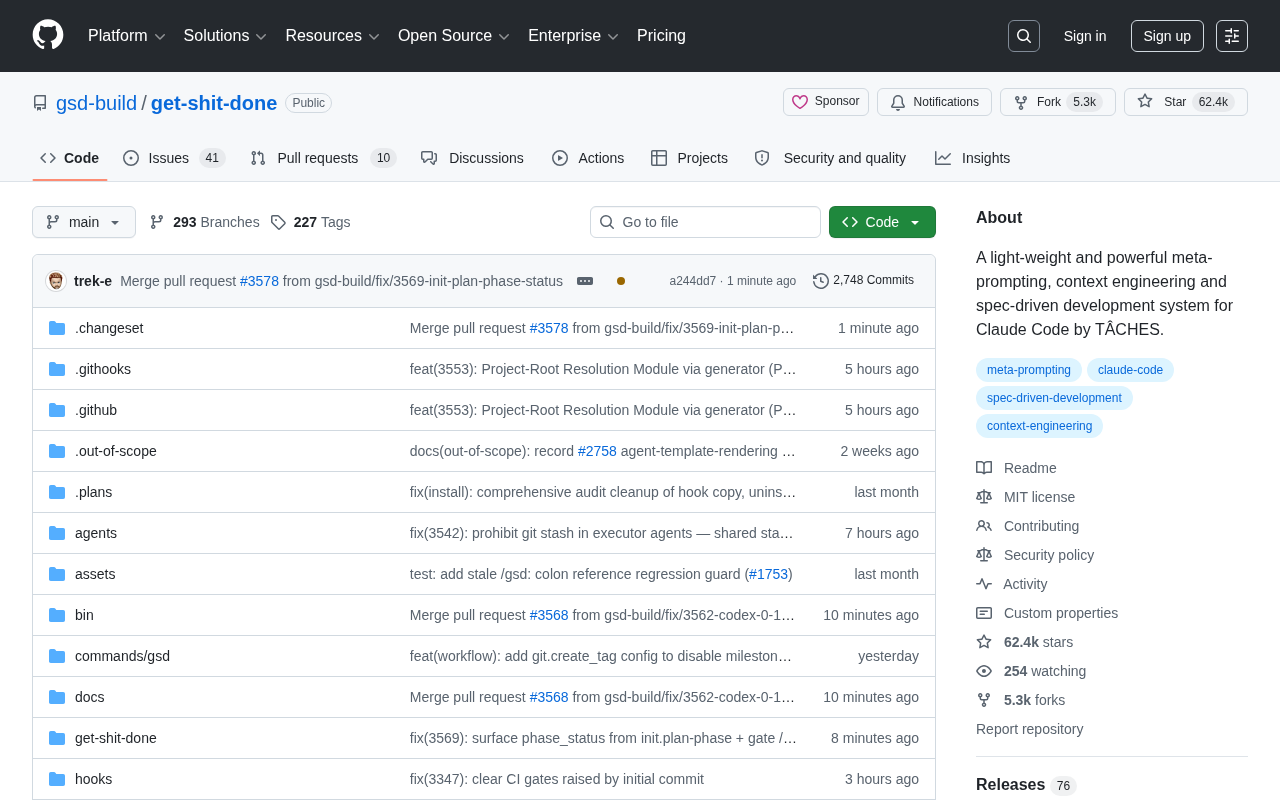
Get Shit Done: Full Breakdown of the 60K-Star Claude Code Meta-Prompting & Spec-Driven Development System
Deep dive into Get Shit Done (GSD), a 62K-star GitHub project built for Claude Code. Covers meta-prompting, context engineering & spec-driven development.
Read more →
 Tech Frontiers
·3 min
OpenAI Restructures to Go All-In on AI Agents: Brockman Takes Command of Product Lines for the 2025 Agent Battle
OpenAI announces major restructuring with President Greg Brockman overseeing all products, consolidating lines to go all-in on AI Agents. Analysis of strategy, competition, and commercialization.
Read more →
 Product Reviews
·4 min
FreeBuff Free AI Coding Assistant In-Depth Review: 9 Sub-Agent Architecture & User Experience
In-depth review of FreeBuff free AI terminal coding assistant: analyzing its 9 sub-agent architecture, multi-model switching, ad-supported business model, and privacy considerations vs. competitors like Verdant.
Read more →
 Product Reviews
·3 min
A Comprehensive Guide to the OpenAI Codex APP: Feature Breakdown and the New Paradigm of AI Programming
Deep dive into OpenAI Codex desktop app: real-time task management, Skills system, MCP protocol integration, Work Trees isolation, and automated tasks reshaping developer workflows.
Read more →
 Product Reviews
·3 min
9 Emerging AI Tools to Try: The Best Automation & Agent Platforms of 2025
Explore 9 noteworthy AI tools of 2025 covering workflow automation, multi-agent collaboration, no-code development, and autonomous programming including Active Pieces, Make, Devin AI, and OpenAI Operator.
Read more →
 Tech Frontiers
·3 min
AI Radio Experiment: Claude, ChatGPT, Gemini, and Grok Run Stations Independently — The Results Are Surprising
Andon Labs had Claude, ChatGPT, Gemini, and Grok independently run radio stations. The experiment reveals real capability limits of autonomous AI in content quality, trustworthiness, and long-term stability.
Read more →
 Tutorials
·4 min
Claude Code Practical Tips: A Complete Guide from Code Q&A to Parallel Workflows
Deep dive into Claude Code tips covering codebase Q&A, CLAUDE.md configuration, MCP server integration, SDK mode, and parallel sessions to master Anthropic's AI coding assistant.
Read more →
 Tutorials
·4 min
Manus AI Tutorial: The Three-Layer Expression Method to Triple Your Efficiency (With 19 Real-World Scenarios)
A detailed guide to Manus AI Agent's core capabilities and usage techniques, using the Three-Layer Expression Method to issue precise instructions across 19 real-world scenarios including workplace reporting, data analysis, and side income.
Read more →
 Product Reviews
·4 min
ZCF Zero-Config Code Flow Tool: Essential for Claude Code and Codex Developers
ZCF (Zero-Config Code Flow) is an open-source zero-config workflow tool for Claude Code and Codex with ~6000 GitHub Stars. Learn its architecture, features, and how it solves AI coding integration challenges.
Read more →
 Deep Dives
·3 min
ReAct Pattern and Transformer Architecture Explained: High-Frequency AI Interview Topics for Frontend Developers
Deep dive into Agent core logic ReAct (Reasoning + Acting) execution flow, Transformer self-attention mechanism, and essential AI skills for frontend developers including prompt engineering, RAG, and Agent development.
Read more →
 Deep Dives
·3 min
Two Root Causes of Agent Context Rot: Distraction vs. Poisoning Explained
AI Agent getting dumber over time? Context Rot has two root causes: Distraction (attention dilution) and Poisoning (causal chain contamination). Learn symptoms, mechanisms, and remediation strategies.
Read more →