#deterministic execution
451 related articles

·3 min
Monocular RGB Human Mesh Reconstruction: Real-Time Motion Capture at 18 FPS with Rust + CUDA
A deep dive into a real-time 3D human mesh reconstruction project using a single RGB camera, built with Rust, Candle, and CUDA, achieving 55ms/frame on an RTX 5080.
Read more →

·5 min
A Beginner's Guide to Prompt Engineering: From One-Off Instructions to a Systematic Methodology
A beginner's guide to prompt engineering covering the four functions of prompts, the key differences from prompt engineering, a six-step systematic workflow, and critical technical and practical limitations.
Read more →

·3 min
Grok 4.5 Feels Weaker in Cursor? A Deep Dive into AI Coding Tool Integration Differences
Users report Grok 4.5 underperforms in Cursor vs. the official terminal. We analyze how system prompts, context management, parameters, and tool calling create AI coding tool integration gaps.
Read more →

·3 min
Carta: Pandoc Rewritten in Rust — 45x Faster, 20x Smaller
Carta is a Rust reimplementation of Pandoc with a 9MB binary (1/20th of Pandoc) and up to 45x faster conversion. Supports Markdown, DOCX, LaTeX, and Pandoc JSON filters.
Read more →

·3 min
Deconstructing Agents: Task Decomposition, Context Compression, and the Case Against Heavy Frameworks
A deep engineering analysis of Agent internals: how LLMs decompose tasks via tool calling, why context compression and memory are essential, and why solo developers should avoid heavy frameworks.
Read more →
·3 min
The Computer Is Being Redefined in the AI Era — Has Your Understanding Kept Up?
Generative AI is profoundly redefining the personal computer — from passive tool to intelligent collaborator. This article examines the core shifts of the AI PC era and the productivity gap created by cognitive lag.
Read more →

·3 min
Gemini Can Generate a PDF One Moment but Claims It Can't the Next? Here's Why
Analysis of why Gemini and other AI LLMs exhibit capability drift, including tool-calling mechanisms, context window limits, and safety policy triggers, plus practical strategies for PDF generation failures.
Read more →
·3 min
Carta: Pandoc Rewritten in Rust — 45x Faster, 20x Smaller
Carta is a Rust reimplementation of Pandoc that produces a 9MB binary (1/20th of Pandoc) and achieves up to 45x faster conversion speeds for Markdown, DOCX, LaTeX, and more.
Read more →

·5 min
The Five Stages of AI Agent Architecture Evolution: The Real Path from Model Calls to Production Runtime
Deep dive into the five evolution stages of AI Agent architecture: model calls, tool calls, workflows, Agent loops, and production runtime. Learn the responsibility boundaries and design principles.
Read more →

·4 min
IntelliJ IDEA Efficiency Configuration Guide: Lessons from Seven Years of Java Development
A senior Java developer shares 7 years of IntelliJ IDEA configuration tips: JVM tuning, AI-assisted coding, Testcontainers testing, debugging tricks, and Spring toolchain setup.
Read more →

·5 min
Complete Breakdown of Core Competencies for AI Agent Engineers: From Demo to Production-Grade Systems
Deep breakdown of 4 core AI Agent engineer competencies: business decomposition, multi-Agent architecture, quantitative evaluation, and engineering delivery—bridging the gap from Demo to production.
Read more →
·3 min
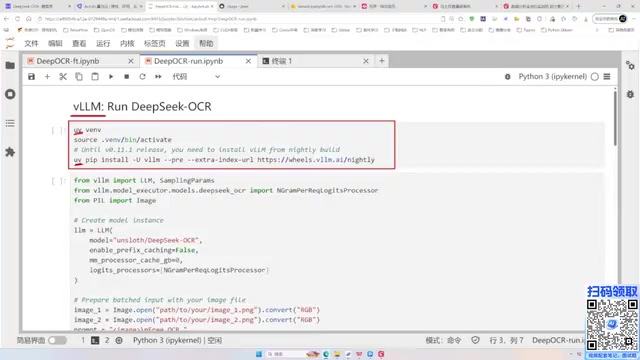
DeepSeek-OCR Deployment & Fine-Tuning in Practice: From vLLM Inference to Unsloth Fine-Tuning
Complete guide to DeepSeek-OCR from vLLM inference deployment and Unsloth model loading to fine-tuning, covering cloud server setup, GPU selection, and code examples — all on a single 4090 GPU.
Read more →
·3 min
Computers Are Being Redefined in the AI Era — Has Your Understanding Kept Up?
Generative AI is profoundly redefining personal computers — from passive tools to intelligent collaborators, from deterministic computation to probabilistic reasoning. Explore the core shifts of the AI PC era.
Read more →

·3 min
API Mock vs. Sandbox in Agent Testing: A Detailed Layered Strategy Guide
API Mock is fast but misses bugs; Sandbox is realistic but costly. This article analyzes their core differences and provides a layered testing strategy for building reliable Agent test systems.
Read more →

·3 min
GitHub Agentic Workflows in Practice: Automating Cross-Repository Documentation Updates
Learn how GitHub Agentic Workflows automate cross-repo documentation updates. See the Aspire team's AI-driven approach: event triggers, smart drafting, and SME review to keep docs in sync with code.
Read more →
·4 min
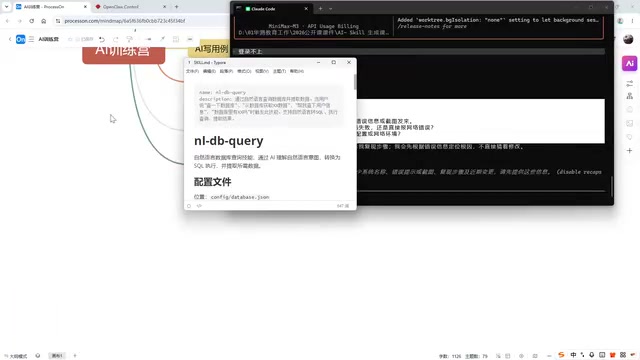
Hands-On Skill Writing and Agent Testing: A Guide to AI Testing Transformation
An in-depth look at AI testing challenges. Learn to write reusable Skill packs and master Agent testing and LLM evaluation—covering the SKILL.md six-dimensional rule, skill-creator, EvalScope, and dataset selection.
Read more →

·4 min
The Cursor Swarm Experiment: What AI Rebuilding SQLite from Scratch in Rust Reveals About Cost
Cursor's swarm experiment had AI teams implement a SQLite engine in Rust from scratch using only 835 pages of docs. All-frontier models cost $10K+, hybrid role division just $1.3K—a 7.9x gap.
Read more →

·3 min
Coze Agent Development in Practice: From Beginner to Multi-Agent Collaboration
Coze is ByteDance's homegrown agent-building platform. This article covers getting started with Coze, its comparison with Dify, skill system, workflow orchestration, and multi-agent collaboration.
Read more →

·3 min
Building AI Agents with Coze: From Beginner to Multi-Agent Collaboration
Coze is ByteDance's homegrown agent-building platform. This article explains getting started with Coze, comparison with Dify, its skill system, workflow orchestration, and multi-agent collaboration.
Read more →

·3 min
Spring AI Alibaba Graph in Practice: Building a Full-Process HR Recruitment Agent
A detailed guide on building a full-process HR recruitment Workflow Agent with Spring AI Alibaba Graph, covering resume parsing, multi-dimensional screening, tiered questions, human-in-the-loop, and state rollback.
Read more →