#developer career advice
63 related articles

·2 min
Why Substack Authors Need an Independent Website: Platform Dependency Risks and Solutions
Analysis of platform dependency risks for Substack authors and why an independent website is essential. Practical strategies for using Substack alongside your own site, with alternatives like Ghost and static sites.
Read more →

·3 min
Backend Developer Transition to AI/LLM: 4 Core Skills and a Practical Learning Roadmap
Complete guide for backend developers transitioning to AI/LLM engineering. Covers the 4 core skills—Python, RAG, Fine-tuning, and Agents—with a phased learning roadmap and practical project advice.
Read more →

·3 min
From Frontend to Agent Development: A Complete 6-Week Systematic Learning Path
A 6-week systematic learning path for frontend engineers transitioning to AI Agent development, covering core architecture, ReAct, multi-agent collaboration, RAG integration, and deployment.
Read more →

·2 min
Getting Started with Codex: A Practical Guide to OpenAI's AI Programming Assistant with Tips to Avoid Common Pitfalls
A detailed guide to OpenAI Codex's core features and setup, comparing it with Claude Code, plus practical tips for configuring DeepSeek and avoiding common pitfalls.
Read more →

·3 min
A Practical Guide for Java Developers Transitioning to AI Application Development
Facing the AI wave, how can Java developers transition from traditional CRUD backend work to AI application development? This article breaks down the AI+ national strategy, China's AI catch-up logic, and offers a practical path.
Read more →

·2 min
Getting Started with ChatGPT Codex: A Practical Guide to the AI Programming Assistant
Codex is OpenAI's AI programming assistant that lets you write code in natural language. This article breaks down Codex's core features, use cases, and why programmers must master AI coding tools.
Read more →
·2 min
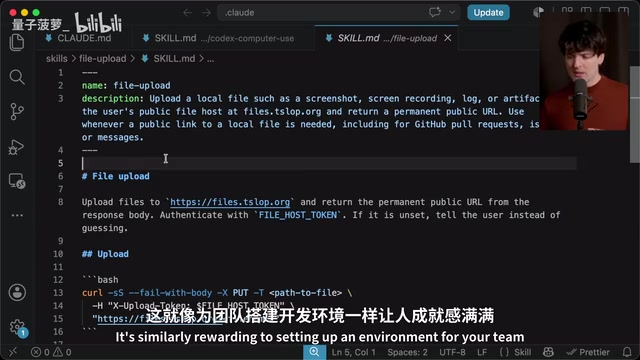
The Age of AI Coding: Why Tinkering Engineers Are Worth More Than Ever
Claude Code creator Boris and developer Theo reveal: in the AI Agent era, tinkering habits like automation, building small tools, and writing CLAUDE.md are becoming the core edge for reaching Staff engineer level.
Read more →

·5 min
DeepSeek's Liang Wenfeng Investor Meeting: Restrained Pricing and the AGI Roadmap Explained
An analysis of DeepSeek's Liang Wenfeng 4-hour investor meeting: restrained pricing with 10-month payback, why open source doesn't hurt revenue, the Agent–continual learning–self-iteration AGI roadmap, plus domestic chips, talent, and your moat.
Read more →

·5 min
The DeepSeek Investor Q&A with Liang Wenfeng: Decoding Restrained Pricing and the AGI Roadmap
Decoding DeepSeek's Liang Wenfeng 4-hour investor Q&A: 10-month-payback restrained pricing, why open source doesn't hurt revenue, the Agent-continual learning-self-iteration AGI roadmap, plus domestic chips, talent, and your moat.
Read more →

·2 min
Full-Stack Developer to AI Engineer: Which Certifications Actually Matter?
Full-stack developer transitioning to AI/ML? Compare Google, AWS, and Microsoft AI certifications, understand the two career paths, and learn what actually matters.
Read more →
CS Self-Study Guide: The 74K-Star Comp…
·2 min
CS Self-Study Guide: The 74K-Star Computer Science Learning Roadmap
A 74K-star GitHub project by Peking University students curates MIT, Stanford, and CMU open courses into a complete CS self-study roadmap covering algorithms, OS, databases, and more.
Read more →

·3 min
The Three Core LLM Job Roles Explained: Entry Requirements and Career Roadmaps
A deep dive into the three core LLM job roles — Application Engineer, R&D Engineer, and Algorithm Engineer — covering academic requirements, salaries, and skill roadmaps.
Read more →

·2 min
3-Month Roadmap to Becoming an AI/LLM Engineer: A Systematic Learning Guide
A 3-month structured roadmap for developers transitioning into AI/LLM engineering: Python & API basics, LangChain/FastAPI stack, and RAG/Agent projects.
Read more →

·3 min
Career Pivot at 47: Midlife Job Anxiety and Redefining Competence in the Age of AI
A 47-year-old engineer who pivoted to data science faces re-employment struggles — a mirror of AI-era anxiety: does using AI count as coding? How to break the midlife career trap?
Read more →

·2 min
Qwen3 Fine-Tuning in Practice: A Complete Guide to Local Deployment and Domain Training
A hands-on guide to LLM fine-tuning: from understanding model weights to local Qwen3 deployment, dataset preparation, and domain-specific training. Build a complete AI engineering skill set.
Read more →

·2 min
How Designers Can Thrive in the AI Era: Build Fun, Hands-On Agents
AI agents are reshaping what designers do. A senior designer shares why understanding agent infrastructure is essential and how to learn by building fun projects.
Read more →

·3 min
Degree or Skills? Career Dilemmas and Breakthroughs for Career Changers
An electronics engineering student who hates hardware wants to pivot to backend dev, facing a dilemma between a "guaranteed" degree and a third-tier BCA. We break down the degree vs. skills tradeoff, how to explain gaps, and self-study paths.
Read more →

·3 min
Vibe Coding: Enterprise-Level Practices and a Skill Progression Guide for AI-Driven Frontend Development
A deep dive into Vibe Coding: how AI-led development workflows are reshaping frontend engineers' value. From interview hot topics to a three-tier competency model for the AI era.
Read more →

·3 min
AI-Powered Python Reverse Engineering: A Full Retrospective on Using LLMs to Accelerate the Workflow
A real-world retrospective on AI-assisted Python reverse engineering: from JS obfuscation tracing and SM2/SM4 key extraction to generating decryption code with DeepSeek. An honest assessment of LLM value and legal risks.
Read more →

·3 min
Four Paths for Frontend Engineers to Level Up in AI: From RAG to Vertical Agents
How can frontend engineers transition into AI development? This guide covers four agent development directions: RAG, workflow agents, vertical agents, and general-purpose agents — with framework picks like LangChain.js.
Read more →