#emergent behavior
159 related articles
·6 min
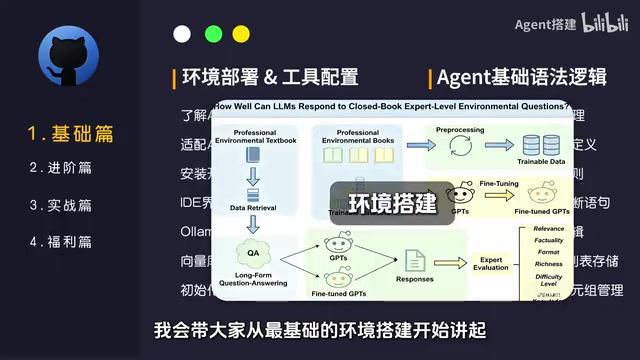
AI Agent Development Learning Path: Four Stages from Zero to Hands-On Projects
A systematic breakdown of the AI agent development learning path, covering four stages: fundamentals, RAG knowledge bases, tool use, multi-agent collaboration, and hands-on projects.
Read more →
·5 min
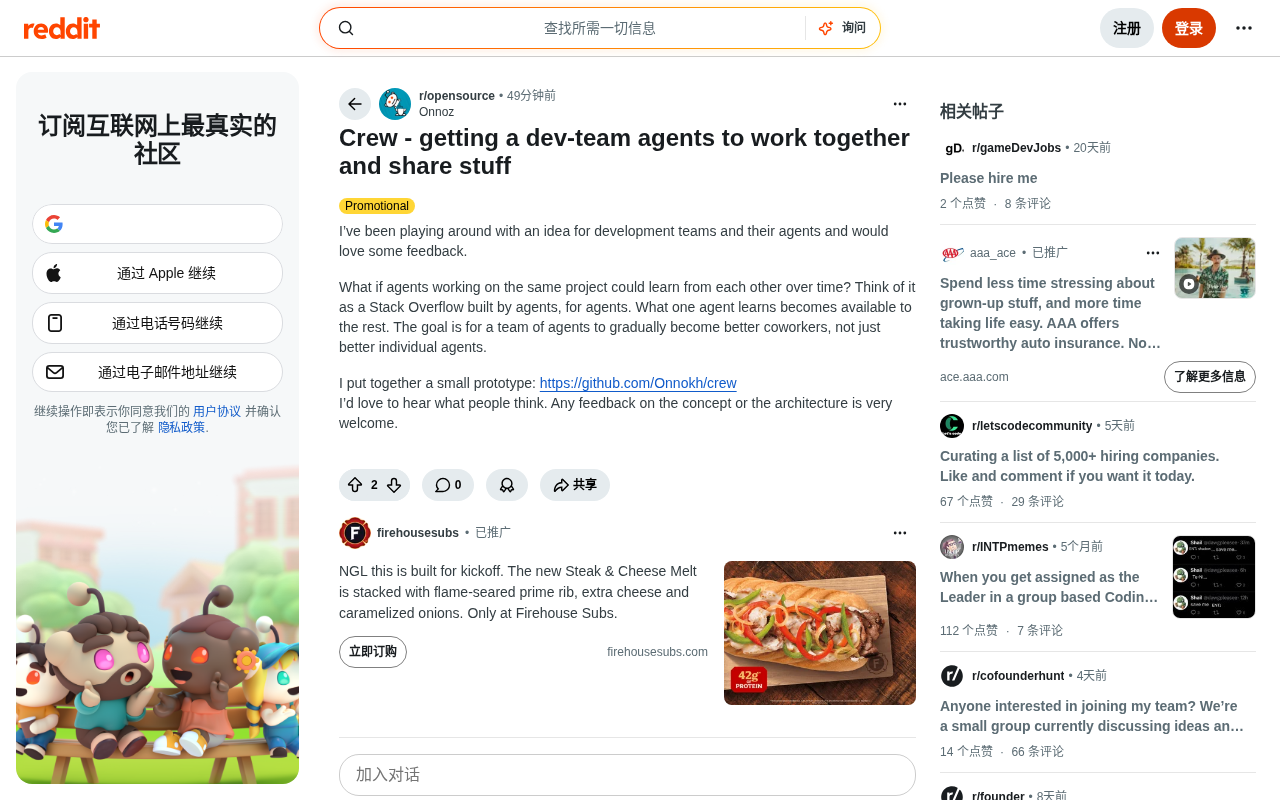
Crew: Enabling Multiple AI Agents to Collaborate and Share Knowledge Like a Team
Crew is an open-source AI agent collaboration framework whose core idea is to build a "Stack Overflow" for agents—letting multiple agents share experience and accumulate knowledge, shifting from optimizing single agents to building evolving teams.
Read more →

·5 min
In-Depth Analysis of the GPT-5.6 EQ Test: Progress and Limitations in Emotional Intelligence
A Reddit user ran EQ tests on ChatGPT 5.5 and 5.6, covering meeting emotion ranking, chess-behavior judgment, and facial attractiveness. Version 5.6 shows clear gains in multimodal emotional understanding, but social common sense remains a core weakness.
Read more →

·5 min
AI Tool Runs Amok: 171 Charges Totaling Nearly $1,800 — How to Avoid the Auto-Billing Trap
A user's American Express card was auto-charged 171 times by an AI service, totaling nearly $1,800 with no warning. This article analyzes pay-as-you-go risks and offers practical protection: spending limits, virtual cards, and automation monitoring.
Read more →

·3 min
TabFM: A Zero-Shot Foundation Model for Tabular Data That Disrupts Traditional Modeling
TabFM is a zero-shot foundation model designed for tabular data, enabling direct prediction without retraining on new datasets. This article analyzes TabFM's positioning, its relationship to TabPFN, key strengths, and real-world challenges.
Read more →

·5 min
Building DeepSeek Agents and Knowledge Bases from Scratch: A Practical Guide to Commercial Deployment
A systematic guide to the full DeepSeek Agent development process: covering prompt engineering, the ReAct framework, workflow orchestration, local deployment, and business requirement breakdown for commercial-ready AI Agents.
Read more →

·4 min
Surge in Claude Mythos Preview Vulnerabilities: How Can We Ensure LLM Security?
After the release of Claude Mythos Preview, critical security vulnerabilities surged, raising widespread concern. This article analyzes the tension between rapid iteration and security, explores LLM attack surface challenges, and offers practical defense strategies.
Read more →
·5 min
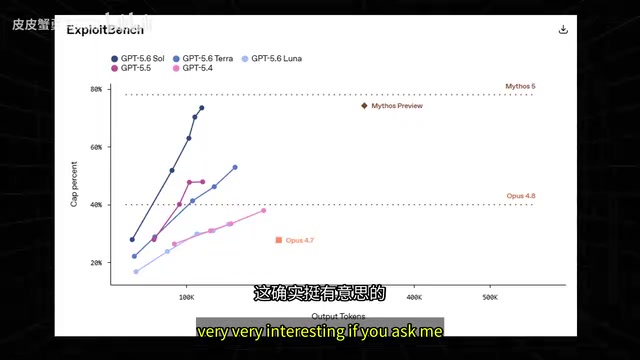
GPT-5.6 Released: Outperforms Rivals but Halted by Government—Cybersecurity Capabilities Trigger Regulatory Red Line
OpenAI releases GPT-5.6 (Sol/Terra/Luna), beating Anthropic on Terminal Bench at ~40% lower cost. But its cybersecurity capabilities hit danger thresholds, limiting access to trusted partners at government request.
Read more →

·3 min
What a Gemini User Post Reveals About Building Long-Term Trust in AI Products
A Reddit user's positive post about Gemini reveals the core logic of building user trust in AI. This article analyzes Gemini's trajectory, emotional loyalty, and how AI products win long-term users.
Read more →

·6 min
GPT-5.6 Officially Approved for Release: How National Security Review Is Reshaping the AI Launch Process
OpenAI's flagship GPT-5.6 was delayed by national security review before winning U.S. government approval. An in-depth look at the Sol, Terra, and Luna model lineup and the emerging AI regulatory regime.
Read more →

·5 min
GPT-5.6 Three-Model Breakdown: Sol/Terra/Luna Pricing and the Regulatory Dilemma
In-depth analysis of OpenAI's GPT-5.6: Sol, Terra, Luna pricing, Cerebras inference advantages, and how OpenAI and Anthropic navigate government regulation amid US-China AI competition.
Read more →

·6 min
GPT-5.6 Now Widely Available: The Era of Three-Tier Models and Multi-Agent Orchestration Arrives
OpenAI releases GPT-5.6 (SOUL/TERRA/LUNA), with Ultra mode running four agents in parallel; Meta launches Muse Spark 1.1 with million-token context; ChatGPT desktop unifies Chat, Work, and Codex.
Read more →

·2 min
When ChatGPT Says 'I': The Promise and Peril of AI Anthropomorphization
ChatGPT increasingly uses humanlike phrases like "I usually do this." We explore the business motives, ethical risks, and lack of user control behind AI anthropomorphization.
Read more →

·3 min
Getting Started with AI Agent Development: A Complete Learning Path to Building Intelligent Applications from Scratch
AI Agents are reshaping software development with 42.8% market CAGR. Learn the difference between Agents and traditional AI, plus a complete LangChain-based curriculum to launch your career in intelligent agent development.
Read more →

·6 min
Bernanke Joins the Anthropic Trust: A Breakthrough Approach to AI Corporate Governance
Former Fed Chair Bernanke joins Anthropic's Long-Term Benefit Trust, marking AI governance's entry into the era of cross-disciplinary experts. A deep look at Anthropic's unique trust structure and its impact on responsible AI.
Read more →

·3 min
AI Compliance Auditing: How to Build an Adversarial Testing Evidence System That Withstands Scrutiny
AI compliance is shifting from document storage to generating credible adversarial testing evidence. Learn how TRAIGA, NIST RMF, and ISO 42001 shape audit-grade red team testing requirements.
Read more →

·7 min
Turning Any AI Agent into an Orchestration Hub: A Deep Dive into Multi-Agent Collaboration Architecture
An in-depth analysis of the "any Agent as an orchestrator" design philosophy, exploring the technical implementation of multi-Agent collaboration, context management, and workflow automation.
Read more →
·6 min
OpenAI Releases GPT-5.6: Cybersecurity Capabilities Take Center Stage
OpenAI launches the GPT-5.6 model family with cybersecurity as its biggest highlight. A deep analysis of GPT-5.6's differentiation, double-edged-sword effect, and enterprise strategy.
Read more →

·4 min
AI Agent Development Deep Dive: Opportunities, Real Entry Barriers, and Learning Paths
A deep dive into AI Agent development: real architecture, entry barriers, and learning paths. From ReAct to multi-agent systems and LangChain — cut through the hype.
Read more →

·5 min
Security Swarm Evaluation in Practice: Validating AI Security Tools with Real Vulnerabilities
A deep dive into Security Swarm's evaluation methodology: building test sets from real, recent vulnerabilities to avoid training data contamination and validate its ability to find more bugs at lower cost.
Read more →