#ensemble learning
88 related articles
Human-Centered AI: Real-World Implemen…
·6 min
Human-Centered AI: Real-World Implementation in Healthcare and Design
An MSR workshop reveals the truth about AI deployment: from a $20 corneal diagnostic device to expert-in-the-loop chatbots, researchers share real-world experiences of AI in healthcare and design within resource-scarce environments.
Read more →

·3 min
Career Pivot at 47: Midlife Job Anxiety and Redefining Competence in the Age of AI
A 47-year-old engineer who pivoted to data science faces re-employment struggles — a mirror of AI-era anxiety: does using AI count as coding? How to break the midlife career trap?
Read more →

·2 min
14 PDF Parsers Compared: Semantic Fidelity Is the Real Bottleneck for RAG Applications
A benchmark of 14 PDF parsers focused on Meaning Survival, not just character accuracy. Covers GPT, Mistral OCR, Azure DI, and key insights for RAG pipeline optimization.
Read more →

·3 min
No-Code Research: Using AI Coding Tools to Complete the Full Machine Learning Pipeline
No coding skills? No problem. Learn how AI tools like Codex and Claude Code let researchers complete ML workflows — data cleaning, model training, visualization — using only natural language.
Read more →

·3 min
GPT-5.6 Prompt Engineering in Practice: A Systematic Approach to Eliminating AI Verbosity
A deep dive into GPT-5.6's official eight-dimension prompt framework — tracing AI verbosity back to RLHF and training data, with practical constraint techniques to fix it.
Read more →

·2 min
The Truth Behind Anthropic's Account Bans: Client Detection Logic and a Wave of AI Model Launches
Unpacking the technical truth behind Anthropic's account bans: hidden timezone and proxy detection logic sparks privacy debate. Plus Claude Sonnet 5, Linux support, and new releases from OpenAI, NVIDIA, and Google DeepMind.
Read more →
·3 min
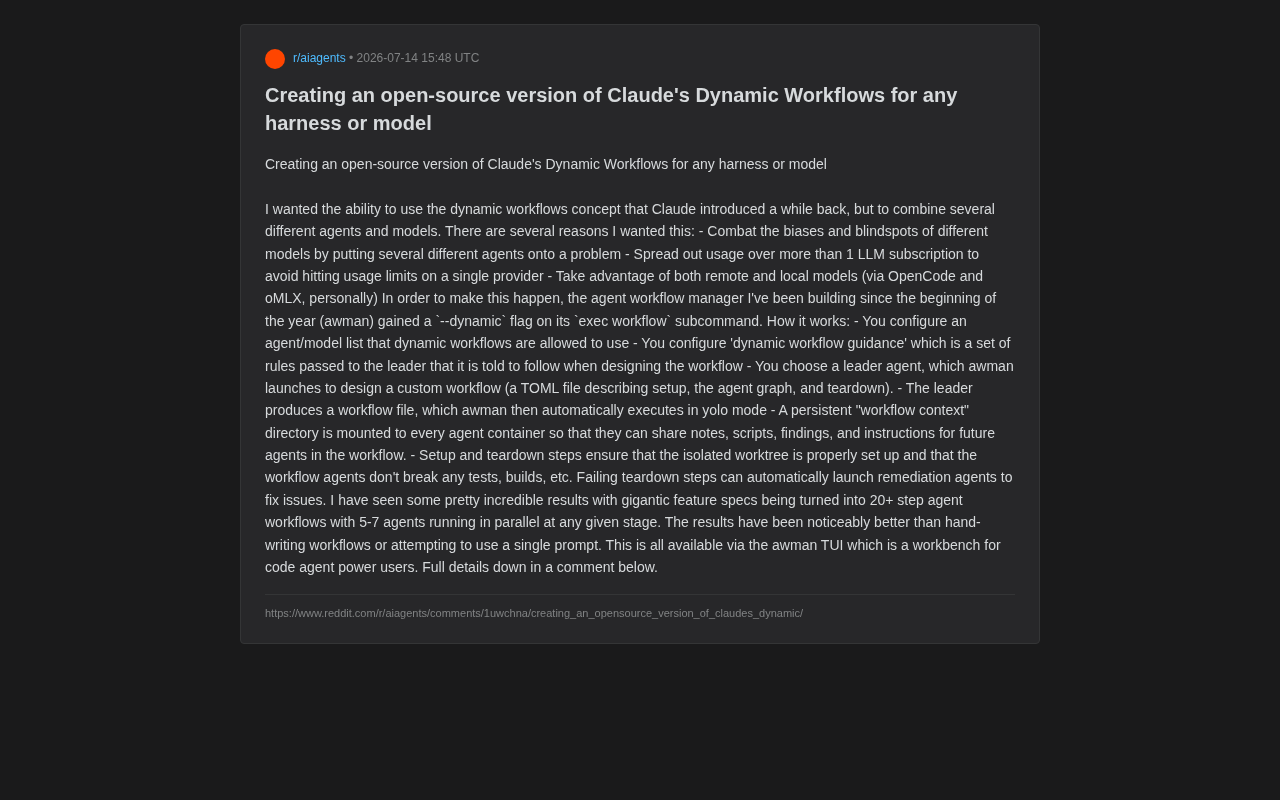
Open-Source Dynamic Workflows: How awman Enables Multi-Model Collaborative AI Programming
awman's --dynamic flag enables cross-framework dynamic workflows with multi-model collaboration. Explore its leader agent architecture, shared context design, and auto fault-tolerance mechanisms.
Read more →

·6 min
Multimodal and Embodied Intelligence: A Comprehensive Look at Progress, Pitfalls, and Opportunities
At the Microsoft Research India summit, top experts explore the real progress of multimodal AI and embodied intelligence: fusing classical robotics with large models, healthcare AI deployment challenges, perceptual bottlenecks in reasoning, and possibilities beyond scaling.
Read more →

·2 min
Vibe Coding in Practice: AI Agents Complete Full Research Experiments in Minutes
No coding required — just describe your needs in natural language. AI Agents handle data cleaning, model training, and visualization automatically. We tested Codex and Claude Code on a heart disease prediction task.
Read more →
Training an RL Agent That Can Do RL: A…
·2 min
Training an RL Agent That Can Do RL: A Deep Dive into Meta-Reinforcement Learning Self-Improvement
An independent developer ran a meta-RL experiment at near-zero cost — training an agent to autonomously perform RL training. Explore the technical depth, cost model, and industry implications.
Read more →

·2 min
Hermes MoA Multi-Model Collaboration: A Real-World Test of Quality Leaps on Complex Problems
Real-world test of Hermes 0.18 MoA (Mixture of Agents): multiple models collaborate, advisors answer independently, a decision-maker synthesizes. Covers setup, speed, cost trade-offs, and best practices.
Read more →
LLM Juries: How Multi-Model Voting Bui…
·2 min
LLM Juries: How Multi-Model Voting Builds Reliable Metadata
Single LLMs risk hallucinations and bias in metadata generation. This article breaks down the LLM Jury mechanism — using multi-model voting and consensus to boost annotation accuracy, with real engineering insights for food, medical, and e-commerce use cases.
Read more →
Hands-On ML Chapter 2 Practical Guide:…
·2 min
Hands-On ML Chapter 2 Practical Guide: Key Takeaways from an End-to-End Project
A deep dive into Chapter 2 of Hands-On ML — California housing price prediction. Covers feature engineering, preprocessing pipelines, cross-validation, and building a complete ML workflow.
Read more →
After Getting Started with AI/ML: Shou…
·3 min
After Getting Started with AI/ML: Should You Pursue an Internship or Continue Studying?
Already trained models and implemented neural nets from scratch — should you apply for internships or keep studying? A practical guide to entry-level AI roles and how to advance.
Read more →

·3 min
How to Systematically Learn Machine Learning After Mastering Math and Python
Already know math and Python? Learn the complete machine learning roadmap: from data science tools and classical algorithms to deep learning frameworks and specialization.
Read more →

·2 min
A Beginner's Guide to Grokking Machine Learning: Self-Study Paths and Resource Recommendations
Why Grokking Machine Learning is a top pick for ML beginners — covering the author, content, legal access options, and an effective self-study roadmap.
Read more →

·2 min
AI Predicts Football Matches: The Reasoning Process Is More Valuable Than the Result
AI football prediction's true value lies not in guessing scores, but in breaking down complex variables and revealing reasoning logic. Explore how multi-model aggregation delivers explainable sports analysis.
Read more →

·4 min
Do You Still Need to Hand-Code Machine Learning Algorithms in the AI Era? The Answer and the Method
With AI tools everywhere, is it still worth hand-coding SVM, decision trees, and other ML algorithms? This article explores the real value of hand-coding, the limits of AI tools, and smarter learning strategies for beginners in the AI era.
Read more →
·4 min
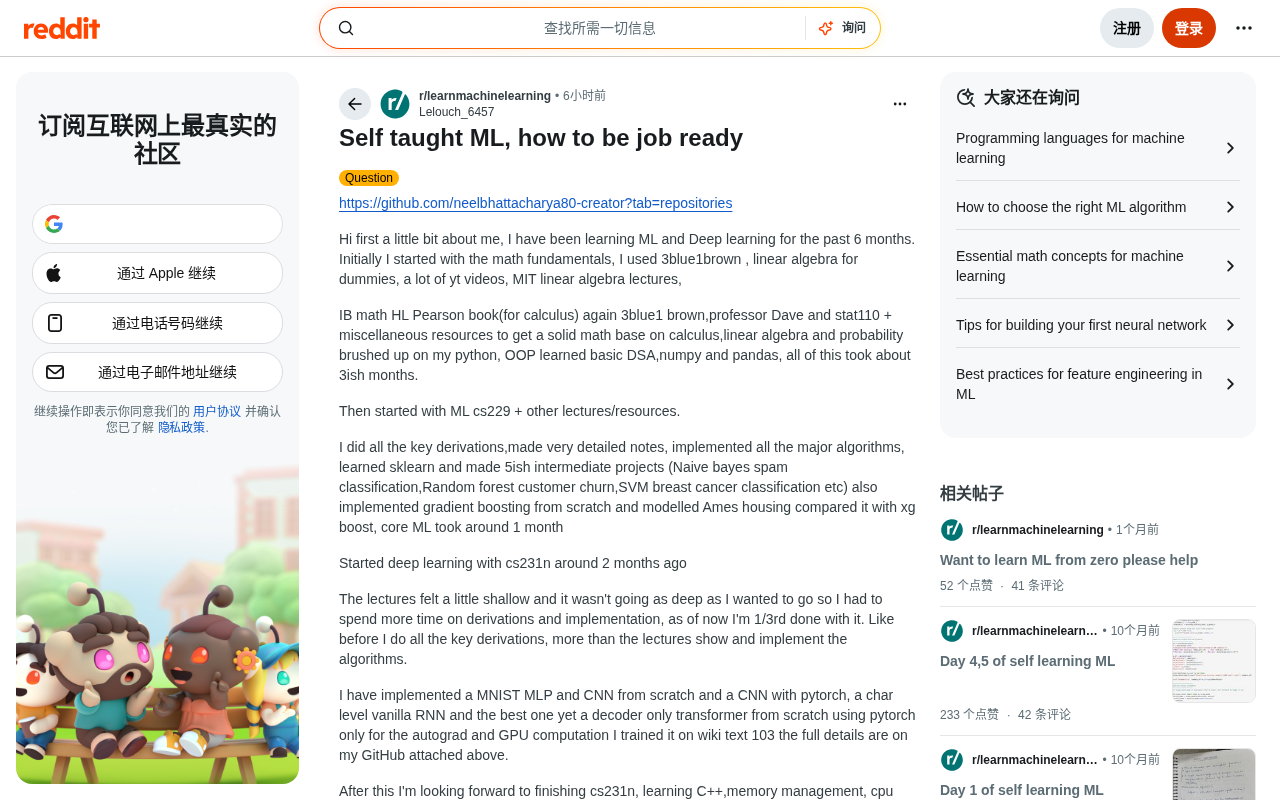
6 Months of Self-Taught Machine Learning: A Complete Roadmap from Zero to Job-Ready
A self-learner completed a full progression from math foundations and core ML to deep learning in 6 months—hand-writing a Transformer and implementing gradient boosting from scratch. This article breaks down the highlights and blind spots of this real roadmap.
Read more →

·6 min
Introducing Consistency Regularization to YOLOv8: Principles, Practice, and Performance Trade-offs
An in-depth analysis of introducing consistency regularization into YOLOv8, covering dual-branch augmentation, consistency loss construction, robustness gains, and training cost trade-offs for object detection optimization.
Read more →