#ensemble learning
80 related articles

·4 min
Quantum Optimization with QAOA + Elastic Net: A Practical Look at Genomic Variant Selection
An in-depth look at Q-FH Explorer's latest iteration: replacing XGBoost with Elastic Net for high-dimensional genomic data and adding QAOA quantum optimization for variant selection, reaching R²=0.655.
Read more →

·7 min
Training Machine Learning Models from Scratch: A Complete Beginner's Guide
A complete walkthrough of training machine learning models from scratch—covering problem definition, data preprocessing, algorithm selection, hyperparameter tuning, and evaluation, with tool recommendations for beginners.
Read more →

·6 min
1X NEO Robotic Hand and GPT-5.6: A Full Breakdown of Dual Breakthroughs in Robot Hardware and Software
1X releases a new robotic hand for the NEO humanoid robot—25 DOF, force transparency, and tactile skin enabling data self-labeling. OpenAI launches the three-tier GPT-5.6, boosting coding and cost-efficiency. Hardware and AI brains evolve together, accelerating humanoid robot commercialization.
Read more →

·3 min
K-means vs Random Forest: How to Choose the Right Algorithm from First Principles
A machine learning exam question pitting K-means against Random Forest sparks debate. Learn the core difference between supervised and unsupervised learning, and how to choose the right algorithm for mixed-feature tasks.
Read more →

·6 min
GPT-5.6 Fully Available: A Deep Dive into the Sol/Terra/Luna Three-Tier Models and Four-Agent Parallelism
GPT-5.6 is now officially available to all users, launching the three-tier Sol, Terra, and Luna models with four-agent parallelism. An in-depth look at the official benchmarks, API pricing, safety, and Ultra mode.
Read more →

·4 min
IMGNet: A New Face Verification Approach Challenging Cosine Similarity with Sign Pattern Matching
IMGNet is a face verification model by an independent Indonesian researcher that replaces cosine similarity with sliding window sign pattern matching. At just 10.58MB, it outperforms cosine on LFW and other benchmarks, introducing metric-loss co-design.
Read more →

·5 min
TensorRT Multi-Device Inference: Engineering Practices for Breaking Through Single-GPU Memory Bottlenecks
NVIDIA TensorRT now supports multi-device inference via pipeline and tensor parallelism, distributing large models across multiple GPUs to break through single-card memory limits.
Read more →

·3 min
IMGNet: A New Face Verification Approach Where Sign Pattern Matching Challenges Cosine Similarity
IMGNet is a 10MB face verification model replacing cosine similarity with sliding window sign pattern matching. Sign metrics outperform cosine on LFW and other benchmarks, suggesting sign consistency may be intrinsic to quality face embeddings.
Read more →

·7 min
Complete Guide to Training Small Models on Kaggle's Free Compute: GPU Quotas and Practical Tips
In-depth guide to Kaggle's free-tier compute: P100/T4 GPU with 30 hours/week quota, 12-hour sessions, suitable models like CNN and BERT fine-tuning, plus tips like mixed precision and checkpointing to start deep learning at zero cost.
Read more →

·4 min
GPT-5.6 Three-Model Benchmark: How Close Are Sol/Terra/Luna to Claude?
Hands-on benchmark of GPT-5.6's three models — Sol, Terra, and Luna — covering frontend, math, and long-horizon agentic tasks. Full scores, category breakdowns, and selection guidance vs. Fable 5 and Opus 4.8.
Read more →

·4 min
Prompt Engineering 101: Core Concepts, Value, and Limitations Explained
What is prompt engineering? This guide covers prompts, their four key functions, the 6-step engineering process, business value, and technical limitations for a complete foundation.
Read more →
·6 min
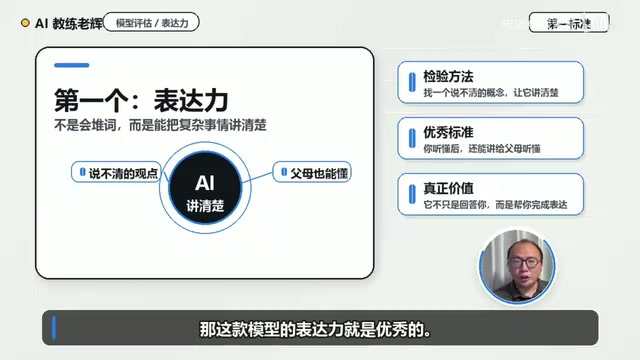
Forget Benchmark Scores! Four Practical Standards to Judge an LLM's Real Capability
High benchmark scores don't mean an LLM is actually useful. This article shares four field-tested standards—expressiveness, insight, cognitive depth, and problem-solving—to help you find the AI that truly fits you.
Read more →

·7 min
Getting Started with OpenAI LLM Development: A Practical Guide to Model Selection, Token Pricing, and API Usage
A systematic guide to the three cores of OpenAI LLM app development: GPT-4/GPT-3.5 model selection, token billing and cost-saving tips, and practical use of the Models, Completion, and Chat Completion APIs.
Read more →

·3 min
Zhipu GLM-5.2 Officially Launches | Full Breakdown of Anthropic's U.S. Export Control
Zhipu GLM-5.2 launches with tiered thinking and long-context support, while Anthropic faces rare U.S. export controls over AI security vulnerabilities. Full breakdown.
Read more →

·3 min
GLM-5.2 vs GPT-5.5: Solving the Mind Map Vertical Centering Problem — A Real-World Comparison
A developer found GPT-5.5 couldn't fix a mind map vertical centering bug, but GLM-5.2 solved it quickly. This article analyzes the capability differences and the value of multi-model collaboration in AI-assisted programming.
Read more →

·6 min
A 284B Model Running on a MacBook: The Real Breakthrough and Barriers of Local DeepSeek Inference
Redis creator runs 284B-parameter DeepSeek model on a MacBook Pro at 26 tokens/sec using a pure C engine, asymmetric quantization, and MoE architecture.
Read more →

·6 min
The New Normal of AI Programming: How Autonomous Agent Development Is Reshaping Software Engineering
AI Agent autonomous programming is evolving from niche experiments to the industry default. This article analyzes the three stages of AI-assisted programming, its impact on developer skills, process restructuring, and key challenges.
Read more →
On-Policy Distillation Explained: Prin…
·3 min
On-Policy Distillation Explained: Principles, Advantages, and Applications — A Comprehensive Guide
A deep dive into On-Policy Distillation: core principles, key differences from Off-Policy methods, and applications in model compression, reasoning transfer, RLHF alignment, and self-improvement.
Read more →

·2 min
AlphaFold Key Figure John Jumper Departs: A Nine-Year Partnership with Demis Hassabis Comes to an End
DeepMind's Demis Hassabis bids farewell to AlphaFold lead John Jumper after 9 years. A look at their journey from protein folding breakthroughs to the Nobel Prize in Chemistry.
Read more →

·2 min
mini-SWE-agent Roulette Mode: Why Randomly Switching Between LLMs Actually Performs Better
SWE-agent team finds mini-SWE-agent randomly switching between GPT-5 and Claude Sonnet 4 outscores either model alone on SWE-bench. Exploring the diversity hypothesis behind Roulette Mode.
Read more →