#full body intelligence
184 related articles

·4 min
What Is the True Nature of Large Language Models? A Super Compressor Analogy to Help You Fully Understand
Large models aren't search engines — they're more like super compressors. This article explains how LLMs compress data to learn semantic patterns, and explores the phenomenon of intelligent emergence.
Read more →

·4 min
The Dao of DeepSeek: Liang Wenfeng on Vision, Restraint, and the Philosophy of Open Source
Analysis of DeepSeek founder Liang Wenfeng's rare investor dialogue, exploring the company's vision-driven culture, strategic restraint toward AGI, and open-source philosophy in the US-China AI race.
Read more →
Terence Tao on AI and Mathematics: For…
·4 min
Terence Tao on AI and Mathematics: Formal Proofs, Human-AI Collaboration, and the Road Ahead
Fields Medalist Terence Tao analyzes AI's impact on math research, discussing LLM-assisted proofs, Lean formal verification, large-scale collaboration, and the future of math education in the AI era.
Read more →

·3 min
Getting Started with AI Agent Development: A Learning Path from Zero to Deployment
A systematic guide to the complete learning path for AI Agent development—covering prompt engineering, RAG knowledge bases, LangChain & LangGraph, fine-tuning, and multi-agent collaboration.
Read more →

·3 min
DeepSeek-OCR Deployment and Fine-Tuning: A Complete Hands-On Guide
Master the full DeepSeek-OCR deployment and fine-tuning workflow: vLLM inference deployment, efficient Unsloth fine-tuning, dataset preprocessing, LoRA training, validation, and RAG vector database integration.
Read more →
·3 min
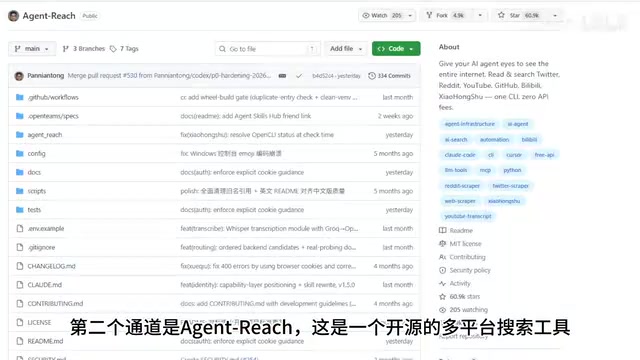
Open-Source Automated News Briefing Generator: A Zero-Technical-Barrier AI Deployment Analysis
An open-source automated news briefing system. No coding needed—just let an AI read the project docs to complete the entire deployment. Six-stage pipeline, four-channel search covering 16+ platforms, smart classification and dedup, daily auto-push to Feishu, completely free.
Read more →

·3 min
Open-Source Newsletter Auto-Generation System: A No-Code AI Deployment Breakdown
An open-source newsletter auto-generation system requiring no coding—just have AI read the project docs to complete deployment. Six-stage pipeline, four-channel search covering 16+ platforms, smart classification & deduplication. Completely free.
Read more →

·5 min
DeepSeek's Five-Step Ladder to AGI: A Restrained Roadmap Built on Twenty Thousand GPUs
DeepSeek founder Liang Wenfeng reveals a five-step AGI roadmap from chain-of-thought to embodied intelligence. How does TileLang crack domestic GPU substitution under a 20,000-card constraint?
Read more →
·3 min
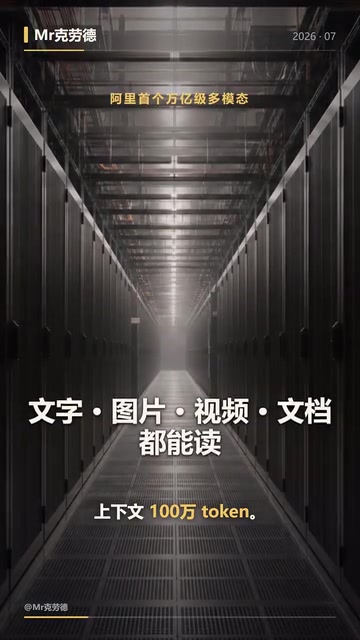
Alibaba's 2.4 Trillion Parameter Qwen Model: Separating Technical Substance from Marketing Hype
Alibaba's Qwen releases a 2.4T parameter MoE model claiming to be 'second only to Gemini 2.5.' We break down what's real—and what's just hype.
Read more →

·7 min
AI Daily: T-Head Open-Sources SAIL Software Stack at WAIC, Flurry of Large Model Releases
T-Head open-sources AI software stack T-Head SAIL at WAIC to lower the barrier for domestic chip development; Kimi K3 tops the WebDev leaderboard; Qwen 3.8 Max Preview cuts prices aggressively; Moonshot prepares a Hong Kong IPO; and Oracle switches its data center to a fuel cell microgrid.
Read more →

·7 min
Harness Engineering: Why a Powerful Model Isn't Enough — Here's What Really Matters
A data-deletion disaster reveals the biggest AI Agent risk: the problem isn't the model, it's Harness design. Learn context management, process standards, and permission isolation.
Read more →

·6 min
Claude Sonnet 5 In-Depth Testing: 8 Real-World Tasks Reveal Its True Capability Boundaries
Bilibili creator KaterSony tests Claude Sonnet 5 across 8 real-world tasks—image recognition, 3D modeling, web generation—comparing it against GPT-5.5, Gemini 3.1 Pro, and revealing its true capability limits and cost traps.
Read more →

·5 min
DeepSeek V4 Enters Grayscale Testing, Grok 5.0 Ready to Launch | Latest AI Model Developments
This AI Daily covers five sectors: DeepSeek V4 reportedly enters grayscale testing with improved chain-of-thought; Musk previews Grok 4.6 and 5.0 with 2T parameters; Intern-S2 open-source model beats Claude Opus 4.8; xAI builds 2000MW Colossus cluster; NVIDIA RoboTTT breaks long-horizon robotics barriers.
Read more →
·5 min
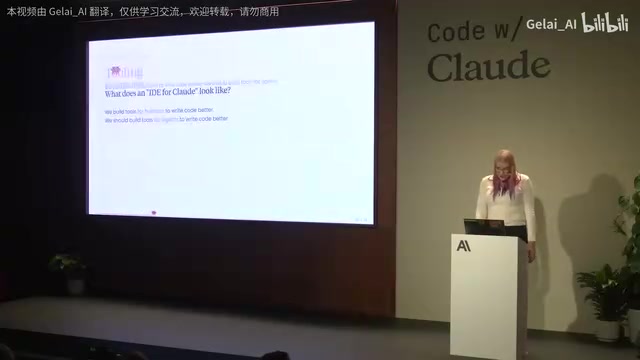
Advanced Claude Code in Practice: Building a Top-Tier AI Development Workflow
In-depth analysis of Claude Code customization methodology: from access, knowledge injection to tooling. Master context window management, zero-overhead Hooks, and MCP & Skills plugin primitives to build a scalable AI software engineering workflow.
Read more →
·2 min
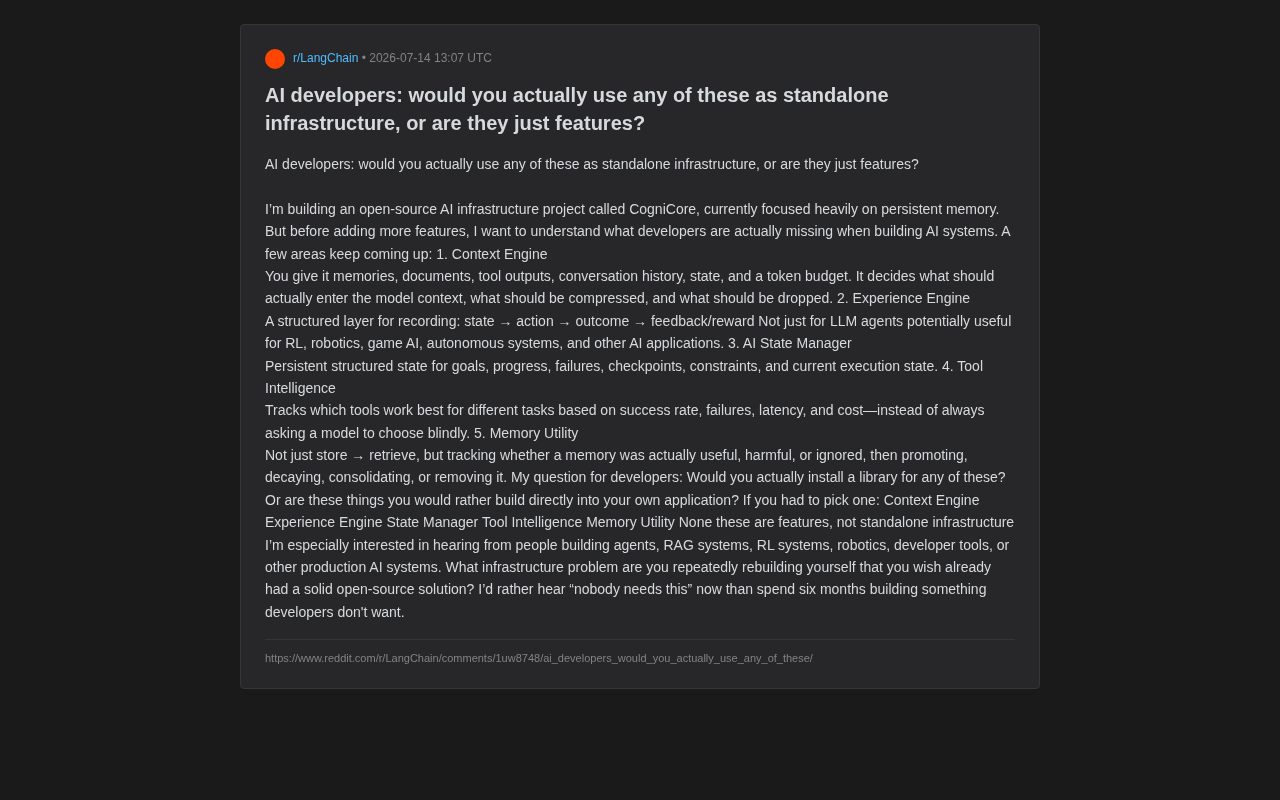
AI Infrastructure or App Feature? The Architecture Debate Sparked by CogniCore
CogniCore asks: should persistent memory, context engines, and state management be standalone AI infrastructure or in-app features? A deep dive into 5 key directions and the missing middleware of the agent era.
Read more →

·4 min
Cross-Platform AI Agent Setup Guide: Breaking Free from Vendor Lock-In for Good
Model performance gaps are closing. Real competitive advantage lies in portable AI agent architecture. Learn how to build a workspace that works across Claude Code, Codex, and beyond — no vendor lock-in.
Read more →

·3 min
What Is a Large Language Model, Really? The Core Principles Explained Through the Lens of Functions
Demystify large language models using middle-school math: LLMs are complex functions, training solves for parameters, and inference predicts next-token probabilities.
Read more →

·2 min
ROS2 for Beginners: The Essential Framework for Robot Development
A complete introduction to ROS2 for beginners: what ROS is, how ROS1 and ROS2 differ, and how to choose the right version to kickstart your robot development journey.
Read more →

·2 min
Getting Started with ROS2: What Is a Robot Operating System, and How Does It Differ from ROS1?
A beginner's guide to ROS2: what ROS really is (an SDK, not a traditional OS), how ROS1 and ROS2 differ, and how to choose the right version to start robot development.
Read more →

·2 min
ROS2 Beginner's Guide: A Deep Dive into the Core Middleware for Robot Development
Learn ROS2 from scratch: understand how ROS differs from traditional OS, explore ROS1 vs ROS2 differences, and master version selection principles for robot development.
Read more →