#full-stack individual
206 related articles
DocuSeal: An Open-Source DocuSign Alte…
·2 min
DocuSeal: An Open-Source DocuSign Alternative — A Deep Dive into Self-Hosted E-Signature
DocuSeal is an open-source, self-hosted e-signature tool built with Ruby — a strong DocuSign alternative. Learn its features, architecture, and deployment options.
Read more →
Anthropic Open-Sources CWC Workshops: …
·2 min
Anthropic Open-Sources CWC Workshops: A Hands-On Guide to Claude Development
Anthropic open-sources cwc-workshops on GitHub — a TypeScript-based, structured workshop covering Prompt design, Tool Use, and Agent orchestration to help developers master Claude integration.
Read more →

·3 min
Claude Code Enterprise Guide: Environment Setup, Git Workflows, and Switching to Chinese AI Models
Enterprise guide to Claude Code: CLI setup, switching to DeepSeek and other Chinese AI models, Git workflow automation, and bug fix loops to boost team productivity.
Read more →

·3 min
GPT + Codex in Action: Building a Real-Time Typhoon Detection System in 20 Minutes
A developer used GPT and Codex to build a real-time typhoon detection system with 3D maps, timeline playback, and risk analysis — all in just 20 minutes.
Read more →

·4 min
DSpark Open Source: DeepSeek's Inference Acceleration Tech That Doubles LLM Speed
DeepSeek and Peking University open-source DSpark, an inference acceleration technology using semi-autoregressive architecture and dynamic scheduling to boost LLM speed by 50%+ and double GPU concurrency without quality loss.
Read more →

·2 min
AI-Native Development in Practice: Building an Enterprise Management System in 30 Minutes Without Writing a Single Line of Code
Can a non-coder build an enterprise management system in 30 minutes? We tested XDevelop, an AI-native dev tool, to see how natural language turns into a fully running app.
Read more →

·2 min
Getting Started with Vibe Coding: Build Apps Without Writing Code
Vibe Coding lets anyone build apps using natural language — no coding required. Learn what it is, which tools to use, and see real stories of non-programmers shipping products.
Read more →

·2 min
MasterGo AI + Cursor: A New Paradigm for AI Full-Stack Development and Developer Capability Reinvention
Discover how MasterGo AI and Cursor are reshaping full-stack development — from prompt-to-design to natural language coding — and what it means for developer skills.
Read more →

·2 min
Vibe Coding: The Full-Stack AI Development Methodology for the Solo Founder Era
Vibe Coding is reshaping software development — use natural language to direct AI through code, design, testing, and marketing. A guide for solo founders and indie developers.
Read more →

·2 min
Modox AI Agent Update: HTML Flowcharts, Software Copyright Docs & One-Click Web App Generation
Modox, an academic AI agent built by a Bilibili creator, adds HTML flowcharts, software copyright docs, improved Word stability, and one-click web app generation.
Read more →

·6 min
OpenAI Merges ChatGPT and Codex: The Super App for the AI Agent Era Is Here
OpenAI merges ChatGPT and Codex into a super app and releases three new GPT-5.6 models: Sol, Terra, and Luna. A deep dive into four hands-on workflows—Computer Use, Loops, and multi-threading—for the AI agent era.
Read more →

·2 min
The AI Startup Boom: The Era of One-Person Companies Has Arrived
AI tools are lowering startup barriers, making one-person companies a real possibility. Explore how AI reshapes entrepreneurship, compresses costs, and what challenges remain.
Read more →

·2 min
Distributed AI Systems: A Practical Engineering Guide to Training, Inference, and Production Deployment
A deep dive into distributed AI systems engineering: data/model/tensor parallelism for training, KV cache, quantization, elastic scaling for inference, and cloud deployment with Kubernetes, Ray, and DeepSpeed.
Read more →

·3 min
Distributed AI Systems in Practice: A Complete Guide to Training, Inference, and Production Deployment
A deep dive into Distributed AI Systems: a new book distilling 10 years of AI engineering experience covering distributed training, inference optimization, and production model serving.
Read more →

·3 min
Getting Started with Codex: A Comprehensive Comparison with Claude Code and How to Choose
A deep comparison of Codex vs. Claude Code on pricing, stability, and frontend/backend strengths — plus how to choose between Cursor, Claude Code, and Codex.
Read more →

·4 min
Is Job-Hopping Worth It During Layoff Season? A Full Breakdown of the Risks and Rewards of a $50K Raise
Are layoffs the new normal? Is a $50K raise worth leaving a stable job for? This article breaks down the real costs and benefits across salary math, stability value, and personal decision frameworks.
Read more →

·3 min
Tracking London's Underground in 3D Real-Time: A Technical Breakdown of an Open-Source Visualization Project
An open-source project rendering the London Underground's real-time status in 3D, combining the TfL open API, WebGL rendering, and real-time data streaming. A deep dive into its implementation and interpolation challenges.
Read more →
·5 min
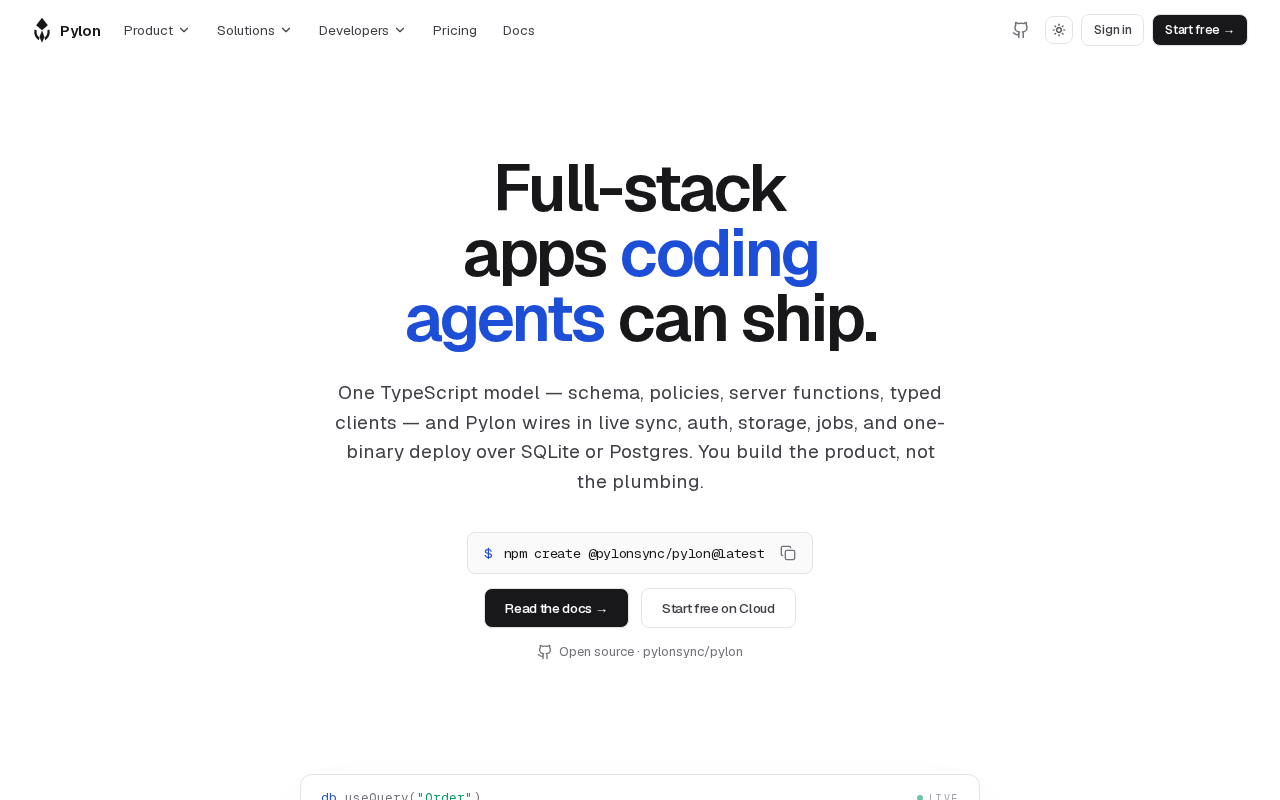
Pylon Sync: An In-Depth Look at the Full-Stack Realtime Framework Built for AI Agents
Pylon Sync is an "Agent-First" full-stack realtime framework that treats AI Agents as first-class design citizens, reducing coding errors via strong conventions.
Read more →

·4 min
AI Agent Learning Path for Beginners: From Theory to Real-World Practice
A complete AI Agent learning roadmap covering BDI theory, core components (Perception/Planning/Execution), AutoGen multi-agent frameworks, and DeepSeek RAG projects for beginners.
Read more →

·4 min
OpenAI Sites: Turn Ideas into Published Websites Instantly — No Coding Required
OpenAI's new Sites tool lets anyone describe an idea and instantly generate a live, shareable website or lightweight app — no coding skills needed.
Read more →