#kanban AI workflow
65 related articles

·2 min
Troopr AI Scrum Master: Auto-Generating Standup Reports from Jira/GitHub Data
Troopr AI Scrum Master auto-reads Jira, GitHub, and Slack data to generate daily standup reports, flags progress anomalies, and continuously learns team collaboration patterns.
Read more →

·3 min
Self-Hosted Family Calendar Solutions Compared: Homeflow, Nextcloud, and Lightweight Alternatives
Compare self-hosted family calendar solutions including Homeflow, Nextcloud, Radicale, and Vikunja across CalDAV compatibility, multi-user management, and task integration.
Read more →

·4 min
Tiling Window Management: A New Interaction Paradigm for Multi-Agent Conversations
Exploring tiling window management for multi-agent AI conversations: how it solves parallel monitoring and observability challenges, real-world limitations, and the evolution from chat boxes to control consoles.
Read more →

·3 min
Nommer.ai: Turning Recipes into 2-Player Cooperative Cooking Mode
Nommer.ai is an iOS recipe app that intelligently splits any recipe into 2-player cooperative mode, enabling two cooks to work in parallel and complete dishes together with seamless coordination.
Read more →

·2 min
Kaneo: An Open-Source Self-Hosted Project Management Tool and a Best Practice in Minimalism
Kaneo is an open-source, self-hosted project management tool built with TypeScript, embracing minimalist design. Explore its features, architecture, and why it earned 4600+ GitHub Stars.
Read more →

·3 min
What Kind of GUI Do AI Agents Need? The Evolution from Chat Boxes to Task Consoles
Exploring GUI design for AI Agents: why chat boxes fall short, and how ideal agent interfaces need task visualization, human-in-the-loop intervention, state presentation, and multi-agent orchestration.
Read more →

·4 min
Banquish: A Mac Productivity Tool That Pins Live Web Fragments onto a Canvas
Banquish is a Mac app that clips live web fragments onto a free-form canvas, eliminating tab-switching hell. Combined with AI Agent automation, it creates personalized information dashboards.
Read more →

·3 min
Self-Hosted Team Collaboration Tools Compared: Zulip, Campfire, and Matrix in Real-World Testing
Real-world comparison of Teams alternatives for 8-15 person teams: Zulip's topic-based chat, Campfire's minimalist one-time purchase, and Matrix's decentralized deployment evaluated for features, cost, and ops.
Read more →

·4 min
7 Core Components for Designing Long-Running AI Agents
A deep dive into the 7 core components for building long-running AI Agents: Goal, Evaluator, Verifier, Loop, Orchestration, Observability, and Memory.
Read more →

·3 min
14 Days of AI Programming: From Zero to Product with Vibe Coding
A zero-to-product AI coding bootcamp by Guo Ke: 14 live sessions, 6 real projects, covering Cursor, Trae, and Codex. Full walkthrough from setup to deployment.
Read more →

·3 min
Multica: An Open-Source Tool for Managing Multiple AI Coding Agents from a Single Dashboard
Multica is an open-source AI Agent management tool that unifies Claude Code, Codex, Cursor and more into one visual dashboard with kanban, task queues, and cloud deployment support.
Read more →
·4 min
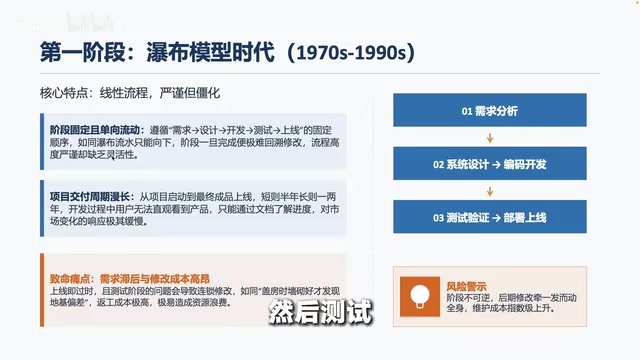
Understanding CI/CD from Scratch: Core Principles and Practical Introduction to Automated Deployment
A clear, practical guide to CI/CD: from Waterfall to DevOps, manual vs. automated deployment, and a full Jenkins + RuoYi hands-on learning path for beginners.
Read more →
·2 min
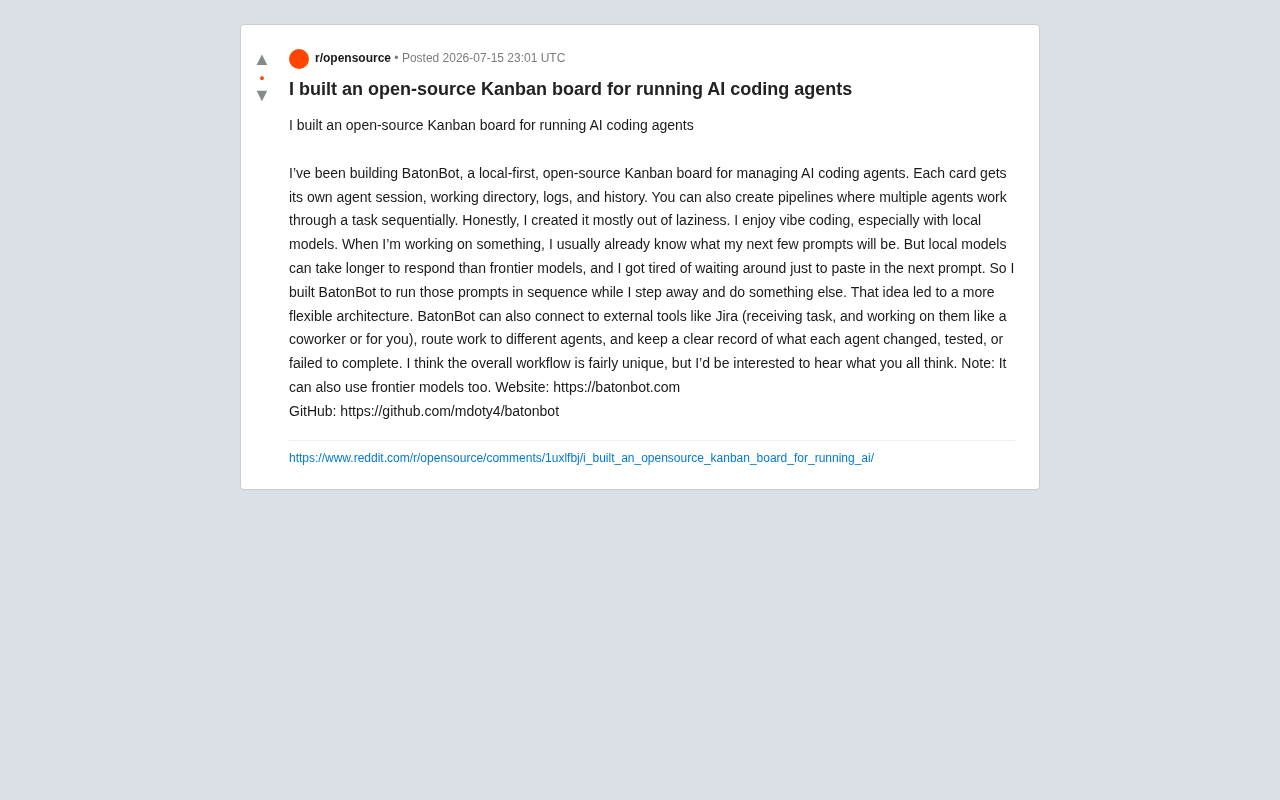
BatonBot: An Open-Source Kanban Tool for Managing AI Coding Agents
BatonBot is a local-first open-source kanban tool built for AI coding agents. Features prompt queuing, pipelines, Jira integration, and multi-model support.
Read more →
·7 min
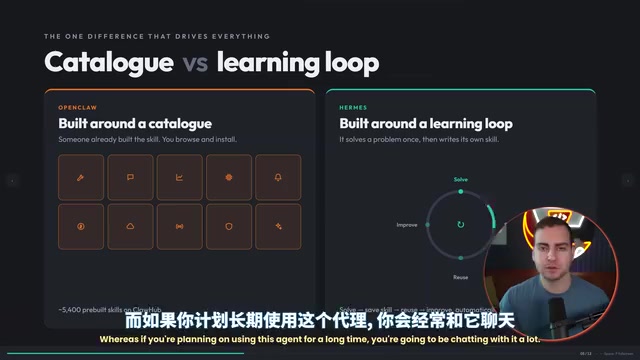
OpenClaw vs Hermes: An In-Depth Comparison and Selection Guide for AI Agent Tools
An in-depth comparison of OpenClaw and Hermes Agent, covering skill management, memory mechanisms, security, and gateway configuration to help you find the right AI agent solution.
Read more →

·6 min
MCP Brings Power Apps Data Seamlessly into M365 Copilot: A Complete Implementation Guide
A Power Platform MVP demonstrates how to use MCP to securely expose Power Apps business data to M365 Copilot. Covers declarative agent creation, custom tool development, and VS Code setup.
Read more →

·4 min
9 Proven Methods to Make Hermes Agent Actually Work for You
9 battle-tested methods from hundreds of hours with Hermes Agent: model selection (Opus/ChatGPT/GLM), multi-agent failover, cross-device coordination via Tailscale, and reverse prompting workflows.
Read more →

·7 min
Fable AI Coding in Practice: Optimizing Reasoning Levels and Multi-Model Collaboration to Cut Costs
How developer Theo used Anthropic's Fable model to rebuild his AI coding workflow — controlling reasoning levels, multi-model routing with Codex, and sub-agent orchestration to cut costs from thousands to $150.
Read more →

·7 min
Fable AI Coding in Practice: Optimizing Reasoning Levels and Multi-Model Collaboration to Save Money
Hands-on guide: Use Anthropic's Fable model to optimize AI coding workflows — control reasoning levels, leverage Claude-Codex multi-model collaboration, and cut costs from thousands to $150.
Read more →

·6 min
The Seven Core Components of Building Long-Running AI Agents
An in-depth look at the seven core components for building long-running AI agents: Goal, Evaluator, Verifier, Outer Loop, Orchestration, Observability, and Memory. Master this control system for reliable autonomous agents.
Read more →

·3 min
Vibe Coding in 3 Hours: Building a Content Creator Competitor Radar That Auto-Analyzes Viral Videos
Build a content creator competitor radar with Vibe Coding in 3 hours: auto-fetch videos, local FunASR transcription, structured viral video analysis, and Feishu dashboard sync.
Read more →