#local LLM training
1068 related articles
 Tutorials
·2 min
Unsloth Tutorial: A Guide to Fine-Tuning LLMs Locally with Reduced VRAM and Faster Training
Learn how Unsloth enables efficient local LLM fine-tuning with LoRA optimization, supporting Gemma 4, Qwen3, and DeepSeek while reducing VRAM usage by 50% and boosting training speed 2-5x.
Read more →
 Product Reviews
·1 min
Unsloth: A Powerful Tool for Training Open-Source LLMs Locally
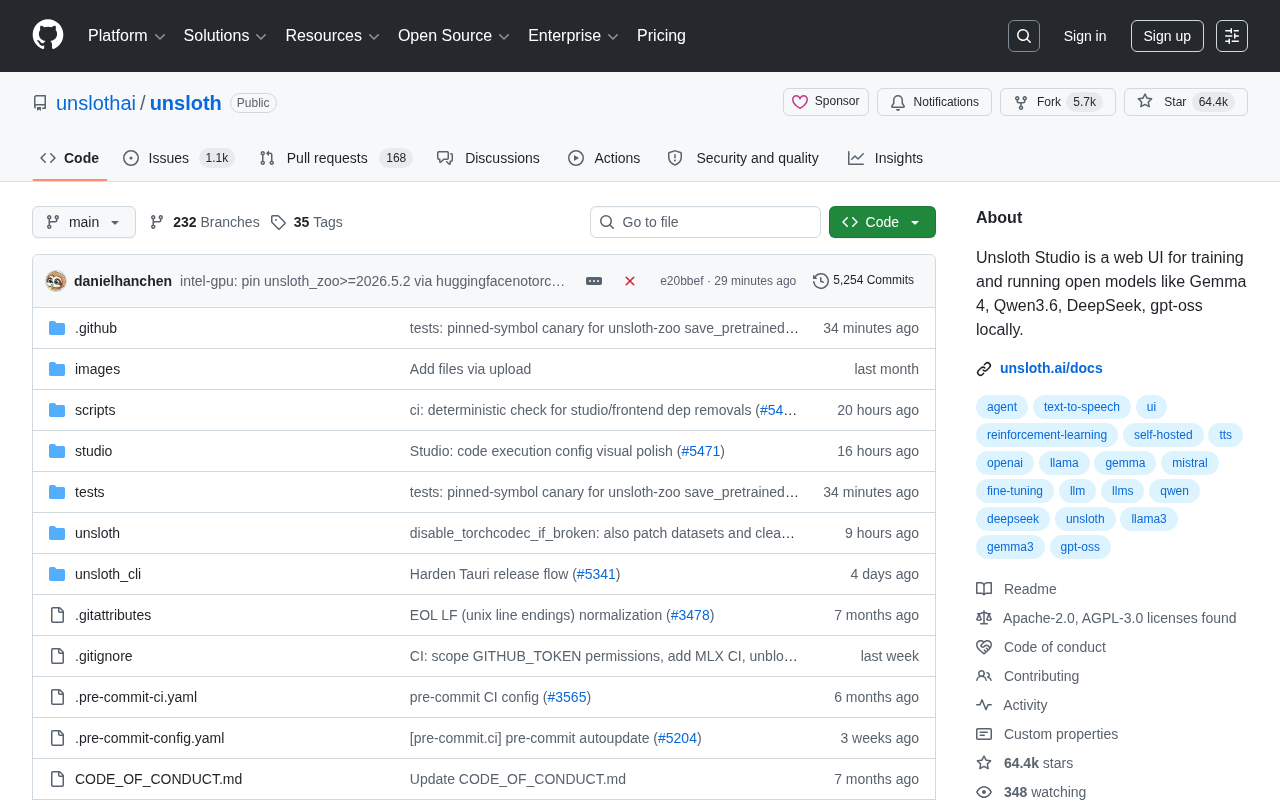
Unsloth is an open-source tool with 63K+ GitHub stars that provides a Web UI for locally training and running LLMs like Gemma 4, Qwen3.6, and DeepSeek.
Read more →
 Product Reviews
·1 min
Unsloth: A Powerful Tool for Locally Training and Running Open-Source LLMs
Unsloth is an open-source tool with 63K+ GitHub stars for locally training and running LLMs like Gemma 4, Qwen3.6, and DeepSeek with optimized VRAM usage.
Read more →
 Product Reviews
·2 min
Unsloth: The Free Local LLM Training Tool with 60K+ Stars on GitHub — A Complete Guide
Unsloth is a 63K-star open-source tool for local LLM training with Web UI. Supports Gemma 4, Qwen 3, DeepSeek fine-tuning with 2-5x speed boost on consumer GPUs.
Read more →
 Product Reviews
·4 min
Unsloth: The Efficient Tool for Local Open-Source LLM Training — The Secret Behind 60K+ GitHub Stars
In-depth analysis of Unsloth, a 60K+ star open-source LLM training tool supporting Gemma 4, Qwen3, DeepSeek local fine-tuning with LoRA/QLoRA to dramatically reduce VRAM requirements.
Read more →

·3 min
6-Month AI Engineer Learning Roadmap: A Deep Review and Pitfall Guide
Deep analysis of a viral Reddit AI learning roadmap: covering Python, ML, deep learning, LLM engineering to job prep, identifying common pitfalls like missing math foundations and overly broad scope.
Read more →

·3 min
Is Cursor Worth Subscribing To? Real Developer Community Reviews and Usage Strategies
In-depth analysis of AI coding tool Cursor's real-world experience, covering community ratings, multi-model support, BYOK mode, and Chinese LLM integration strategies for developers.
Read more →

·3 min
Blueberry: An AI Assistant That Auto-Replies to iMessages in Your Voice
Blueberry is a macOS menu bar AI app that mimics your voice to draft iMessage replies. Using AI drafting + human approval, it helps chronic ghosters maintain relationships.
Read more →

·3 min
Ollama Cloud Unsubscription Story: A Real-World Comparison of GLM vs DeepSeek
A Django developer shares their Ollama Cloud subscription experience, comparing GLM 5.2 and DeepSeek V4 Pro for PHP programming, analyzing cloud AI coding service value for indie developers.
Read more →

·2 min
Qwen3 Max Tops the Agentic Index Leaderboard: A Deep Dive into Agent Capability Evaluation
Qwen3 Max tops the Agentic Index leaderboard, excelling in tool use, multi-step reasoning, and code execution. A deep analysis of evaluation results and model selection in the agent era.
Read more →

·3 min
KV Cache Quantization Benchmark: 413 Configurations Reveal KVarN 6-bit Outperforming q8_0
Benchmark of 413 KV cache quantization configs comparing KVarN variance normalization vs traditional methods on Qwen and Gemma models. KVarN 6-bit + precision tail beats q8_0 at lower VRAM.
Read more →

·4 min
Quantization Illustrated: A Deep Dive into Core Compression Techniques for Large Language Models
A deep dive into LLM quantization techniques covering symmetric/asymmetric quantization, PTQ, QAT, GPTQ, AWQ, and outlier solutions for efficient model deployment.
Read more →

·3 min
Local LLM Selection Guide: Practical Applications for Cybersecurity Purple Teams
A deep dive into how cybersecurity Purple Teams and SOC analysts can select locally deployed LLMs, covering hardware constraints, censored vs. uncensored models, specific recommendations, and RAG integration.
Read more →

·3 min
How Open-Source Models Achieve Superior Retrieval Performance at 1% of GPT's Cost
Deep analysis of how open-source models match GPT-level retrieval performance at 1/100th the cost. Covers RAG cost optimization, embedding model fine-tuning, and deployment strategies.
Read more →

·2 min
Cursor Keeps Writing Wrong UTF Encoding Then Self-Correcting? The Hidden Trap of Token Waste
Developers report Cursor AI frequently writes wrong UTF encoding then wastes tokens self-correcting with scripts. Analysis of root causes and practical fixes.
Read more →

·3 min
Five Local LLMs Built a Small Town, and Emergent Behaviors Included Facebook and a Duck Credit Bureau
A developer lets Mistral, Qwen, Llama and other local LLMs autonomously live in virtual town Pepperton. AI residents spontaneously invent social networks, conspiracy theories, and case law.
Read more →

·3 min
Machine Learning Project Portfolio: A Complete Guide to Building Resume-Worthy ML Projects
From project selection to deployment, learn how to build resume-worthy ML projects. Covers end-to-end workflows, tiered project recommendations, and practical tips for ML learners transitioning from beginner to intermediate.
Read more →

·3 min
Qwen3 Series Deep Dive: The Multimodal Ambitions and Future Outlook of Open-Source LLMs
In-depth analysis of Alibaba's Qwen3 series, exploring its multimodal visual understanding, Chinese language capabilities, open-source ecosystem, and impact on developers and the AI industry.
Read more →

·2 min
Acrux Core: Open-Source LLM Observability Platform, a Self-Hosted Alternative to LangSmith
Acrux Core is an open-source LLM observability platform supporting self-hosted deployment with prompt management, dynamic tool binding, user feedback loops, and full-chain tracing—a free alternative to LangSmith and Langfuse.
Read more →

·2 min
Homebench: A Comprehensive Benchmarking Tool for Local LLMs Across Speed, Memory, and Quality
Homebench is an open-source local LLM benchmarking tool that evaluates models across speed, memory, and quality dimensions, helping developers make optimal model selection and quantization decisions.
Read more →