#multi-agent AI coding
734 related articles

·3 min
The AI Coding Landscape: Model Tiers, Tool Camps, and a Deep Dive into MCP/Skills/CLI
A systematic map of today's AI coding landscape: the evolution from ChatGPT to Claude Code, LLM capability tiers, tool camps like Cursor/Copilot, and the three key weapons of the Agent era — MCP, Skills, and CLI.
Read more →

·3 min
Zhipu's Mobile AI Agent Tested: A Full Breakdown of the Cloud Phone Approach — Capabilities and Limitations
Hands-on test of Zhipu's mobile AI Agent: using a cloud phone to bypass permission limits, it supports natural language-driven automation. We cover its core mechanics, real performance, app restrictions, and future potential.
Read more →

·3 min
Pinterest Medic: Engineering an AI Agent for Automated Spark Failure Diagnosis
How Pinterest engineers built Medic for Apache Spark — a multi-agent auto-diagnosis tool — covering the evolution from a single ReAct agent, observability, log denoising, and end-to-end testing.
Read more →

·3 min
The Rise of General AI: Breakthroughs in Mathematical Reasoning and Competitive Programming
Frontier AI is going general: costs are dropping, general models are beating specialized ones in math and competitive programming, and multi-agent workflows are maturing fast.
Read more →

·4 min
Java Developer to AI Architect: A Three-Layer Capability Upgrade Roadmap
How can Java engineers transition to AI Architect? This article breaks down three core capability layers — AI app development, production RAG, and AI Agent orchestration — using Spring AI Alibaba and LangChain4j to turn your Java foundation into a competitive edge.
Read more →

·4 min
Beyond Vibe Coding: A Complete Guide to Enterprise-Grade AI Engineering
Hit the Vibe Coding ceiling? This guide covers the three-stage AI coding progression path, Claude Code vs. Codex, SuperPower SDD, and how to go from vibe coding to enterprise-grade AI engineering.
Read more →

·3 min
Vibe Coding for Beginners: Build Your First Project with AI from Scratch
What is Vibe Coding? Learn this new AI programming paradigm from scratch — no CS degree needed. Use Claude Code, Cursor, and more to build real projects by describing your ideas.
Read more →

·3 min
Claude Code Getting Started: Installation, Switching to Chinese LLMs, and Git Workflow Guide
A complete guide to Claude Code: CLI installation, switching to DeepSeek and other Chinese LLMs via CC Switch, and conversational Git workflows for developers.
Read more →
GitHub Daily · July 23: The Duet of Ru…
·3 min
GitHub Daily · July 23: The Duet of Rust's Dominance and the AI Agent Collaboration Paradigm
GitHub Trending July 23: block/buzz tops the chart with 3,252 stars, Rust dominates system tools, and AI Agents shift from tools to parallel collaborators.
Read more →

·3 min
Qwen3.8 Deep Dive: How Does a 2.4 Trillion Parameter MoE Model Claim Second Place?
Alibaba's Qwen3.8 challenges larger models with a 2.4T-parameter MoE architecture, claiming second only to Gemini. A deep dive into MoE mechanics, continuous updates, two-speed release strategy, and real local deployment requirements.
Read more →

·2 min
Getting Started with LangGraph: Graph Orchestration and State Machines for AI Agents
A comprehensive guide to LangGraph's core concepts: Graph API vs Functional API, three-layer architecture, and workflow visualization methods for building AI Agents.
Read more →

·7 min
The Complete Guide to LLM Application Engineer Interviews: Six High-Frequency Topics in the Agent Domain
A focused guide to the core interview topics for LLM application engineers, covering agent architecture, Multi-Agent, Langfuse evaluation & tracing, security, and RAG optimization.
Read more →

·7 min
The Complete Guide to LLM Application Engineer Interviews: Six High-Frequency Agent Topics
A focused guide to core LLM application engineer interview topics, covering agent architecture, Multi-Agent, Langfuse evaluation, security, and RAG optimization.
Read more →

·7 min
From Chat to Agent Platform: A Practical Guide to Engineering AI Applications
A deep dive into engineering AI applications: from a simple chat page to a multi-layer Agent platform, covering RAG knowledge bases, Workflow scheduling, multi-model management, and run tracing.
Read more →

·6 min
30-Minute Hands-On: Building a Working AI Agent from Scratch
Skip the dry theory and get hands-on! This article demonstrates step by step how to build a working AI Agent from scratch in 30 minutes using AI coding tools—covering the agent skeleton, tool system, memory mechanism, Flask web UI, and DeepSeek API integration.
Read more →

·2 min
GPT-5.6 Sol Tops Frontend Leaderboard · Claude Code Gets Built-in Browser · 50-Year Math Conjecture Solved
GPT-5.6 Sol tops Chatbot Arena's frontend leaderboard, Claude Code gains a built-in browser, Sol Ultra proves a 50-year math conjecture, and Gemma 4 gets 5x faster.
Read more →

·6 min
GPT-5.6 Hands-On Deep Dive: Three-Tier Models + Ultra Multi-Agent, Codex Fully Evolved
OpenAI launches GPT-5.6 with three tiered models—Sol, Terra, and Luna—Ultra multi-agent parallel collaboration, Codex integrated into ChatGPT desktop, and an upgraded Computer Use.
Read more →

·4 min
Teaching AI to Have "Taste": Exploring Multi-Agent Design with Open-Source Skill Taste
Why does AI-generated UI all look the same? Designer SEN open-sourced a Skill called Taste that uses a four-agent pipeline to reverse-engineer website "taste" into verifiable design principles called Taste DNA.
Read more →

·5 min
The Complete Claude Code Guide: Installation, Core Features, and Advanced Workflows
An in-depth guide to Anthropic's Claude Code agentic coding tool, covering installation, pricing plans, model selection, token management, CLAUDE.md global memory, MCP integration, Subagents, and more.
Read more →
·3 min
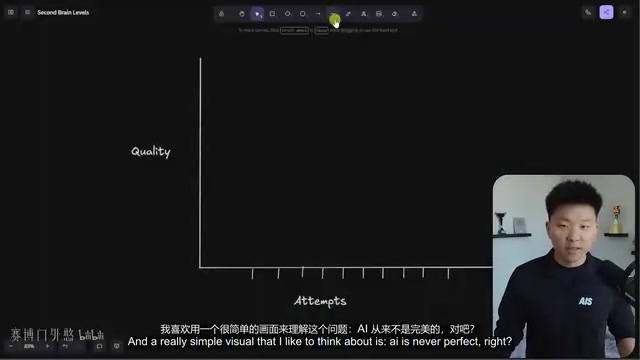
Agent Loop: A Design Guide for AI Autonomous Reasoning-Action-Verification Workflows
A deep dive into AI Agent Loops: from single loops to multi-agent collaboration. Master goal definition, validation mechanisms, and stop conditions to avoid blindly building agent fleets.
Read more →