#multi-model inference
296 related articles

·5 min
Getting Started with Codex: Four Product Forms Explained & How to Choose Between Cursor, Claude Code, and Codex
In-depth analysis of OpenAI Codex's four forms (CLI, web, plugin, app), comparing Codex, Claude Code, and Cursor on price, stability, and use cases to help developers choose the right tool.
Read more →
·3 min
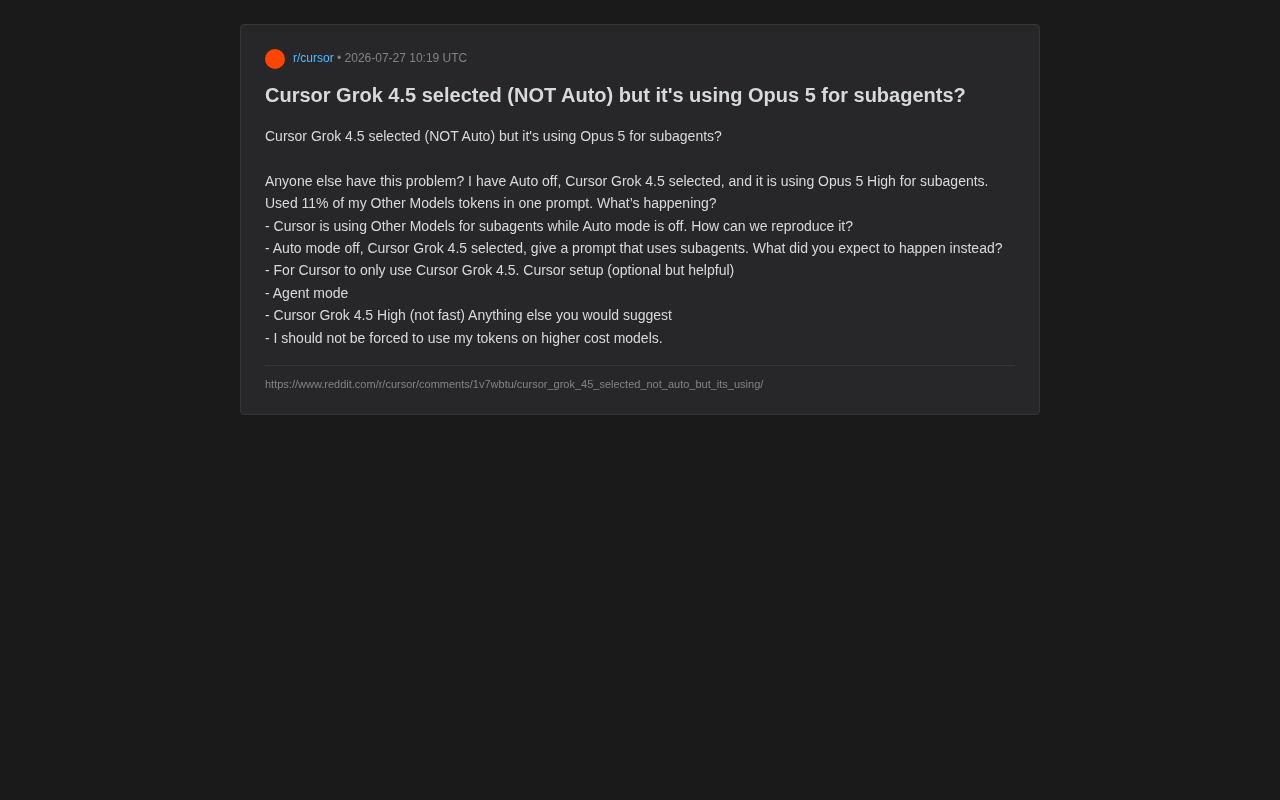
Cursor Selects Grok but Calls Opus: Subagent Model Substitution and Cost Control Issues Explained
Cursor users selecting Grok 4.5 find subagents secretly calling expensive Opus 5, consuming 11% quota per prompt. Analysis of model decoupling, cost transparency, and user strategies.
Read more →
In-Depth Analysis of the Claude Opus 5…
·3 min
In-Depth Analysis of the Claude Opus 5 Elevated Error Rate Incident and Response Strategies
Deep analysis of the Claude Opus 5 elevated error rate incident, exploring LLM service reliability challenges and providing developers with practical strategies including multi-model redundancy, retry mechanisms, and graceful degradation.
Read more →

·5 min
Ollama Performance Degrades After Connecting to OpenWebUI? A Complete Troubleshooting Guide
Complete guide to troubleshooting Ollama performance degradation with OpenWebUI, covering num_ctx truncation, sampling parameter differences, GPU resource contention, and system prompt interference.
Read more →

·4 min
Notion Co-founder: From Note-Taking Tool to AI Agent Workspace
Notion co-founder Simon Last shares Notion's journey from note-taking tool to AI agent workspace: from first tasting GPT-4 to personal and custom agents.
Read more →

·2 min
Grok 4.5 Hands-On Review: Code Generation and Research Visualization Capabilities
Hands-on review of xAI's Grok 4.5: one-shot web code generation and research figures rivaling top journal visuals. Covers core capabilities, Claude Opus comparison, and aggregation platform tips.
Read more →
GitHub Daily · July 25: Where Decentra…
·2 min
GitHub Daily · July 25: Where Decentralized Communication Meets AI-Native Tools
GitHub Trending July 25: bitchat's Bluetooth Mesh chat gains 1,700 stars in a day, palmier-pro reimagines AI-native video editing, and aisuite unifies LLM access.
Read more →

·3 min
Multi-Model AI Aggregator Platforms Explained: Access GPT, Claude, Gemini & More from One Chat Interface
AI aggregator platforms promise one interface for GPT, Claude, Gemini, DeepSeek & more. This deep-dive covers core features, real value, data security risks, and safer alternatives.
Read more →
·2 min
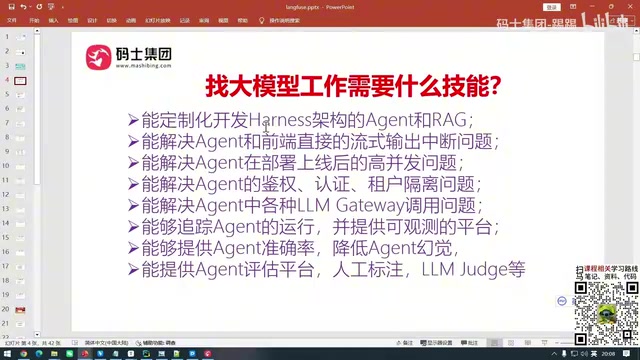
The New Bar for AI/LLM Roles: A Practical Guide to Agent Observability and Evaluation
Enterprise AI/LLM roles now demand engineering skills: streaming recovery, high concurrency, multi-tenancy, LLM gateways, Langfuse observability, and evaluation platforms. Master these 8 core competencies.
Read more →

·4 min
Do Cursor Promo Codes Still Work? A Developer's Guide to Saving on AI Coding Tools
Are Cursor referral codes and discount codes still valid? This guide analyzes Cursor's pricing model, promotional policy trends, and practical savings strategies including annual billing, education discounts, and competitor comparisons.
Read more →
Intelligent Model Routing: The Core Te…
·3 min
Intelligent Model Routing: The Core Technology and Implementation Guide for AI Cost Reduction and Efficiency
Intelligent Model Routing is becoming key AI infrastructure. This article explores its principles, solution types, technical challenges, and implementation considerations to help developers balance cost, latency, and quality.
Read more →

·4 min
Spring AI 1.0 Practical Guide: A Java Developer's Fast Track to Building AI Applications
Spring AI 1.0 is here — Java developers can now build AI apps without switching to Python. This guide covers LLM integration, RAG, intelligent customer service, and Agent patterns for enterprise deployment.
Read more →

·6 min
The Complete Guide to Using Claude in China: In-Depth Comparison of 4 Solutions and How to Choose
How can users in China use Claude? This article deeply compares four solutions: official subscription, proxy subscription (WildCard), relay platforms (2233/0011.ai), and API aggregation (OpenRouter).
Read more →

·3 min
Claude Code Artifacts Now Open: AI Agent Race Shifts Into High Gear
Claude Code Artifacts opens to Pro/Max users with real-time web deployment. Roundup of AI Agent news: Alipay Abao beta, ByteDance EdgeBench, Microsoft Frontier Company, and OpenAI/Anthropic compute strategies.
Read more →

·4 min
5 Tips to Cut Claude Opus 5 Costs by Up to 80%
Opus 5 moving to API billing? 5 proven tips to cut token costs by up to 80%: lower Effort Level, architect-executor split, Ponytail compression, Deep Research, and Advisor Mode — while outperforming Opus 4.8.
Read more →

·6 min
Claude Sonnet 5 In-Depth Testing: 8 Real-World Tasks Reveal Its True Capability Boundaries
Bilibili creator KaterSony tests Claude Sonnet 5 across 8 real-world tasks—image recognition, 3D modeling, web generation—comparing it against GPT-5.5, Gemini 3.1 Pro, and revealing its true capability limits and cost traps.
Read more →
AstrBot: A Deep Dive into the Multi-Pl…
·2 min
AstrBot: A Deep Dive into the Multi-Platform AI Agent Development Framework
AstrBot is an open-source AI Agent framework supporting WeChat, QQ, Telegram and more, with multi-LLM compatibility and plugin extensibility. Full technical breakdown inside.
Read more →
Microsoft's Two-Track AI Coding Strate…
·3 min
Microsoft's Two-Track AI Coding Strategy: A Deep Dive into Claude Code and GitHub Copilot CLI
Microsoft plans to launch Claude Code and GitHub Copilot CLI, making the terminal the new frontier for AI coding. A deep dive into Microsoft's multi-model strategy and its impact on developer workflows.
Read more →

·3 min
Opal: A Designer Built an AI Pet Assistant on Raspberry Pi Using OpenClaw
Microsoft designer Tua Nguyen built Opal, an AI rabbit assistant on Raspberry Pi using OpenClaw — capable of browsing the web, finding recipes, and operating GitHub.
Read more →
transcribe.cpp: A Unified Speech Recog…
·2 min
transcribe.cpp: A Unified Speech Recognition Engine Built on ggml, Supporting 16+ Model Families
transcribe.cpp is an open-source ggml-based speech recognition engine supporting 16+ model families in a single C++ codebase — lightweight, cross-platform, and quantization-ready for local STT.
Read more →