#multimodal dataset alignment
111 related articles

·4 min
GenAI Job Interview Gone Wrong: Interviewer Googles Gemini for Questions on the Spot — What's Broken in AI Hiring?
A fresh grad interviewing for a GenAI Trainer role faced prime number coding and activation function questions while the interviewer used Gemini to generate questions live — exposing AI hiring chaos.
Read more →

·4 min
One-Shot Movie Poster Generation: Analyzing AI Image Generation's One-Shot Capabilities
A Reddit user generated a polished parody movie poster with a single prompt. This article analyzes AI image generation's one-shot breakthroughs and deepfake risks.
Read more →

·7 min
AI Daily: T-Head Open-Sources SAIL Software Stack at WAIC, Flurry of Large Model Releases
T-Head open-sources AI software stack T-Head SAIL at WAIC to lower the barrier for domestic chip development; Kimi K3 tops the WebDev leaderboard; Qwen 3.8 Max Preview cuts prices aggressively; Moonshot prepares a Hong Kong IPO; and Oracle switches its data center to a fuel cell microgrid.
Read more →

·2 min
17 Million Mouse Trajectories: Unpacking the Machine Learning Value of Gaming Behavioral Data
A League of Legends player collected 17M mouse trajectories and 670K clicks. We analyze the ML value of this gaming behavioral telemetry data for imitation learning, anti-cheat, and player modeling.
Read more →
Fine-Tuning Cosmos Models in One Day w…
·2 min
Fine-Tuning Cosmos Models in One Day with Agent Skills — Breaking 90% Accuracy
NVIDIA uses Autonomous Coding Agents and Agent Skills with TAO to fine-tune Cosmos visual reasoning models in one day, achieving over 90% accuracy.
Read more →

·2 min
ChatGPT Recreates 70s Retro Ads: A Time-Travel Experiment for Modern Brands
A creative AI experiment where ChatGPT reimagines modern brands like Apple, Netflix, and Spotify as 1970s retro ads — revealing AI's deep grasp of historical aesthetics.
Read more →
The Grok-4.5 Jailbreak Incident: Why A…
·3 min
The Grok-4.5 Jailbreak Incident: Why AI Safety Guardrails Are So Hard to Hold
The Grok-4.5 jailbreak claim went viral. We break down common jailbreak techniques, analyze structural vulnerabilities in AI safety alignment, and explore industry defenses.
Read more →

·3 min
AI-Powered OSINT in Practice: A Learning Path and Tool Guide for CS Professionals
How can OSINT practitioners with a CS background automate intelligence with AI? This guide covers computer vision, VLMs, and Agent frameworks including YOLO, SAM, and Grounding DINO.
Read more →
Meta Muse Spark 1.1 Released: A Deep D…
·4 min
Meta Muse Spark 1.1 Released: A Deep Dive into the First Spark Model with an Open API
Meta officially releases Muse Spark 1.1, the first model in the Spark series to offer an API, with a focus on strengthening agentic tool calling and computer use capabilities.
Read more →

·6 min
GPT-5.6 vs Grok 4.5 on the Same Day: A Packed Week of Flagship AI Model Launches
OpenAI's GPT-5.6 launches with Sawa, Terra, and Luna sub-models the same day as Musk's Grok 4.5, while Anthropic, Meta, and NVIDIA make their moves. A packed week of flagship AI launches.
Read more →
·3 min
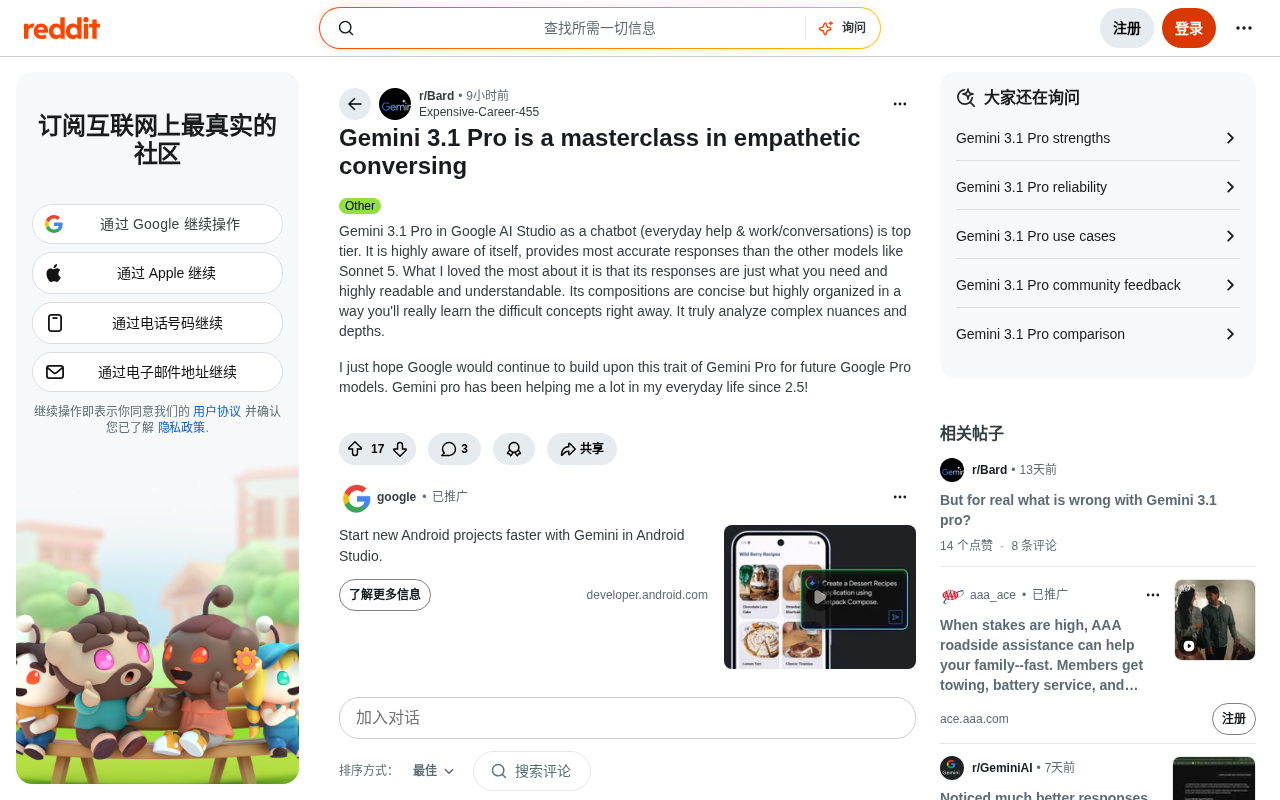
Gemini 3.1 Pro Review: Why Its Empathetic Conversation Style Keeps Users Coming Back
A longtime user calls Gemini 3.1 Pro "a masterclass in empathetic conversing" — concise, context-aware, and intent-driven. We break down why empathy is becoming AI's new competitive frontier.
Read more →
Anti-AI Fonts: Adversarial Typography …
·3 min
Anti-AI Fonts: Adversarial Typography That Humans Can Read but Machines Can't
Anti-AI fonts use adversarial glyph design to exploit the perceptual gap between human and machine vision, blocking OCR and LLM scraping. A deep dive into the tech, limits, and data sovereignty implications.
Read more →

·5 min
In-Depth Analysis of the GPT-5.6 EQ Test: Progress and Limitations in Emotional Intelligence
A Reddit user ran EQ tests on ChatGPT 5.5 and 5.6, covering meeting emotion ranking, chess-behavior judgment, and facial attractiveness. Version 5.6 shows clear gains in multimodal emotional understanding, but social common sense remains a core weakness.
Read more →

·4 min
Eight Text-to-Image Models Compared: Which Excels at Realism, Ghibli, and Anime Styles
A comprehensive comparison of eight mainstream text-to-image models including Krea2, Flux2, and Qwen Image, covering realistic portraits, Ghibli, 3D anime, and Japanese anime styles.
Read more →
Deconstructing the SWE-1.7 Coding Mode…
·3 min
Deconstructing the SWE-1.7 Coding Model: How Specialized AI Approaches Top-Tier General Models
The SWE-1.7 specialized coding model sparked buzz on Hacker News, claiming performance near GPT-5.5 and Claude Opus. This deep dive analyzes the technical approach, benchmark limitations, and how specialized AI coding models challenge general LLMs.
Read more →

·4 min
AI Agents Powering the Full Research Pipeline: A Practical Guide to Automation from Topic Selection to Publication
Learn how to use AI Agents to link the entire research pipeline—from literature management, data analysis, and paper writing to scientific illustration and dissemination—building a reusable research automation workflow with NotebookLM, N8N, and Ollama.
Read more →

·4 min
433 Fitness Exercises Open-Source Dataset: Structured Fields + Animation Demos Fully Explained
GitHub trending project exercises-dataset features 433 fitness exercises with target muscles, equipment types, instructions, and animation demos—ideal for fitness apps, AI coaches, and RAG systems.
Read more →

·3 min
GPT-5.6 Deep Dive: SOL, TERRA & LUNA — Performance Benchmarks and Pricing Breakdown
OpenAI's GPT-5.6 series (SOL, TERRA, LUNA) benchmarked via PinBash: major gains in math and backend tasks, but frontend visuals remain a weakness. Full pricing and model selection guide.
Read more →

·2 min
Fine-Tuning PaliGemma 2 for Custom Object Detection: A Practical Guide from General to Specialized
Learn how to fine-tune Google's open-source PaliGemma 2 VLM for custom object detection. Covers model architecture, data formatting, fine-tuning strategies, and real-world value.
Read more →

·5 min
Practical Guide to Deploying Invoice Analysis AI: Model Selection and Architecture Pitfalls
How can enterprises process 50+ invoice formats with AI? This article analyzes visual document understanding approaches—multimodal LLMs, OCR+LLM, and hybrid architecture—with key decision advice for non-technical AI leads.
Read more →