#node-based workflow
101 related articles

·3 min
Programs as Data Flow: Rethinking Architecture Paradigms Through Building a 3D Editor in C++
A developer builds a 3D editor from scratch in C++, modeling programs as dataflow graphs rather than object collections. Exploring dataflow vs. OOP, Greenspun's Tenth Rule, and the debugging dividend of visual programming.
Read more →

·2 min
LTX 2.3 Hands-On: How Efficient Is Local AI Video Generation on the RTX 5080?
Hands-on with LTX 2.3 and ComfyUI for local AI video generation on the RTX 5080: 8-second clips in just 2-3 minutes while running DaVinci Resolve simultaneously. Covers hardware, workflow setup, and multi-tool creation.
Read more →

·2 min
ComfyUI MCP: AI Autonomously Builds Workflows, Generate Images Locally with a Single Sentence
The open-source ComfyUI MCP project uses Anthropic's MCP protocol to let LLMs like Claude directly control ComfyUI node graphs—describe needs in natural language, AI auto-builds the workflow, and renders locally on your GPU. Zero-click AI image generation.
Read more →

·3 min
Depth Map and OpenPose Extraction Workflow: A Practical Guide to Controllable AI Video Generation
A deep dive into the principles and applications of the Depth Map and OpenPose pose extraction workflow, combined with Seedance 2's reference video feature, helping creators precisely control camera movement and character poses in AI video.
Read more →

·5 min
In-Depth Comparison of AI Image Generation Tools: How to Choose Between Flux, Midjourney, and Gemini?
A comprehensive comparison of mainstream AI image generation tools: Flux, Midjourney, Grok, Gemini, and Stable Diffusion. Dissecting their pros and cons across quality, freedom, and usability to help you find the right AI drawing solution.
Read more →

·4 min
INT4 ConvRot W4A4 Quantization: Running Large Image Models on Low-VRAM GPUs in ComfyUI
An in-depth look at INT4 ConvRot W4A4 quantization, covering conversions of Krea2, Qwen-Image, and other diffusion models to help ComfyUI users run large image models on 8GB GPUs.
Read more →

·3 min
Flow Review: 3D AI Studio's ComfyUI-Style Node System for 3D Creation
3D AI Studio launches Flow, a node-based workflow tool supporting image-to-3D, part splitting, batch export, and a built-in AI Agent for auto-building pipelines from Blender to UE5.
Read more →

·2 min
Krea 2 Emotion Expression Test: Turbo vs Raw+LoRA Head-to-Head Review
An in-depth review of how Krea 2 Turbo and Raw+LoRA differ in emotional scenarios. Using a variable-controlled workflow and the same random seed, comparing 11 emotional scenarios, with auxiliary LoRA and prompt tips.
Read more →
·2 min
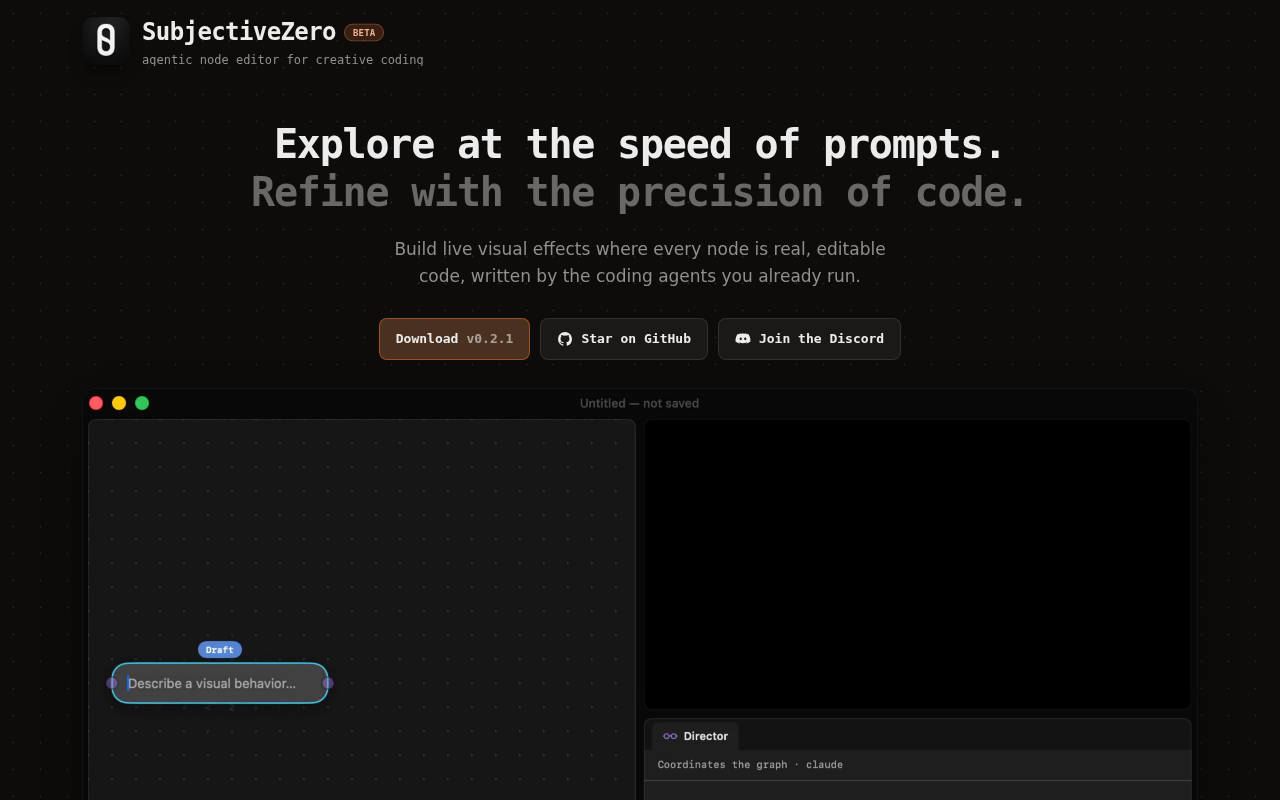
SubjectiveZero: A New Creative Coding Paradigm with AI Agents and Node Editors
SubjectiveZero is an open-source agentic node editor for creative coding, merging AI agents with visual node programming. Explore its technical vision and value for digital artists.
Read more →

·5 min
Runs on Low VRAM! A Hands-On Look at the ID LoRA Face-to-Video Workflow
A face-to-video workflow built on GGUF quantized models and ID LoRA runs on just an RTX 3060 with 6GB VRAM. This article breaks down its core principles, four-step process, and how it tackles facial consistency in AI video.
Read more →

·4 min
Agent Skills Explained: A Five-Level Evolution from Prompt to AI Expert
A deep dive into Agent Skills: from basic prompts to fully encapsulated AI capability units. Five levels of human-AI interaction evolution, with clear distinctions between Skills, MCP, and Workflow.
Read more →

·6 min
7 Anima Model Combinations Tested: The Optimal Config Guide for Anime Image Generation
A Reddit user's rigorous controlled experiment testing all 7 Anima combos—base, aesthetic, turbo LoRA, and turbo baked. Key takeaway: choose aesthetic first, add Turbo LoRA for anime-girl style. Includes prompt structures and ComfyUI configs.
Read more →

·5 min
Ideogram 4 Local Deployment in Practice: One-Click Image Generation with a Fully Automated ComfyUI Workflow
Deep dive into Ideogram 4's core strengths: realistic photographic quality, powerful text generation, and Chinese prompt support. Learn to skip complex JSON prompts with a fully automated ComfyUI workflow + Qwen3—input your idea, get an image instantly, deployable locally at just 8GB.
Read more →

·3 min
Building an AI Auto-Editing Workflow with n8n: Parallel Processing, Date Filtering, and Scheduled Triggers — A Full Dev Log
A complete walkthrough of building an AI auto-editing workflow in n8n: Merge node sync, Luxon date filtering, scheduled triggers, real bugs, and debugging tips for solo creators.
Read more →
·6 min
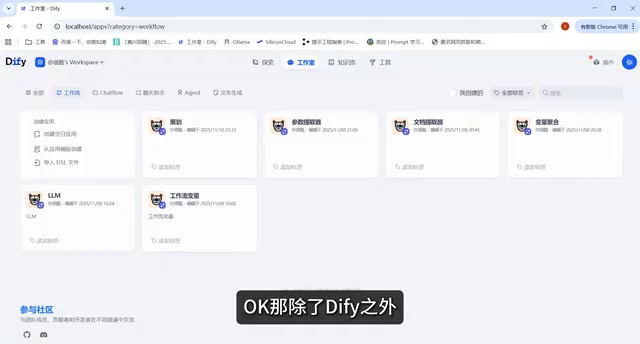
Complete Guide to Deploying Dify Locally: Docker + Ollama + RAG Setup Tutorial
A detailed guide to deploying the Dify agent platform locally: from Docker setup and integrating Ollama + DeepSeek local LLMs to workflow orchestration and RAG knowledge base construction.
Read more →

·7 min
Electron + LangGraph in Practice: Building an AI Agent Visual Orchestration App from Scratch
A hands-on guide to building an enterprise-grade AI Agent workflow orchestration app with Electron Forge and LangGraph, covering local LLM deployment (Qwen3-0.6B), node-based visual canvas design, and full Function Calling integration.
Read more →

·7 min
PP-OCRv6 Deployment Deep Dive: Invoice Recognition Results and the Font-Missing Pitfall Explained
PP-OCRv6 is PaddlePaddle's SOTA-level OCR model. This article covers Docker deployment, invoice recognition testing, and the critical font-missing pitfall causing entire regions to be skipped.
Read more →

·4 min
Coze for Beginners: A Complete Guide to ByteDance's AI Application Development Platform
A complete guide to ByteDance's Coze platform: agents, AI apps, workflows, nodes, and plugins explained. Build AI applications with no coding required.
Read more →

·2 min
MediaAgent: Building a Brain for ComfyUI in Rust to Fully Automate Workflows
MediaAgent is a Rust-based AI Agent system that gives ComfyUI a brain via PTCA loops and JSON-LD semantic workflows, enabling fully automated model selection, parameter tuning, and retries.
Read more →

·6 min
Dify Self-Hosted Deployment in Practice: Building an Enterprise-Grade AI Application Platform from Scratch
A complete guide to self-hosting Dify, the open-source AI platform: environment setup, Docker Compose deployment, LLM integration, and app building. Runs on just 2 cores and 4GB RAM.
Read more →