#numerical stability
128 related articles

·4 min
AI Persistent Memory Three-Layer Architecture Explained: In-Depth Comparison of Mem0, Zep, and ContextNest
Deep dive into the three-layer architecture of AI persistent memory systems—storage, management, and retrieval—with an in-depth comparison of Mem0, Zep, and ContextNest to help developers choose the right memory solution for AI Agents.
Read more →

·7 min
Practical RL Compute Optimization: Core Strategies to Boost CPU and GPU Utilization
An in-depth look at why CPU and GPU utilization is low in RL training, covering vectorized environment parallelism, distributed Actor-Learner architectures, GPU-side simulation (Isaac Gym/Brax), and Ray RLlib practice.
Read more →

·6 min
Grok 4.5 Hands-On: A Faster, Cheaper Coding Dark Horse — Can It Replace Opus and GPT?
In-depth Grok 4.5 hands-on review: priced at a fraction of Opus 4.8, twice the token efficiency of peers, and coding ability in the top tier. A real-project breakdown of its strengths, highlights, and shortcomings.
Read more →

·2 min
VR Teleoperation Robotics: A Practical Guide to Swapping Left/Right Controller Data and Aligning Coordinate Systems
How to programmatically swap left/right controller mappings in MuJoCo when using Pico 4 Ultra and XRoboToolkit for VR robot teleoperation, including coordinate frame alignment and quaternion mirroring.
Read more →

·5 min
Connecting DeepSeek V4 in VSCode: Complete Claude Code Plugin Setup Tutorial
Shrinking GitHub Copilot student benefits? Learn to install the Claude Code plugin in VSCode and connect the DeepSeek V4 API via CCSwitch—powerful Agent capabilities at 25% price, no IDE switch needed.
Read more →

·5 min
Essential Math for AI/ML Research: Should Undergrads Choose the Specialist Sequence or the Major Track?
Aiming for AI/ML research? How should you pick undergrad math courses? This article breaks down linear algebra, probability & statistics, and optimization, weighing the specialist sequence vs. the Major track.
Read more →

·3 min
Krea 2 Real-World Test: RTX 3060 Generates 1080P Images in Under 2 Minutes
Can an RTX 3060 12GB run Krea 2? Real-world tests show 1080P images in 1–2 minutes. Explore how Krea2 Turbo FP8 quantization enables efficient AI art on consumer GPUs.
Read more →

·4 min
DeepSeek-V4 Deep Dive: Million-Token Context Architecture Breakthrough and Core Innovations
Deep dive into DeepSeek-V4: 1.6T-parameter MoE, CSA+HCA hybrid attention, MHC & MUON optimizer. Inference FLOPs drop to 27% of V3.2, redefining open-source LLM SOTA.
Read more →

·4 min
AI Agent Development Deep Dive: Opportunities, Real Entry Barriers, and Learning Paths
A deep dive into AI Agent development: real architecture, entry barriers, and learning paths. From ReAct to multi-agent systems and LangChain — cut through the hype.
Read more →

·7 min
Krea2 Tested: Does the FP8 vs BF16 Quality Gap Still Exist?
A Reddit user compared FP8 and BF16 precision on the Krea2 model and found almost no difference in image quality. This article analyzes the technical reasons behind the shrinking quantization gap and its real-world impact on VRAM usage and inference speed.
Read more →

·7 min
Complete Guide to Training Small Models on Kaggle's Free Compute: GPU Quotas and Practical Tips
In-depth guide to Kaggle's free-tier compute: P100/T4 GPU with 30 hours/week quota, 12-hour sessions, suitable models like CNN and BERT fine-tuning, plus tips like mixed precision and checkpointing to start deep learning at zero cost.
Read more →

·6 min
Unsloth Major Update: DeepSeek-V4 Support and a Deep Dive into NVFP4 Quantized Export
Unsloth v0.1.481-beta adds full DeepSeek-V4-Flash support, NVFP4/FP8/imatrix GGUF quantized export, 1.3x faster GRPO, 3-5x faster MoE training, and an OpenAI-compatible API service in Studio.
Read more →

·7 min
Getting Started with Dify: A Complete Guide from Local Deployment to Building Enterprise-Grade AI Applications
A detailed guide to Dify, the open-source LLM app development platform, covering its core features and full local deployment via VMware + Ubuntu + aaPanel + Docker. Supports 100+ models like DeepSeek and ChatGPT to build enterprise AI apps fast.
Read more →

·7 min
Zero-Basis Learning Path for AI Agents: A Three-Stage Journey from Beginner to Deployment
A systematic zero-basis learning path for AI Agent development, covering Python and LLM fundamentals, five core capabilities like task planning and RAG, and LangChain hands-on practice.
Read more →

·5 min
Turn PRD into XMind Test Cases with One Click Using Cursor — 10x Efficiency Boost
A must-read for test engineers: use Cursor's custom Skills to auto-generate test cases covering positive, negative, and boundary values from PRDs, output as Markdown linked to XMind, adapting to functional, interface, and performance testing.
Read more →

·4 min
Claude Science Launch: Anthropic's AI Assistant Built for End-to-End Scientific Research
Anthropic launches Claude Science (beta), a research-focused AI app with artifact traceability, on-demand environments, and 60+ scientific database integrations.
Read more →
·5 min
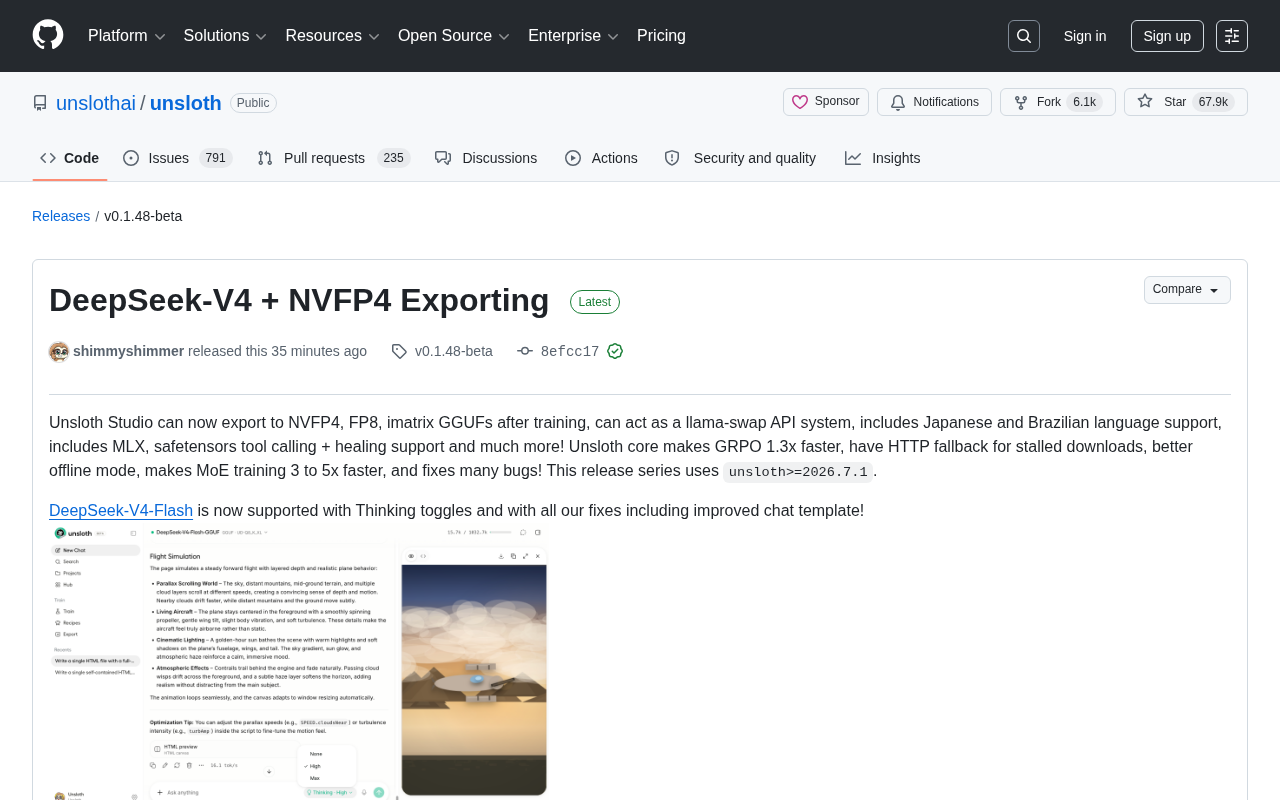
Major Unsloth Update: NVFP4 Quantization Export and DeepSeek-V4 Training Support
Unsloth v0.1.48-beta released, adding NVFP4/FP8 quantization export, OpenAI-compatible API hot-swapping, 3-5x faster MoE training, and 1.3x faster GRPO, covering the full LLM fine-tuning, quantization, and local deployment pipeline.
Read more →

·6 min
AI Agent Learning Roadmap: A Four-Stage Guide from Beginner to Practical Mastery
A systematic AI Agent learning roadmap in four progressive stages: fundamentals → ReAct core paradigm → memory & tools → multi-agent collaboration. Master LangChain, AutoGen, and more, growing from beginner to practical developer in three months.
Read more →

·6 min
GPT-5.6 Three-Model Family Launch: A Complete Breakdown of Sol/Terra/Luna Capabilities and the Government Restriction Incident
OpenAI officially launches the GPT-5.6 family, including the Sol flagship, Terra balanced, and Luna lightweight models. Coding capabilities set a new industry benchmark, generating a Minecraft clone in 90 minutes—while OpenAI publicly opposes U.S. government release restrictions.
Read more →

·7 min
Agentic AI Development in Practice: Evaluation and Error Analysis Are the Real Competitive Edge
Cut through the Agentic AI hype to see the real value of agentic applications. Based on Andrew Ng's course, learn why Evals and error analysis—not framework choice—separate top developers.
Read more →