#procedural generation
115 related articles

·3 min
Degree or Skills? Career Dilemmas and Breakthroughs for Career Changers
An electronics engineering student who hates hardware wants to pivot to backend dev, facing a dilemma between a "guaranteed" degree and a third-tier BCA. We break down the degree vs. skills tradeoff, how to explain gaps, and self-study paths.
Read more →

·4 min
Viktor: The AI Employee Living Inside Slack — How to Build a True Company-Wide AI Colleague
Viktor is a Slack-native AI employee with 3,000+ integrations and team-shared context. Learn how it evolved from browser agents to company-level AI, tackling memory, permissions, and proactivity.
Read more →

·3 min
Enterprise AI Agent Learning Roadmap: A Complete Guide from Beginner to Production
A structured AI Agent learning roadmap covering 4 stages: foundations, core frameworks, scenario practice, and advanced product thinking. Master LangChain, tool calling, memory, and more.
Read more →

·3 min
Open Source Technical Writing in Practice: A Deep Dive into LibreOffice Documentation Collaboration
A deep dive into LibreOffice's open source documentation workflow — covering volunteer writing models, style standards, and how to lower barriers to contribution.
Read more →
AI-Generated Infinite Cathedral: How I…
·2 min
AI-Generated Infinite Cathedral: How Interactive Creative Experiences Are Redefining the Boundaries of Art
A creator built an interactive "Infinite Cathedral" powered by AI — anyone can explore it online. Discover how AI creative tools are evolving from static demos to immersive web experiences.
Read more →

·3 min
OpenAI Copyright Lawsuit: The Battle Over Training Data Retrieval and AI's Trust Crisis
The NYT vs. OpenAI copyright lawsuit escalates into a trust crisis over training data retrieval. Did OpenAI mislead the court? A deep dive into AI data governance.
Read more →

·3 min
Will Vibe Coding Ruin Programmers? Coding Anxiety and How to Break Through in the AI Era
As Vibe Coding rises, many developers can't write code without AI. We break down the risks, whether traditional coding skills still matter, and how to rebuild them.
Read more →

·2 min
Mercor Races Toward a $20B Valuation: The Capital Logic Behind the AI Data Labeling Race
AI talent and data labeling platform Mercor is in talks for a new funding round targeting a $20B valuation, nearly doubling from $10B months earlier. A deep dive into Mercor's business model and the AI data supply chain logic.
Read more →

·3 min
Generate a Mini-Game from a Single Prompt? Testing the Cocos AI Agent Plugin
Deep dive into the Cocos Creator AI Agent Plugin: three-level context compression, tool approval, multi-agent parallelism, and DeepSeek-powered Mario scene building — all in one test.
Read more →

·3 min
Arcaide: Understanding Codebase Structure Through Multi-Level Call Graph Visualization
Arcaide is a code comprehension tool based on multi-level call graphs, helping developers explore function calling relationships from macro to micro, speed up onboarding, assess change impact, and identify technical debt.
Read more →

·4 min
New York Times Accuses OpenAI of Concealing Evidence, Escalating ChatGPT Copyright Lawsuit
The New York Times and other publishers accuse OpenAI of withholding key tools and datasets in the ChatGPT copyright lawsuit, filing a sanctions motion. A deep analysis of the Discovery dispute, AI training data copyright dilemmas, and implications for AI industry compliance.
Read more →

·4 min
GPT-5.6 In-Depth Analysis: Model Architecture, Performance Benchmarks, and a Complete Guide to the Agentic Era
A comprehensive analysis of GPT-5.6: the Sol/Terra/Luna product-line positioning, MoE architecture, 1.5M token context, coding agent benchmarks, and the shift from Chatbot to Agent.
Read more →
·6 min
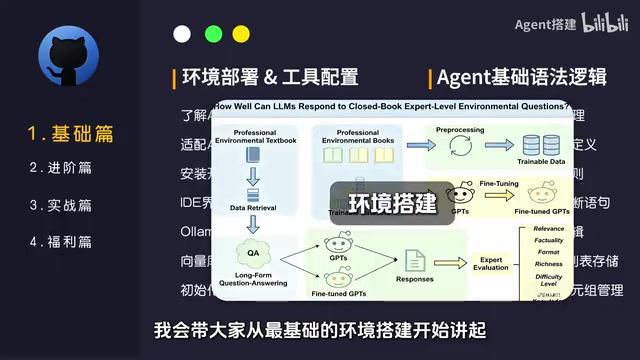
AI Agent Development Learning Path: Four Stages from Zero to Hands-On Projects
A systematic breakdown of the AI agent development learning path, covering four stages: fundamentals, RAG knowledge bases, tool use, multi-agent collaboration, and hands-on projects.
Read more →

·2 min
A Guide to Selecting AI Agent Memory Strategies: A Deep Dive into the Decision-Tree Methodology
How do you choose the right memory strategy for an AI agent? This article uses a decision-tree methodology to analyze the use cases and trade-offs of short-term memory, vector retrieval, and structured summaries.
Read more →
Small but Beautiful Culinary RPG: Rede…
·4 min
Small but Beautiful Culinary RPG: Redefining Role-Playing Games Through Restraint
A small-scale RPG centered on food, using restraint and focus to counter AAA content overload. An in-depth analysis of the culinary RPG design philosophy.
Read more →

·3 min
The Field Equation: Bringing Math Equations to Life with Real-Time Shaders
Explore how The Field Equation project uses real-time shaders and field equation techniques, via SDF ray marching and noise functions, to generate breathing dynamic geometric art.
Read more →
·7 min
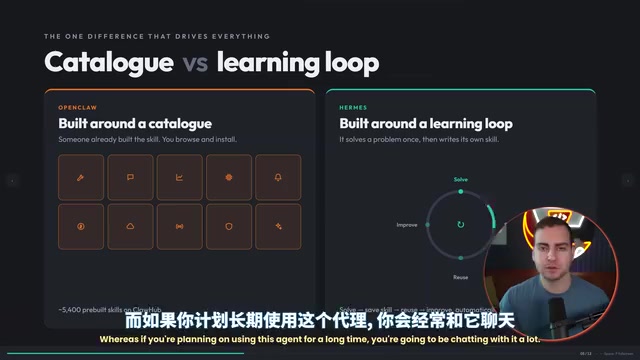
OpenClaw vs Hermes: An In-Depth Comparison and Selection Guide for AI Agent Tools
An in-depth comparison of OpenClaw and Hermes Agent, covering skill management, memory mechanisms, security, and gateway configuration to help you find the right AI agent solution.
Read more →

·6 min
Grok 4.5 Coding Benchmark: A Deep Dive into Performance, Speed, and Cost
xAI releases Grok 4.5, purpose-built for coding agents. 80 TPS speed, $2/M input tokens, SWE Bench Pro score of 64.7, and 4.2x better token efficiency than Opus 4.8. A deep hands-on review.
Read more →

·6 min
Grok 4.5 Hands-On: A Faster, Cheaper Coding Dark Horse — Can It Replace Opus and GPT?
In-depth Grok 4.5 hands-on review: priced at a fraction of Opus 4.8, twice the token efficiency of peers, and coding ability in the top tier. A real-project breakdown of its strengths, highlights, and shortcomings.
Read more →

·7 min
Base44 in Practice: How Claude Code Powered Rapid Scaling from 1 to 80 People
How Base44's product team scaled from a single founding engineer to an 80-person team with Claude Code. Covers AI-assisted onboarding, code review, user evaluation, and QA automation.
Read more →